



Search News
Industry Portal
Popular Tags
How to Evaluate an Urban Rail Pantograph Manufacturer for Long-Term Reliability
Author
Time
Click Count
How to Evaluate an Urban Rail Pantograph Manufacturer for Long-Term Reliability
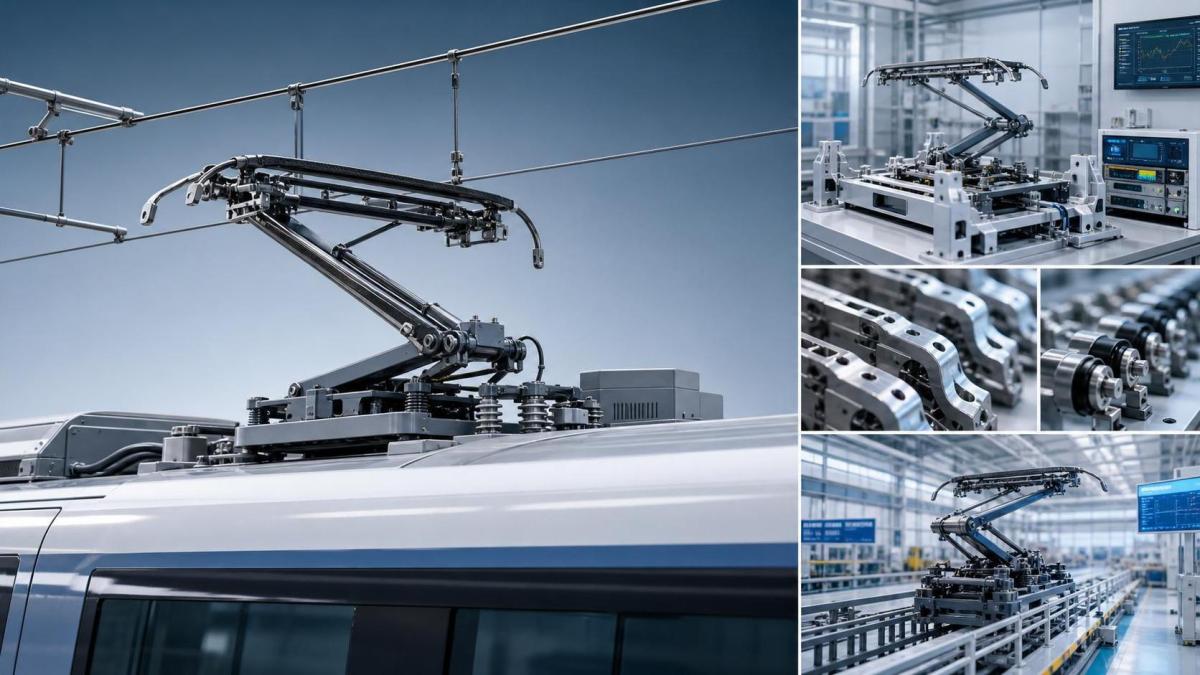
Choosing the right urban rail pantograph manufacturer is not only about price or lead time. It directly affects fleet stability, safety compliance, and lifecycle cost.
In urban rail projects, a weak supplier usually creates hidden problems first. Failures often show up later through wear, arcing, carbon strip loss, or unstable current collection.
That is why supplier evaluation should go beyond brochures. A dependable urban rail pantograph manufacturer must prove technical consistency, production control, and service responsiveness over many years.
For procurement decisions, the goal is simple. Reduce downtime risk, protect network availability, and secure long-term value from the first tender stage.
Start with Operating Conditions, Not Catalog Claims
A capable urban rail pantograph manufacturer should ask detailed questions before offering a model. That early behavior tells you a lot about engineering depth.
The right evaluation starts with actual line conditions. Urban networks create different demands from intercity or high-speed operations.
- Maximum operating speed and acceleration profile
- Contact wire height range and stagger tolerance
- Tunnel pressure, vibration, and wind exposure
- Temperature, humidity, dust, salt, and pollution levels
- Power system voltage and current demand
- Maintenance window limits and depot practices
In practice, a strong urban rail pantograph manufacturer maps these variables into a clear technical proposal. A weaker one tends to reuse a generic design with minimal adaptation.
This also affects reliability later. If the pantograph is mismatched to the line, even certified products can create fast wear and repeated service interruptions.
Check Core Engineering Capability
Not every urban rail pantograph manufacturer controls the key engineering variables that matter in daily service. Long-term reliability comes from design discipline, not from appearance.
Focus on the technical elements that drive current collection stability. These are the areas where real differences usually appear.
Contact force control
Ask how the manufacturer manages static and dynamic contact force. Poor control increases arcing, wire wear, and carbon strip damage.
Head geometry and aerodynamic behavior
Even in urban rail, airflow and vibration matter. The urban rail pantograph manufacturer should provide simulation or test data for uplift stability and frame behavior.
Material and wear design
Review the material strategy for joints, springs, bearings, insulators, and carbon strips. Durable materials reduce fatigue failures and lower replacement frequency.
Maintainability by design
A reliable urban rail pantograph manufacturer designs for fast inspection and simple replacement. Easy access to wear parts matters as much as performance data.
From a procurement angle, engineering quality should be visible in documents. Ask for drawings, failure mode analysis, validation reports, and maintenance instructions.
Validate Testing Depth and Standards Compliance
Certification is necessary, but it is not enough. A serious urban rail pantograph manufacturer should show how compliance connects to real operating performance.
Look for evidence across type testing, routine inspection, and field validation. The best suppliers can explain the difference clearly.
- EN or IEC test compliance for pantograph performance
- Fatigue and endurance test records
- Insulation and dielectric performance data
- Current collection behavior under vibration conditions
- Traceable incoming, in-process, and final inspection reports
More importantly, ask what happened after delivery. An experienced urban rail pantograph manufacturer should have field feedback loops, corrective action records, and revision history.
That is often the strongest signal. Reliability improves when test findings and fleet data flow back into design and process control.
Assess Manufacturing Consistency and Supply Chain Control
A well-designed product can still fail if production discipline is weak. This is where many sourcing decisions become risky.
When screening an urban rail pantograph manufacturer, check whether the factory can produce the same quality across batches, projects, and years.
During audits, pay attention to how answers are given. A mature urban rail pantograph manufacturer provides records quickly and explains controls without hesitation.
A less prepared supplier often relies on broad statements. That usually means process stability is still developing.
Look Beyond Price to Lifecycle Economics
A lower unit quote can look attractive in the tender phase. Yet the total cost picture is usually much wider.
A better urban rail pantograph manufacturer often reduces cost through longer service intervals, fewer failures, and lower inventory pressure.
Review lifecycle cost using a practical structure:
- Initial purchase price and tooling cost
- Installation and interface adaptation cost
- Expected wear part replacement frequency
- Planned and unplanned maintenance labor
- Network delay or service disruption exposure
- Spare parts availability over the contract term
This is where reference data becomes valuable. Ask the urban rail pantograph manufacturer for fleet performance benchmarks, mean time between failures, and strip replacement intervals.
If those numbers are unavailable, treat the proposal more cautiously. Long-term reliability is difficult to prove without operating evidence.
Examine Service Support and Problem Response
After-sales capability is often underestimated during selection. In actual business, it can determine whether a small issue stays small.
A dependable urban rail pantograph manufacturer should offer structured support, not informal promises.
- Clear warranty scope and response time commitment
- On-site technical support when fleet issues occur
- Training for installation, inspection, and troubleshooting
- Spare parts stocking strategy and obsolescence planning
- Root cause analysis process with corrective action closure
The more mature the supplier, the more disciplined the response system. Ask for examples of previous field incidents and how they were resolved.
That conversation reveals whether the urban rail pantograph manufacturer works reactively or manages reliability as a long-term partnership.
Use a Simple Supplier Scorecard Before Final Decision
To keep the process objective, use a weighted scorecard. This helps separate strong technical suppliers from low-price bids with hidden risk.
A practical scorecard for an urban rail pantograph manufacturer can include five dimensions:
- Technical fit for operating conditions
- Testing depth and certification credibility
- Manufacturing consistency and traceability
- Lifecycle cost and fleet performance evidence
- Service response and long-term support capacity
From recent market shifts, this matters even more. Delivery pressure and localized sourcing changes can hide quality variation unless evaluation is disciplined.
The clearest signal is consistency. A strong urban rail pantograph manufacturer shows the same control in engineering, factory execution, and field support.
Before award, compare references, audit records, and lifecycle assumptions side by side. That final step usually leads to a more defensible choice and a more reliable network outcome.
Recommended News
 Jul 30, 2026How to Specify Traction Power Equipment Switchgear for Urban Rail ProjectsTraction power equipment switchgear selection for urban rail starts with system duty, fault levels, maintainability, and lifecycle cost. Learn how to specify the right solution with confidence.
 Jul 15, 2026How to Evaluate an Urban Rail Pantograph Manufacturer for Long-Term ReliabilityUrban rail pantograph manufacturer selection affects safety, uptime, and lifecycle cost. Learn how to assess engineering, testing, production control, and support for long-term reliability.
 Jul 09, 2026Urban Rail Pantograph Price: What Drives Lifecycle CostUrban rail pantograph price is only the starting point. Discover what really drives lifecycle cost, from wear and downtime to reliability, maintenance, and supplier support.
 Jul 04, 2026How to Evaluate Railway Pantograph Components for EMU ReliabilityRailway pantograph components for EMU reliability: learn how to assess contact stability, wear, dynamics, and lifecycle risk to improve fleet performance and reduce maintenance costs.
 Jul 01, 2026How to Evaluate Pantographs for Tram Systems by Wear, Noise, and UptimePantographs for tram systems: learn how to evaluate wear, noise, and uptime with practical metrics that reduce risk, improve reliability, and support smarter fleet decisions.
 Jun 27, 2026Pantograph Components Checklist for Retrofit and ReplacementPantograph components checklist for retrofit and replacement: learn how to assess compatibility, wear, climate, and lifecycle cost to improve rail reliability and reduce downtime.
 Jun 26, 2026Urban Rail Pantographs: Selection Factors for Stable Current CollectionUrban rail pantographs are key to stable current collection. Learn the selection factors that improve reliability, reduce wear, and support efficient metro and light rail operations.
 Jun 26, 2026Urban Rail Pantographs: Common Wear Problems and FixesUrban rail pantographs face wear from arcing, contamination, and mechanical looseness. Learn the common problems, practical fixes, and maintenance tips to boost reliability and cut downtime.
 Jun 17, 2026How to Compare Pantographs Manufacturers for Urban Rail ProjectsPantographs manufacturers for urban rail: learn how to compare technical performance, lifecycle cost, certifications, and service support to choose lower-risk suppliers for transit projects.
 Jun 11, 2026How to Compare Pantographs Manufacturers for Urban Rail ProjectsPantographs manufacturers for urban rail should be compared on technical fit, lifecycle cost, quality control, and support. Learn how to choose a reliable supplier with confidence.
 Jun 06, 2026Pantographs Manufacturers for Urban Rail: Key Checks Before ShortlistingPantographs manufacturers for urban rail: discover the key checks for technical fit, compliance, reliability, and after-sales support before shortlisting suppliers.
 May 27, 2026How to Compare Urban Rail Pantographs Manufacturers in 2026Pantographs manufacturers for urban rail: learn how to compare suppliers in 2026 by performance, compliance, lifecycle cost, and support to reduce risk and choose with confidence.
 May 19, 2026Pantographs Manufacturers for Urban Rail: What Impacts Lifecycle Value?Pantographs manufacturers for urban rail: discover what drives lifecycle value beyond price, from contact stability and maintenance to compatibility, testing, and long-term fleet reliability.
 May 07, 2026Traction Power Issues Behind Repeated Rail System DowntimeTraction power issues often hide behind repeated rail downtime. Learn the key fault triggers, fast-check methods, and maintenance insights to restore reliability and cut recurring failures.