



Search News
Industry Portal
Popular Tags
How digital land-sea interconnection improves cargo transfer efficiency
Author
Time
Click Count
For project managers, the value of digital land-sea interconnection is not abstract. It is the difference between cargo waiting at a terminal boundary and cargo moving through a coordinated chain with fewer idle minutes, fewer manual handoffs, and fewer surprises. The real question behind the topic is not whether rail, port, and vessel systems can be connected in theory. It is whether that connection measurably improves transfer efficiency under operational constraints, mixed ownership, and uneven data quality.
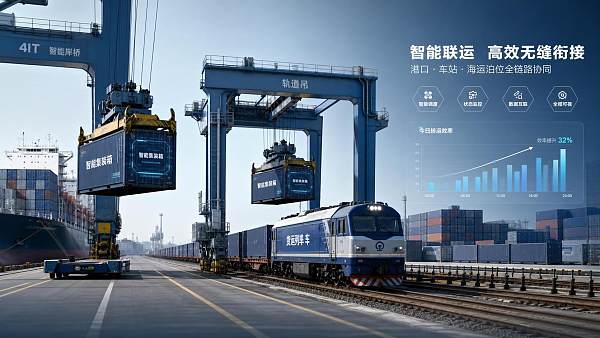
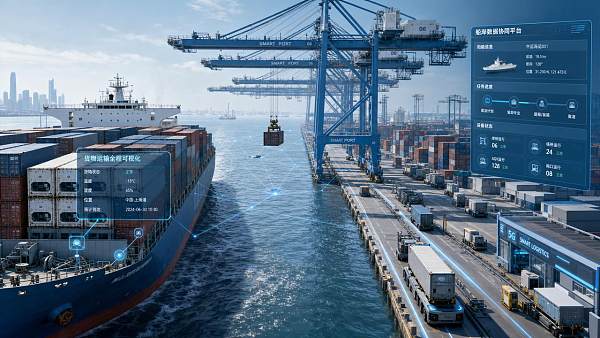
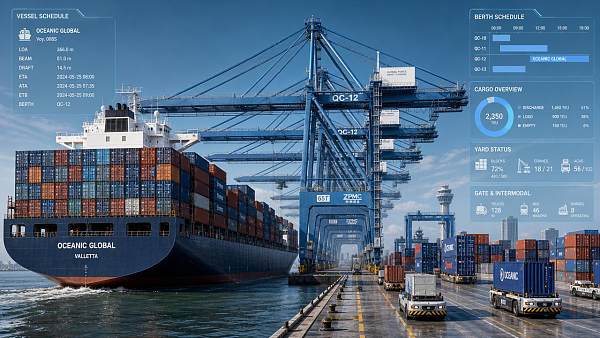
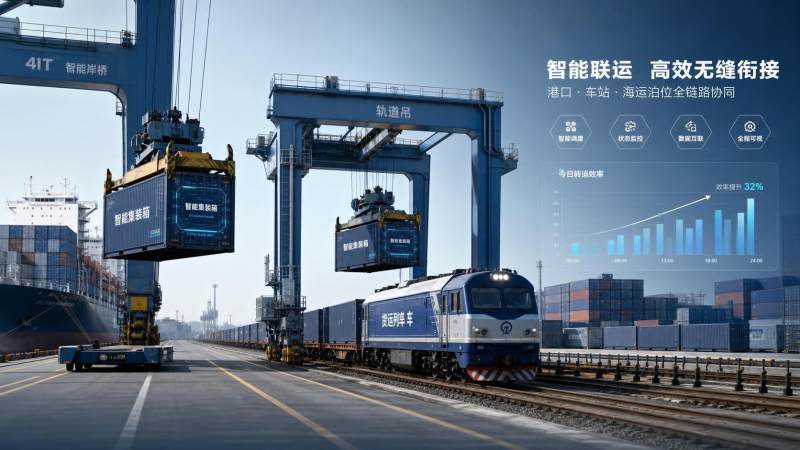
In practical terms, cargo transfer efficiency is determined by how well the land side and sea side can align timing, capacity, documentation, and equipment availability. A terminal may have enough cranes, rail slots, and berth windows on paper, yet still lose time because the gate system, yard plan, locomotive schedule, vessel ETA, and customs release status are not synchronized. Digital land-sea interconnection targets that gap. It turns separate operational systems into a shared decision environment, so that handoffs are planned against live conditions rather than static estimates.
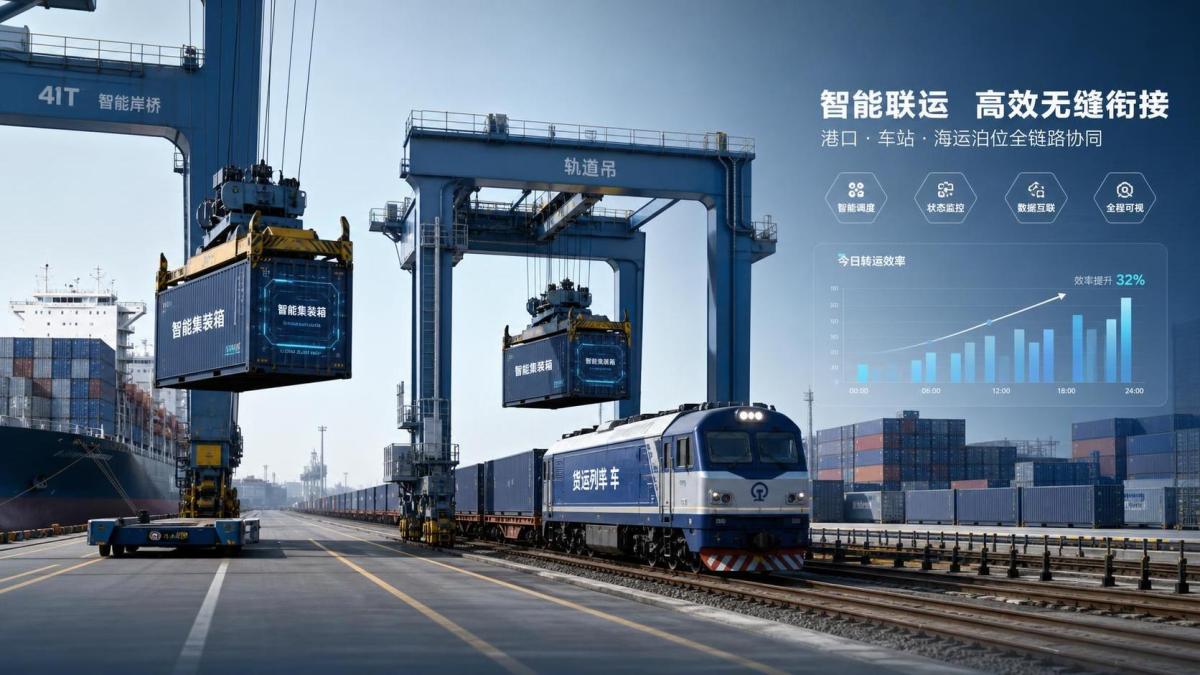
Where transfer delays actually come from
Most cargo transfer loss does not come from one dramatic failure. It comes from small mismatches that compound: a delayed vessel arrival that was not reflected in yard planning, a rail departure that was fixed before the berth plan changed, a container release message that arrived after the truck appointment was already assigned, or a maintenance restriction that reduced available handling equipment without propagating to the whole chain. These are coordination problems, not just equipment problems.
That is why digital land-sea interconnection tends to deliver value first in multi-node operations. The more interfaces there are between rail terminal, port yard, customs, shipping line, and inland distribution, the more time is lost to waiting for confirmation. In those environments, even modest improvements in status visibility and schedule coordination can reduce dwell time, lower rehandling, and improve asset utilization. The benefit is usually cumulative rather than dramatic at one point in the chain.
What the digital layer should connect
A serious implementation is more than a dashboard. It needs to connect the operational systems that drive decisions, including signaling and dispatch systems on the land side, terminal operating systems, berth and yard planning tools, vessel coordination feeds, gate control, and cargo documentation status. If the project only links reports after the fact, it improves visibility but not throughput.
For engineering leaders, the key is to treat the integration as an operational control problem. The question is not whether data can be exchanged. The question is whether the exchanged data can trigger better sequencing: which train should be staged next, which yard block should be cleared, which berth should be prioritized, which container should be held, and which move should be postponed because a higher-value transfer is about to open.
Functions that matter most
- Shared ETA and schedule updates across rail, port, and vessel systems
- Dynamic yard and berth coordination based on live congestion
- Exception alerts for delayed arrivals, equipment outages, and documentation holds
- Resource allocation logic for cranes, locomotives, trucks, and storage space
- Traceable handoff records for audit, billing, and dispute reduction
Where the efficiency gain comes from
The gain usually comes from four sources. First, waiting time drops because each party sees the same operational picture earlier. Second, utilization rises because equipment and crews are scheduled against a more reliable plan. Third, rework falls because cargo is less likely to be moved twice due to late changes. Fourth, recovery improves when disruptions occur, because the system can recalculate priorities faster than manual coordination.
That said, not every project will see the same effect. A small terminal with simple flows may gain more from process discipline than from a large digital platform. A high-volume intermodal hub, by contrast, can lose substantial time through small coordination errors, so the return on interconnection is usually stronger. Project managers should judge the opportunity by transfer complexity, not by technology enthusiasm.
One common mistake is to assume that automation automatically improves throughput. It does not, unless the upstream and downstream decision points are also connected. A port crane operating efficiently cannot compensate for a rail departure that was planned without a realistic vessel update. Likewise, a smart vessel routing model cannot fix a terminal that still uses disconnected spreadsheets for cargo release and berth assignment.
How to evaluate whether it fits your project
Before committing to an interconnection program, the project team should test whether the operating model has enough complexity to justify the integration cost. The strongest cases usually include repeated interface failures, multiple stakeholders with separate systems, strong service-level pressure, and measurable penalties for dwell time or missed windows. Weak cases usually involve low cargo frequency, limited handoffs, or an operating structure where the same operator already controls most of the chain.
Risks that are often underestimated
The first risk is data inconsistency. If vessel ETA, rail dispatch, yard inventory, and cargo status are not governed by the same master data rules, the system creates false confidence. People assume the platform is accurate because it looks integrated, but the underlying records may still conflict. That can be worse than having no system at all, because bad coordination becomes faster bad coordination.
The second risk is operational rigidity. Some organizations digitize the workflow but fail to preserve manual override paths. In real cargo operations, weather, labor shortages, equipment breakdowns, and customs holds will interrupt the plan. The system must support exception handling, not just normal-case optimization.
The third risk is integration scope creep. Teams often start with a focused cargo transfer use case and gradually add every adjacent function. The result is delayed delivery and unclear ownership. A better approach is to define one high-value transfer corridor, establish measurable baseline performance, and expand only after the operating logic is proven.
What project leaders should insist on
For implementation, the minimum requirement is not a big platform. It is a disciplined operating model with clear interfaces, standard event definitions, and decision ownership. Project managers should insist on measurable process indicators, including transfer time, truck or rail turnaround, yard dwell, berth-to-gate latency, exception resolution time, and forecast accuracy. Without those metrics, the project will be judged by anecdote.
It also helps to separate visibility from control. Visibility tells the team what is happening. Control changes what happens next. Many programs stop at the first stage and call it transformation. For cargo transfer efficiency, that is not enough. The system has to influence work sequencing, resource release, and exception response.
In procurement and planning discussions, the strongest vendors and integrators are usually the ones that can explain how their solution handles live operational change, cross-organization data sharing, and fallback procedures when interfaces fail. If they cannot show how the system behaves during disruption, they have not addressed the real use case.
What to watch next
The direction of travel is clear: tighter linkage between port, rail, and vessel operations; more predictive scheduling; more machine-assisted exception handling; and stronger demand for traceability across the full handoff chain. For project teams, the practical implication is that cargo transfer efficiency will increasingly depend on orchestration, not just capacity. The organizations that treat digital land-sea interconnection as an operational control layer, rather than a reporting layer, will be better positioned to absorb volatility and keep cargo moving.
That is the real test for any project: whether the interconnection shortens the time between a change in conditions and a correct response. If it does, efficiency follows. If it only makes the interruption visible, the transfer problem remains where it was.
Recommended News
 Sep 19, 2026What vessel connectivity equipment is needed for reliable cargo monitoring?Vessel connectivity equipment for reliable cargo monitoring: explore satellite links, IoT gateways, sensors, edge storage, and cybersecurity for smarter maritime operations.
 Aug 16, 2026How digital land-sea interconnection improves cargo transfer efficiencyDigital land-sea interconnection helps cargo move faster by syncing rail, port, and vessel operations in real time, reducing delays and boosting transfer efficiency.
 Jun 26, 2026Maritime Logistics Systems: How to Cut Delays in Port OperationsMaritime logistics systems help ports cut delays with real-time visibility, smarter berth planning, and faster coordination. Discover practical ways to reduce bottlenecks and improve port operations.
 Jun 24, 2026Perceptive Interconnection in Cargo Monitoring: What Improves Response Speed?Perceptive interconnection helps cargo monitoring respond faster by linking sensor data, context, and action across ship, port, and inland operations. See what truly improves speed.
 Jun 06, 2026Smart Container Ship Logistics: What Improves Cargo Visibility FastMaritime logistics for smart container ships improves cargo visibility fast with better sensors, cleaner event data, and stronger ship-to-shore integration. Discover what drives faster, smarter decisions.
![]() Jun 04, 2026Smart Maritime Logistics: Where Cargo Monitoring Adds ValueSmart maritime logistics turns cargo monitoring into real business value—improving visibility, reducing risk, supporting compliance, and strengthening cost control across global supply chains.
Jun 04, 2026Smart Maritime Logistics: Where Cargo Monitoring Adds ValueSmart maritime logistics turns cargo monitoring into real business value—improving visibility, reducing risk, supporting compliance, and strengthening cost control across global supply chains. May 28, 2026Maritime Logistics for Smart Container Ships: 5 Cargo Monitoring Gaps to Fix EarlyMaritime logistics for smart container ships: discover 5 early cargo monitoring gaps that can trigger claims, compliance failures, and delays—and learn what to fix first.
 May 26, 2026How Maritime Logistics Intelligence Platforms Reduce Cargo Visibility GapsMaritime logistics intelligence platform insights reveal how to close cargo visibility gaps, improve ETA accuracy, reduce delays, and help operators act faster across ocean supply chains.
![]() May 23, 2026Perceptive Interconnection in Cargo MonitoringPerceptive interconnection transforms cargo monitoring with real-time visibility, faster alerts, and smarter control across rail and ocean networks—improving safety, reducing risk, and boosting efficiency.
May 23, 2026Perceptive Interconnection in Cargo MonitoringPerceptive interconnection transforms cargo monitoring with real-time visibility, faster alerts, and smarter control across rail and ocean networks—improving safety, reducing risk, and boosting efficiency. May 20, 2026Smart Container Ships: Maritime Logistics Gaps That Still Delay TurnaroundMaritime logistics for smart container ships still faces berth, data, and terminal gaps that delay turnaround. Discover practical fixes to improve port performance and supply chain resilience.
 May 19, 2026What a Maritime Logistics Intelligence Platform Should Track FirstA maritime logistics intelligence platform should track vessel position, port congestion, ETA accuracy, container flow, and exception alerts first to cut delays and improve operational control.
 May 18, 2026Smart Maritime Technology for Better Cargo VisibilitySmart maritime technology improves cargo visibility with real-time tracking, safer vessel coordination, and faster decisions—helping operators reduce delays and strengthen supply chain control.