



Search News
Industry Portal
Popular Tags
Smart Container Ship Logistics: What Improves Cargo Visibility Fast
Author
Time
Click Count
In fast-moving global trade, maritime logistics for smart container ships now decides how quickly cargo status becomes visible, trustworthy, and useful. The issue is rarely a total lack of data. It is usually delayed updates, fragmented systems, and weak coordination between ship, terminal, and inland transport.
That is why technical evaluation now starts with one practical question: what improves cargo visibility first, without waiting for a full fleet-wide transformation? In most cases, the fastest gains come from better onboard sensing, cleaner event capture, and tighter ship-to-shore data flow.
For GTOT, this topic fits a larger intercontinental logic. Just as railway signal control depends on precise status feedback and safe response timing, maritime logistics for smart container ships depends on accurate event intelligence, route awareness, and operational synchronization across sea and land corridors.
What usually improves cargo visibility fastest
The first wins do not always come from the most complex platform. They come from the points where cargo events are created, delayed, or lost. That is where maritime logistics for smart container ships becomes measurable.
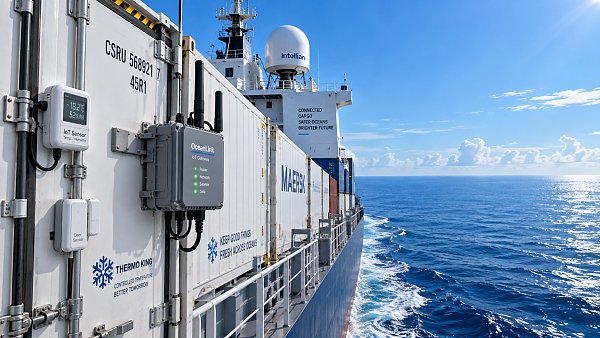
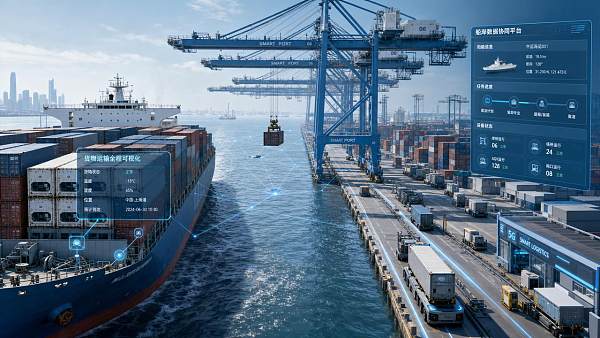
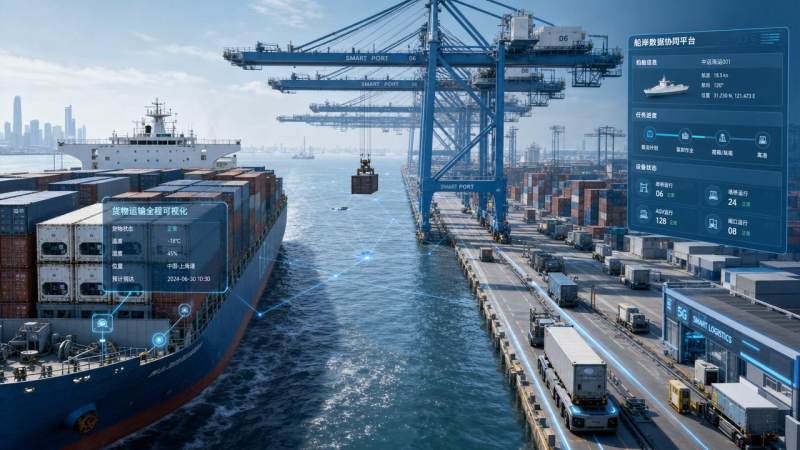
The image below reflects the core data loop many teams assess first: onboard capture, edge processing, vessel transmission, port integration, and exception handling.
[Image 01: Smart container ship cargo visibility workflow from onboard sensors to port systems]
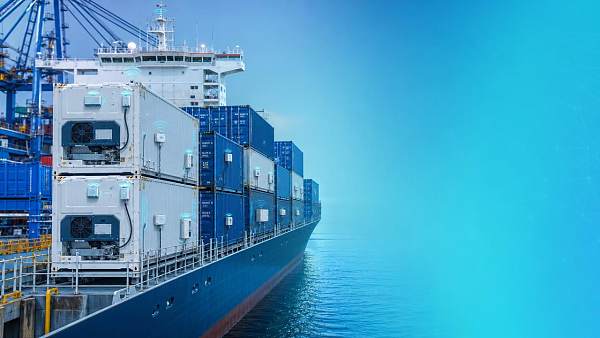
- Deploy container event sensors at hatch, reefer, and gate interfaces to capture load, discharge, power, and seal exceptions in near real time.
- Add edge processing onboard so raw signals become usable milestones before transmission, reducing noise, duplicate alerts, and unnecessary satellite bandwidth costs.
- Standardize event codes across vessel, terminal, and inland systems, so one cargo status means the same thing everywhere in the transport chain.
- Connect ETA prediction with weather, berth congestion, and route deviation models to make cargo visibility operational, not just descriptive.
- Prioritize exception dashboards over static tracking pages, because delayed reefer alarms or customs holds matter more than routine location pings.
- Audit data timestamps at source level, since many visibility failures come from late synchronization rather than sensor accuracy problems.
Where technical evaluation should focus first
When comparing systems, it helps to ignore broad marketing claims and look at specific decision points. Good maritime logistics for smart container ships should shorten the time between an operational change and a trusted cargo update.
1. Onboard data capture quality
If data is weak at origin, every downstream dashboard becomes less credible. This is especially true for reefer units, high-value cargo, and transshipment containers.
- Verify whether sensor inputs cover container position, door status, temperature, shock, and power continuity instead of relying on manual updates alone.
- Check calibration routines and failure alerts, because invisible sensor drift can create false confidence in maritime logistics for smart container ships.
2. Ship-to-shore transmission logic
A vessel may collect strong data and still deliver poor visibility if transmission rules are inefficient. Satellite cost, bandwidth limits, and message priority all matter.
- Use event-priority transmission rules so route deviations, reefer faults, and discharge changes move first, even when bandwidth drops.
- Require offline buffering and resend logic, ensuring cargo milestones are not lost during temporary communication gaps at sea.
3. Port and inland integration depth
Cargo visibility ends up failing at handoff points. Arrival visibility is useful, but handover visibility is what supports action.
- Map berth, crane, customs, yard, rail, and truck events into one timeline so cargo visibility continues beyond the vessel boundary.
- Test API latency and data ownership rules early, because integration delays often block maritime logistics for smart container ships more than hardware gaps do.
A practical view of the most useful capabilities
Not every function creates equal value at the same stage. The table below helps sort “good to have” from “improves visibility now.”
What changes in real operating scenarios
Transshipment-heavy routes
This is where maritime logistics for smart container ships often proves its value fastest. Containers move through more handoffs, so each missing milestone creates larger blind spots.
The key check is whether the system keeps one cargo identity across vessel discharge, yard handling, and next-vessel loading. If that breaks, visibility becomes fragmented even when each system works separately.
Temperature-sensitive cargo
For reefer flows, a location update is not enough. Temperature drift, power interruption, and delayed intervention matter more than map position.
A practical setup links reefer telemetry with alert escalation. That means the right people see the issue before cargo quality is affected, not after a claims dispute starts.
Port congestion and weather disruption
In disruption, visibility quality depends on prediction logic, not on raw tracking volume. Technical value comes from revised ETAs, updated berth assumptions, and cargo reprioritization.
This is also where GTOT’s wider land-sea intelligence view matters. Rail signaling, braking response, and ocean routing all share one principle: delayed situational awareness multiplies operational risk.
What gets overlooked too often
Many digital shipping projects underperform for simple reasons. The most common issue is not technology absence. It is operational mismatch between what the platform shows and what the workflow actually needs.
- Do not measure success by vessel map visibility alone; confirm whether cargo exceptions trigger actual dispatch, terminal, or service responses.
- Avoid mixing manual milestone entry with automated timestamps without audit rules, because confidence drops when event histories conflict.
- Check cybersecurity segmentation between navigation, cargo, and communication domains to prevent visibility tools from introducing operational exposure.
- Review data retention and traceability, especially for claims, compliance, and reefer incident reconstruction after handoff disputes.
- Make sure terminal partners can consume the same event structure; otherwise maritime logistics for smart container ships stays intelligent only onboard.
A sensible way to move forward
A strong next step is to evaluate cargo visibility in layers. Start with source events onboard. Then test transmission reliability. After that, validate terminal and inland milestone continuity.
For most operations, the best early result comes from improving exception visibility rather than chasing complete digital perfection. That approach makes maritime logistics for smart container ships more useful, faster, and easier to scale.
GTOT’s cross-domain perspective is helpful here because smart shipping does not stand alone. It connects with rail timing, equipment reliability, decarbonization pressure, and the wider need for resilient global transport intelligence.
If the current goal is faster cargo visibility, focus first on event accuracy, exception priority, and ship-shore integration depth. Those three points usually reveal which maritime logistics for smart container ships capabilities will deliver operational value first.
Recommended News
 Sep 19, 2026What vessel connectivity equipment is needed for reliable cargo monitoring?Vessel connectivity equipment for reliable cargo monitoring: explore satellite links, IoT gateways, sensors, edge storage, and cybersecurity for smarter maritime operations.
 Aug 16, 2026How digital land-sea interconnection improves cargo transfer efficiencyDigital land-sea interconnection helps cargo move faster by syncing rail, port, and vessel operations in real time, reducing delays and boosting transfer efficiency.
 Jun 26, 2026Maritime Logistics Systems: How to Cut Delays in Port OperationsMaritime logistics systems help ports cut delays with real-time visibility, smarter berth planning, and faster coordination. Discover practical ways to reduce bottlenecks and improve port operations.
 Jun 24, 2026Perceptive Interconnection in Cargo Monitoring: What Improves Response Speed?Perceptive interconnection helps cargo monitoring respond faster by linking sensor data, context, and action across ship, port, and inland operations. See what truly improves speed.
 Jun 06, 2026Smart Container Ship Logistics: What Improves Cargo Visibility FastMaritime logistics for smart container ships improves cargo visibility fast with better sensors, cleaner event data, and stronger ship-to-shore integration. Discover what drives faster, smarter decisions.
![]() Jun 04, 2026Smart Maritime Logistics: Where Cargo Monitoring Adds ValueSmart maritime logistics turns cargo monitoring into real business value—improving visibility, reducing risk, supporting compliance, and strengthening cost control across global supply chains.
Jun 04, 2026Smart Maritime Logistics: Where Cargo Monitoring Adds ValueSmart maritime logistics turns cargo monitoring into real business value—improving visibility, reducing risk, supporting compliance, and strengthening cost control across global supply chains. May 28, 2026Maritime Logistics for Smart Container Ships: 5 Cargo Monitoring Gaps to Fix EarlyMaritime logistics for smart container ships: discover 5 early cargo monitoring gaps that can trigger claims, compliance failures, and delays—and learn what to fix first.
 May 26, 2026How Maritime Logistics Intelligence Platforms Reduce Cargo Visibility GapsMaritime logistics intelligence platform insights reveal how to close cargo visibility gaps, improve ETA accuracy, reduce delays, and help operators act faster across ocean supply chains.
![]() May 23, 2026Perceptive Interconnection in Cargo MonitoringPerceptive interconnection transforms cargo monitoring with real-time visibility, faster alerts, and smarter control across rail and ocean networks—improving safety, reducing risk, and boosting efficiency.
May 23, 2026Perceptive Interconnection in Cargo MonitoringPerceptive interconnection transforms cargo monitoring with real-time visibility, faster alerts, and smarter control across rail and ocean networks—improving safety, reducing risk, and boosting efficiency. May 20, 2026Smart Container Ships: Maritime Logistics Gaps That Still Delay TurnaroundMaritime logistics for smart container ships still faces berth, data, and terminal gaps that delay turnaround. Discover practical fixes to improve port performance and supply chain resilience.
 May 19, 2026What a Maritime Logistics Intelligence Platform Should Track FirstA maritime logistics intelligence platform should track vessel position, port congestion, ETA accuracy, container flow, and exception alerts first to cut delays and improve operational control.
 May 18, 2026Smart Maritime Technology for Better Cargo VisibilitySmart maritime technology improves cargo visibility with real-time tracking, safer vessel coordination, and faster decisions—helping operators reduce delays and strengthen supply chain control.