



Search News
Industry Portal
Popular Tags
Maritime Logistics for Smart Container Ships: 5 Cargo Monitoring Gaps to Fix Early
Author
Time
Click Count
In maritime logistics for smart container ships, cargo visibility can fail long before a shipment is reported at risk. For quality control and safety managers, fixing early monitoring gaps is essential to prevent temperature drift, shock damage, seal breaches, and delayed intervention. This article highlights five critical blind spots that deserve attention before they escalate into costly operational and compliance issues.
For most quality and safety teams, the core search intent behind maritime logistics for smart container ships is practical: identify where cargo monitoring breaks down, understand the operational risk, and decide what should be fixed first.
They are not looking for a general overview of smart shipping. They want early-warning logic, stronger control points, and realistic ways to reduce cargo claims, compliance failures, and response delays across sea transport operations.
The most useful discussion therefore centers on monitoring gaps, escalation paths, data reliability, and intervention timing. Broad narratives about digital transformation matter less unless they clearly support day-to-day cargo protection and audit readiness.
Why early monitoring gaps matter more than late incident reports
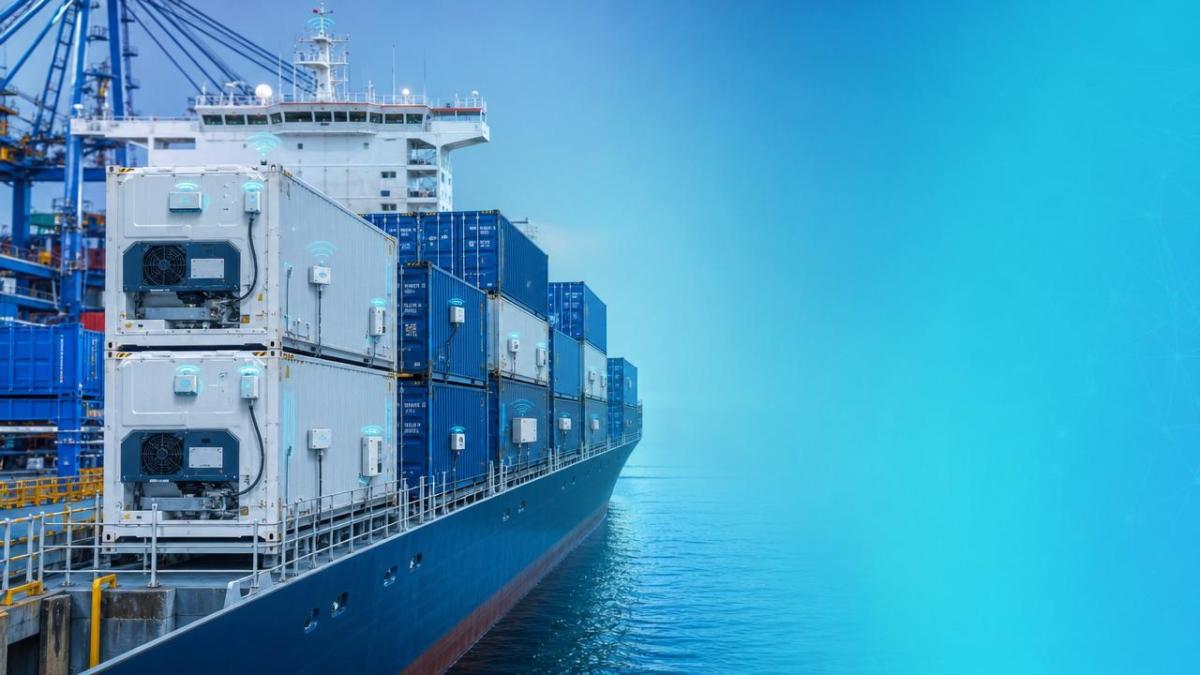
In smart container shipping, reported incidents are often the end of a much longer chain of unnoticed deviation. By the time an alert reaches shore staff, cargo condition, schedule integrity, or safety margins may already be compromised.
That is why maritime logistics for smart container ships should be evaluated through a prevention lens. The real question is not whether a vessel carries sensors, but whether those sensors reveal actionable exceptions early enough to change the outcome.
For quality control personnel, this means asking three direct questions. Was the event detected at the right point? Was the data trusted enough to trigger action? Was someone clearly responsible for acting on it?
For safety managers, the concern is broader. Monitoring gaps can amplify fire risk, dangerous goods mishandling, reefer instability, cargo shift exposure, and unauthorized access, especially when vessel operations rely on distributed digital systems.
Smart container ships promise perceptive interconnection, ship-to-shore coordination, and AI-assisted routing. Yet even advanced vessels can suffer from ordinary failures: weak thresholds, fragmented dashboards, delayed escalation, and poor sensor placement.
Fixing these issues early typically produces better returns than adding more devices later. Better detection logic, cleaner workflows, and clearer accountability usually reduce loss frequency faster than hardware expansion alone.
Gap 1: Cargo condition is monitored, but not at the most failure-prone points
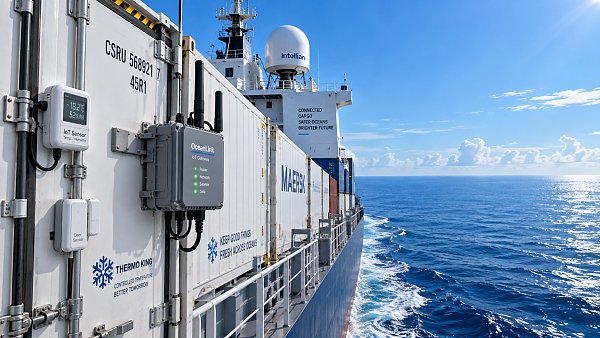
A common weakness is assuming that any temperature, humidity, or vibration sensor creates sufficient cargo visibility. In reality, many deployments monitor average conditions while missing the precise zones where damage starts first.
Inside containers, micro-environments can vary by door position, airflow path, load density, packaging pattern, and exposure to deck heat. A single reading may look acceptable while a hidden cargo pocket drifts outside tolerance.
For reefer cargo, the danger is especially clear. Supply air may remain within range while return air, product core temperature, or localized circulation performance indicates the beginning of quality loss.
For dry cargo, shock and tilt events may be detected at low resolution, making it difficult to distinguish harmless movement from the kind of impact that damages electronics, chemicals, or precision industrial parts.
Quality managers should review whether monitoring points match actual failure modes. If claims usually involve corner damage, seal-side heat exposure, or top-layer crush, the sensor plan should be built around those patterns.
Useful corrective action includes multi-point sensing for critical cargo, lane-specific sensor placement standards, and packaging-informed monitoring design. A cargo map that links product sensitivity to likely stress zones is far more valuable than generic coverage.
This is also where shipper, carrier, and technology teams must align. If cargo risk assumptions are made onshore but sensor deployment is executed differently at loading, blind spots persist despite good digital infrastructure.
Gap 2: Alerts exist, but thresholds are too generic to support intervention
Another major blind spot is threshold design. Many smart shipping systems generate alerts only after a parameter crosses a fixed limit, yet cargo degradation often begins before that formal alarm point is reached.
For example, a pharmaceutical shipment may technically remain within a broad allowable band while repeated short fluctuations still reduce product confidence. The same applies to food, specialty chemicals, batteries, and moisture-sensitive industrial goods.
In maritime logistics for smart container ships, thresholds should reflect product tolerance, transit stage, route conditions, and exposure duration. A static red-line model is too blunt for complex cargo environments.
Safety managers should be especially cautious when dangerous goods, lithium batteries, or pressure-sensitive containers are involved. The right intervention window may depend not only on value drift, but on the probability of escalation into a safety event.
Better practice includes layered thresholds. A watch alert signals deviation trend, an action alert triggers operational checks, and a critical alert initiates formal escalation to onboard and shore teams.
Trend-based logic is often more useful than single-point logic. A slow but continuous temperature rise, repeated door-open anomalies, or vibration accumulation across several hours may deserve action before a hard limit is breached.
Teams should also validate whether operators ignore too many alerts. If dashboards produce noise, staff become less responsive when a meaningful signal appears. Threshold quality is therefore a labor-efficiency issue, not just a technical setting.
Gap 3: Data is visible on a dashboard, but not trusted for operational decisions
Many organizations believe visibility has been achieved once cargo data appears in a platform. But if onboard crews, control towers, or quality teams doubt the accuracy, freshness, or context of that data, they hesitate to act.
That hesitation is costly. Delayed trust often means delayed intervention, and delayed intervention is where preventable product loss becomes a reportable claim, regulatory problem, or customer dispute.
Data trust issues usually come from four sources: inconsistent calibration, transmission latency, missing metadata, and poor event context. A number on a screen is not enough if nobody knows how it was generated.
For quality control teams, calibration governance should be treated as part of cargo assurance, not just device maintenance. Sensor drift, battery weakness, placement inconsistency, and damaged units can quietly undermine the entire monitoring chain.
For safety teams, context matters just as much. If a temperature spike follows a planned power transition, maintenance test, or temporary handling event, the interpretation differs from an unexplained rise in a sealed hazardous container.
To improve trust, data streams should include time stamps, location references, sensor health status, and event annotations. Integration with voyage events, hatch operations, reefer power status, and access logs strengthens decision confidence.
It also helps to define what level of data confidence is required for each action type. Some alerts may justify inspection only, while others should justify cargo isolation, route adjustment, or immediate customer notification.
Gap 4: Exception handling is fragmented between ship, shore, and partners
Even when a monitoring system detects a real problem, response can fail because roles are unclear. This is one of the most damaging gaps in smart maritime operations.
Onboard teams may assume the shore office is reviewing alerts. Shore teams may assume the terminal, shipper, or reefer service partner has already taken over. Meanwhile, the cargo condition continues to deteriorate.
Quality and safety managers should map exception ownership across the full chain: who receives the first alert, who validates it, who decides the response, and who closes the case with evidence.
Without that map, smart container ship technology creates visibility but not control. A well-designed process should specify response windows, backup contacts, escalation tiers, and documentation standards for every critical cargo category.
This is particularly important for mixed fleets and international routes where operating models vary by port, region, charter arrangement, or communications standard. A digital alert is only useful if it activates a stable workflow across all parties.
One effective method is to create cargo exception playbooks. Each playbook defines the trigger, probable causes, verification steps, immediate containment actions, and reporting path for events such as reefer drift, seal breach, or shock exceedance.
These playbooks also strengthen audit and claims defense. When the record shows prompt detection, defined decision logic, and documented response, organizations are in a stronger position during customer review or compliance investigation.
Gap 5: Monitoring focuses on condition, but misses security and tamper signals
Many cargo programs still treat condition monitoring and security monitoring as separate disciplines. For smart container ships, that separation is increasingly risky.
A shipment can remain within temperature limits while still being compromised through unauthorized opening, seal substitution, route deviation, power interruption, or suspicious dwell behavior. These events may have quality, safety, and legal consequences at once.
For high-value cargo, dangerous goods, or regulated commodities, tamper visibility should be part of core maritime logistics for smart container ships. It is not an optional layer added only after theft incidents occur.
Quality managers should pay attention to anomalies such as unexplained access timing, repeated short door events, or changes in power patterns that coincide with handling points. Safety managers should examine whether those anomalies could mask more serious hazards.
Integrated monitoring is the stronger model. Seal status, access control, power continuity, geofencing, shock, and cargo condition should be reviewed together rather than in separate systems with separate owners.
This convergence matters because incidents rarely stay in one category. A tamper event can create moisture ingress, refrigeration loss, contamination exposure, or dangerous goods non-compliance, depending on the cargo involved.
If your current platform cannot correlate these signals, your team may detect events individually but still miss the operational story. That is exactly the kind of blind spot smart shipping programs should eliminate early.
How quality and safety managers should prioritize fixes
Not every gap should be addressed at the same pace. The best prioritization method combines cargo criticality, route exposure, incident history, and intervention feasibility.
Start with cargoes where minor deviation creates major downstream loss. Pharmaceuticals, cold-chain foods, batteries, chemicals, electronics, and precision components usually justify the earliest process upgrades.
Next, look at routes with longer dwell times, harsh climate exposure, port congestion, or transshipment complexity. Monitoring gaps become more expensive when the operating environment reduces recovery options.
Then assess which fixes improve action speed rather than just data volume. In many cases, escalation design, threshold tuning, and response ownership provide faster gains than adding another dashboard layer.
A practical first-stage checklist includes five questions. Are sensors placed at known risk points? Are thresholds cargo-specific? Is the data trusted? Is exception ownership clear? Are security and condition signals connected?
If the answer is no to two or more of these questions, the system is likely generating a false sense of control. That is the real risk in modern maritime logistics: visibility that looks advanced but fails under pressure.
What better cargo monitoring maturity looks like
Mature smart container ship monitoring is not defined by the number of connected devices onboard. It is defined by how reliably the system detects deviation early, supports rapid judgment, and enables documented intervention.
In practical terms, maturity means targeted sensing, dynamic alert logic, trusted data, integrated workflows, and combined condition-security visibility. These elements turn digital capability into operational protection.
For organizations operating across high-value or safety-sensitive cargo categories, this maturity also supports stronger customer confidence and more credible tender participation. Buyers increasingly want proof of control, not just proof of technology adoption.
That aligns with the broader direction of advanced ocean-going vessel intelligence. As ship-to-shore coordination grows and AI route optimization improves, cargo monitoring must also become more precise, accountable, and action-oriented.
In other words, the goal is not simply to know more about the cargo. The goal is to know sooner, decide faster, and reduce the chance that a manageable deviation turns into a costly event.
Conclusion
The biggest monitoring failures in smart shipping usually begin long before a shipment is officially classified as at risk. For quality control and safety managers, early blind spots deserve more attention than late-stage incident reporting.
If you want stronger maritime logistics for smart container ships, focus first on five areas: sensor placement, threshold design, data trust, response ownership, and integrated security visibility.
These are the control points that determine whether smart vessel technology actually protects cargo or simply records its deterioration more clearly. Fix them early, and your operation becomes safer, faster, and more defensible.
That is the standard modern cargo assurance should aim for: not passive visibility, but timely, trusted, and coordinated intervention across the full maritime logistics chain.
Recommended News
 Sep 19, 2026What vessel connectivity equipment is needed for reliable cargo monitoring?Vessel connectivity equipment for reliable cargo monitoring: explore satellite links, IoT gateways, sensors, edge storage, and cybersecurity for smarter maritime operations.
 Aug 16, 2026How digital land-sea interconnection improves cargo transfer efficiencyDigital land-sea interconnection helps cargo move faster by syncing rail, port, and vessel operations in real time, reducing delays and boosting transfer efficiency.
 Jun 26, 2026Maritime Logistics Systems: How to Cut Delays in Port OperationsMaritime logistics systems help ports cut delays with real-time visibility, smarter berth planning, and faster coordination. Discover practical ways to reduce bottlenecks and improve port operations.
 Jun 24, 2026Perceptive Interconnection in Cargo Monitoring: What Improves Response Speed?Perceptive interconnection helps cargo monitoring respond faster by linking sensor data, context, and action across ship, port, and inland operations. See what truly improves speed.
 Jun 06, 2026Smart Container Ship Logistics: What Improves Cargo Visibility FastMaritime logistics for smart container ships improves cargo visibility fast with better sensors, cleaner event data, and stronger ship-to-shore integration. Discover what drives faster, smarter decisions.
![]() Jun 04, 2026Smart Maritime Logistics: Where Cargo Monitoring Adds ValueSmart maritime logistics turns cargo monitoring into real business value—improving visibility, reducing risk, supporting compliance, and strengthening cost control across global supply chains.
Jun 04, 2026Smart Maritime Logistics: Where Cargo Monitoring Adds ValueSmart maritime logistics turns cargo monitoring into real business value—improving visibility, reducing risk, supporting compliance, and strengthening cost control across global supply chains. May 28, 2026Maritime Logistics for Smart Container Ships: 5 Cargo Monitoring Gaps to Fix EarlyMaritime logistics for smart container ships: discover 5 early cargo monitoring gaps that can trigger claims, compliance failures, and delays—and learn what to fix first.
 May 26, 2026How Maritime Logistics Intelligence Platforms Reduce Cargo Visibility GapsMaritime logistics intelligence platform insights reveal how to close cargo visibility gaps, improve ETA accuracy, reduce delays, and help operators act faster across ocean supply chains.
![]() May 23, 2026Perceptive Interconnection in Cargo MonitoringPerceptive interconnection transforms cargo monitoring with real-time visibility, faster alerts, and smarter control across rail and ocean networks—improving safety, reducing risk, and boosting efficiency.
May 23, 2026Perceptive Interconnection in Cargo MonitoringPerceptive interconnection transforms cargo monitoring with real-time visibility, faster alerts, and smarter control across rail and ocean networks—improving safety, reducing risk, and boosting efficiency. May 20, 2026Smart Container Ships: Maritime Logistics Gaps That Still Delay TurnaroundMaritime logistics for smart container ships still faces berth, data, and terminal gaps that delay turnaround. Discover practical fixes to improve port performance and supply chain resilience.
 May 19, 2026What a Maritime Logistics Intelligence Platform Should Track FirstA maritime logistics intelligence platform should track vessel position, port congestion, ETA accuracy, container flow, and exception alerts first to cut delays and improve operational control.
 May 18, 2026Smart Maritime Technology for Better Cargo VisibilitySmart maritime technology improves cargo visibility with real-time tracking, safer vessel coordination, and faster decisions—helping operators reduce delays and strengthen supply chain control.