



Search News
Industry Portal
Popular Tags
Perceptive Interconnection in Cargo Monitoring

Author
Time
Click Count
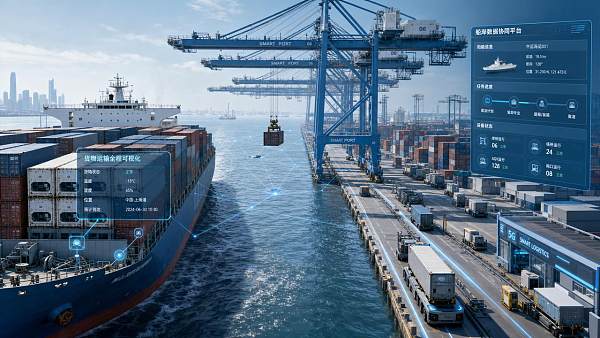
In modern cargo operations, perceptive interconnection is transforming how operators track, manage, and respond to cargo conditions across rail and ocean networks. By linking real-time data, intelligent control systems, and equipment performance insights, it helps reduce risks, improve visibility, and support faster decisions. For users and operators, this connected approach is becoming essential to safer, smarter, and more efficient global transport.
For most operators, the core question is not what perceptive interconnection means in theory. It is how this connected model improves cargo visibility, reduces manual checking, and helps teams act earlier when conditions shift.
Users searching this topic usually want practical clarity. They need to know what data is being connected, how alerts become operational decisions, and whether the system truly improves safety, timing, and cargo protection.
In cargo monitoring, the value of perceptive interconnection comes from linking equipment status, cargo condition, route information, and environmental changes into one usable operational picture rather than separate disconnected signals.
What operators really need from perceptive interconnection in cargo monitoring
Operators are responsible for cargo condition, schedule reliability, and response speed. Their biggest concern is usually not data volume, but whether they can identify a problem early enough to prevent cargo loss, delay, or unsafe handling.
That is why perceptive interconnection matters. It connects sensor inputs, location feeds, control systems, and equipment performance data so operators can see relationships that would otherwise remain hidden until damage or disruption appears.
For example, a temperature deviation inside a container may seem minor by itself. When connected with route delay data, power irregularities, and weather exposure, it can signal a much larger risk requiring intervention.
This is especially important across rail and ocean logistics. Cargo often moves through terminals, yards, onboard systems, and inland corridors. Without interconnected perception, each stage may see only part of the operational reality.
The practical expectation is simple. Operators want one system that helps them detect, interpret, and respond instead of forcing them to compare screens, logs, emails, and manual reports under time pressure.
How perceptive interconnection works in real cargo monitoring environments
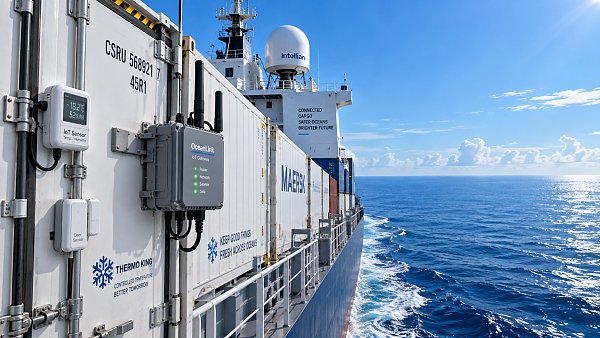
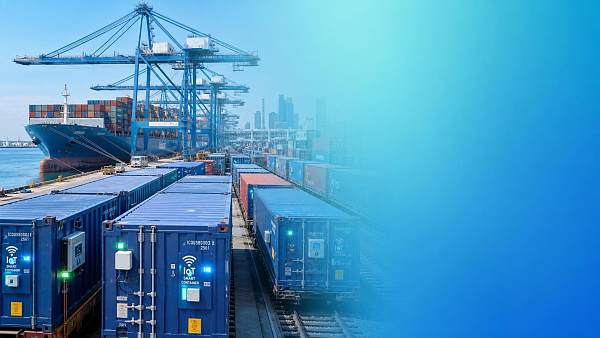
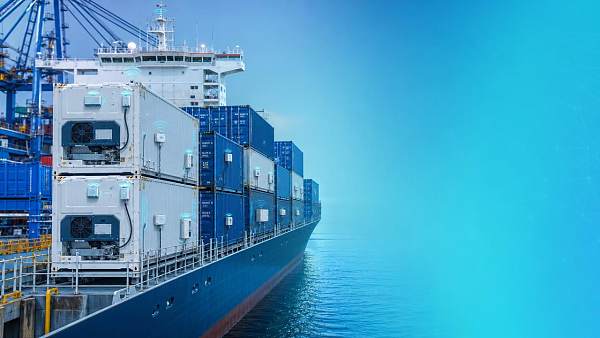
In real operations, perceptive interconnection combines three layers. The first is sensing, where devices collect data such as temperature, humidity, vibration, position, shock, door status, and power conditions.
The second layer is communication. Data must move reliably through rail corridors, ports, onboard ship systems, and remote routes using networks that can handle intermittent coverage and different equipment standards.
The third layer is intelligence. This is where raw signals become operational insight. The system compares current values with thresholds, route context, equipment health patterns, and cargo sensitivity rules.
When these layers function together, operators no longer receive isolated alarms without context. They receive a more complete understanding of what changed, why it matters, and which response is most urgent.
For high-value, temperature-sensitive, or delay-sensitive cargo, this difference is critical. A connected monitoring environment can reveal whether the issue is cargo-related, equipment-related, route-related, or procedural.
Which cargo risks become easier to control with a connected perceptive system
One major advantage of perceptive interconnection is earlier risk detection. Instead of identifying issues after unloading or customer complaint, operators can intervene while the cargo is still in motion.
Temperature excursions are a common example. In conventional monitoring, a late notification may only confirm that cargo quality has already been affected. In a connected model, operators can trace causes and escalate faster.
Shock and vibration risks also become easier to understand. Repeated impacts may indicate poor handling, track condition issues, stowage instability, or route-related stress rather than one isolated event.
Security events benefit as well. Door opening alerts become more useful when connected with geofencing, stop schedules, handover records, and time stamps, helping operators distinguish authorized access from suspicious activity.
Equipment failure is another area where connected perception adds value. If a refrigeration unit, onboard power line, or communication module begins to behave abnormally, the system can flag the trend before full failure occurs.
For operators, these improvements reduce uncertainty. The goal is not just to receive more alerts, but to reduce blind spots and make fewer decisions based on incomplete information.
Why rail and ocean cargo operations need perceptive interconnection more than isolated monitoring tools
Rail and ocean transport both involve long operating cycles, multiple transfer points, and exposure to changing physical conditions. This makes isolated monitoring tools less effective as cargo moves between systems and stakeholders.
In rail environments, operators may need to consider braking patterns, vibration corridors, power continuity, yard dwell time, and schedule density. In maritime settings, route deviation, sea state, machinery condition, and port congestion also matter.
Perceptive interconnection helps because it supports continuity across these environments. It allows the cargo story to remain visible even when the transport mode, communication channel, or operating team changes.
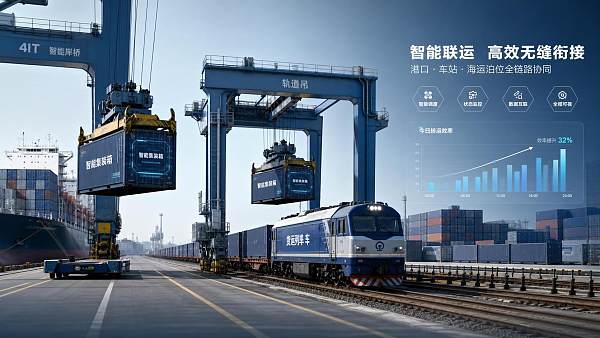
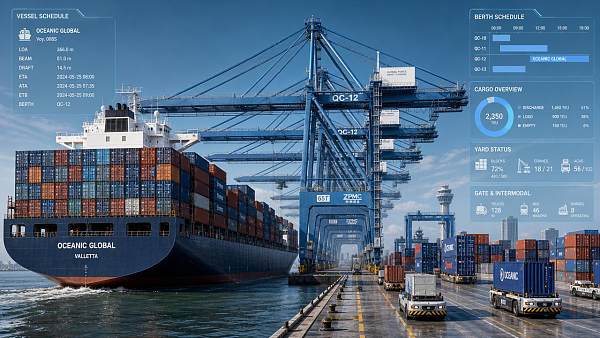
That continuity is especially valuable for intermodal operations. A container leaving a smart terminal, boarding a vessel, and entering a rail corridor should not lose its monitoring intelligence at each transfer point.
For users and operators, the benefit is operational coherence. They can work from one evolving chain of evidence rather than rebuilding cargo status from scratch at every stage.
What makes a perceptive interconnection system useful instead of complicated
Not every connected platform delivers practical value. Operators quickly reject systems that create too many alerts, poor prioritization, or dashboards that look advanced but slow down response decisions.
A useful system should first present only the most relevant exceptions. Operators need to know which cargo units require action now, which can be monitored, and which are operating within acceptable range.
Second, the platform should provide context with every warning. An alarm without route data, cargo class, equipment condition, and timing history often forces manual investigation that wastes critical minutes.
Third, the system should support escalation logic. If a condition persists or worsens, notifications should move from local operator to supervisor, control team, or maintenance support in a defined sequence.
Fourth, the interface should be operationally readable. Users should be able to interpret cargo health, equipment state, and transport progress quickly without navigating too many disconnected menus.
Finally, integration matters. A good perceptive interconnection setup works with terminal systems, vessel platforms, rail control environments, and maintenance records rather than becoming another isolated application.
How operators can use perceptive interconnection in daily workflow
For frontline users, the best way to adopt perceptive interconnection is to tie it directly to existing workflow rather than treating it as a separate digital initiative.
Before departure, operators can verify sensor status, communication readiness, cargo-specific thresholds, and assigned escalation contacts. This ensures the monitoring chain is active before cargo enters a risk environment.
During transit, teams should review exception queues by severity, not just by time. This helps them focus first on conditions that threaten cargo integrity, safety compliance, or time-critical customer commitments.
When an alert appears, the first step should be context review. Operators should check route status, transfer history, equipment condition, and related signals before deciding whether the issue is isolated or systemic.
After intervention, the action should be logged with time, cause, and outcome. This improves not only traceability but also future system learning, threshold tuning, and process improvement.
At the end of each movement cycle, teams can analyze patterns. Repeated alerts on the same route, asset class, or handling point often reveal operational weaknesses that simple alarm monitoring would miss.
How to judge whether perceptive interconnection is delivering real value
Operators should evaluate outcomes, not just technical features. A system has value when it improves cargo protection, reduces response time, and lowers the number of unresolved incidents reaching the customer.
One useful indicator is alert quality. If most alerts lead to meaningful action, the system is likely calibrated well. If teams ignore repeated warnings, the configuration may be creating unnecessary operational noise.
Another indicator is intervention timing. Connected monitoring should help teams act earlier in the event chain, ideally before quality damage, schedule loss, or equipment failure becomes irreversible.
Claim reduction is also important. If perceptive interconnection is working, organizations should gradually see fewer disputes related to temperature deviation, unexplained shock events, unauthorized access, or tracking uncertainty.
Cross-team coordination is another sign of maturity. Better interconnection should reduce confusion between terminal staff, onboard crews, rail operators, maintenance personnel, and cargo control teams.
Most importantly, users should feel greater confidence in decision making. The system should make operations clearer, not more confusing, especially during fast-changing conditions or high-pressure exceptions.
The future role of perceptive interconnection in safer and smarter cargo transport
As cargo networks become more automated, the role of perceptive interconnection will expand from monitoring to prediction and coordinated response. Operators will increasingly rely on systems that anticipate risk instead of only reporting it.
In smart container shipping, this means stronger links between vessel systems, shore platforms, cargo sensors, and route optimization engines. In rail logistics, it means tighter connection with signalling, traction, and braking-related operational context.
The long-term benefit is not only efficiency. It is the ability to protect cargo, improve asset use, support compliance, and maintain service reliability across complex global transport chains.
For users and operators, perceptive interconnection should be understood as a practical operating capability. It is the foundation for seeing more clearly, reacting more quickly, and managing cargo with fewer blind spots.
In cargo monitoring, the strongest systems will not be the ones with the most data points. They will be the ones that turn connected perception into usable action at the moment action matters most.
Perceptive interconnection in cargo monitoring delivers its real value when it helps operators connect condition, context, and response in one workflow. For rail and ocean logistics, that means safer cargo, faster decisions, and stronger operational control.
Recommended News
 Sep 19, 2026What vessel connectivity equipment is needed for reliable cargo monitoring?Vessel connectivity equipment for reliable cargo monitoring: explore satellite links, IoT gateways, sensors, edge storage, and cybersecurity for smarter maritime operations.
 Aug 16, 2026How digital land-sea interconnection improves cargo transfer efficiencyDigital land-sea interconnection helps cargo move faster by syncing rail, port, and vessel operations in real time, reducing delays and boosting transfer efficiency.
 Jun 26, 2026Maritime Logistics Systems: How to Cut Delays in Port OperationsMaritime logistics systems help ports cut delays with real-time visibility, smarter berth planning, and faster coordination. Discover practical ways to reduce bottlenecks and improve port operations.
 Jun 24, 2026Perceptive Interconnection in Cargo Monitoring: What Improves Response Speed?Perceptive interconnection helps cargo monitoring respond faster by linking sensor data, context, and action across ship, port, and inland operations. See what truly improves speed.
 Jun 06, 2026Smart Container Ship Logistics: What Improves Cargo Visibility FastMaritime logistics for smart container ships improves cargo visibility fast with better sensors, cleaner event data, and stronger ship-to-shore integration. Discover what drives faster, smarter decisions.
![]() Jun 04, 2026Smart Maritime Logistics: Where Cargo Monitoring Adds ValueSmart maritime logistics turns cargo monitoring into real business value—improving visibility, reducing risk, supporting compliance, and strengthening cost control across global supply chains.
Jun 04, 2026Smart Maritime Logistics: Where Cargo Monitoring Adds ValueSmart maritime logistics turns cargo monitoring into real business value—improving visibility, reducing risk, supporting compliance, and strengthening cost control across global supply chains. May 28, 2026Maritime Logistics for Smart Container Ships: 5 Cargo Monitoring Gaps to Fix EarlyMaritime logistics for smart container ships: discover 5 early cargo monitoring gaps that can trigger claims, compliance failures, and delays—and learn what to fix first.
 May 26, 2026How Maritime Logistics Intelligence Platforms Reduce Cargo Visibility GapsMaritime logistics intelligence platform insights reveal how to close cargo visibility gaps, improve ETA accuracy, reduce delays, and help operators act faster across ocean supply chains.
![]() May 23, 2026Perceptive Interconnection in Cargo MonitoringPerceptive interconnection transforms cargo monitoring with real-time visibility, faster alerts, and smarter control across rail and ocean networks—improving safety, reducing risk, and boosting efficiency.
May 23, 2026Perceptive Interconnection in Cargo MonitoringPerceptive interconnection transforms cargo monitoring with real-time visibility, faster alerts, and smarter control across rail and ocean networks—improving safety, reducing risk, and boosting efficiency. May 20, 2026Smart Container Ships: Maritime Logistics Gaps That Still Delay TurnaroundMaritime logistics for smart container ships still faces berth, data, and terminal gaps that delay turnaround. Discover practical fixes to improve port performance and supply chain resilience.
 May 19, 2026What a Maritime Logistics Intelligence Platform Should Track FirstA maritime logistics intelligence platform should track vessel position, port congestion, ETA accuracy, container flow, and exception alerts first to cut delays and improve operational control.
 May 18, 2026Smart Maritime Technology for Better Cargo VisibilitySmart maritime technology improves cargo visibility with real-time tracking, safer vessel coordination, and faster decisions—helping operators reduce delays and strengthen supply chain control.