



Search News
Industry Portal
Popular Tags
Rail Transit Braking Performance Checks for Safer Daily Operation
Author
Time
Click Count
Rail Transit Braking Performance Checks for Safer Daily Operation
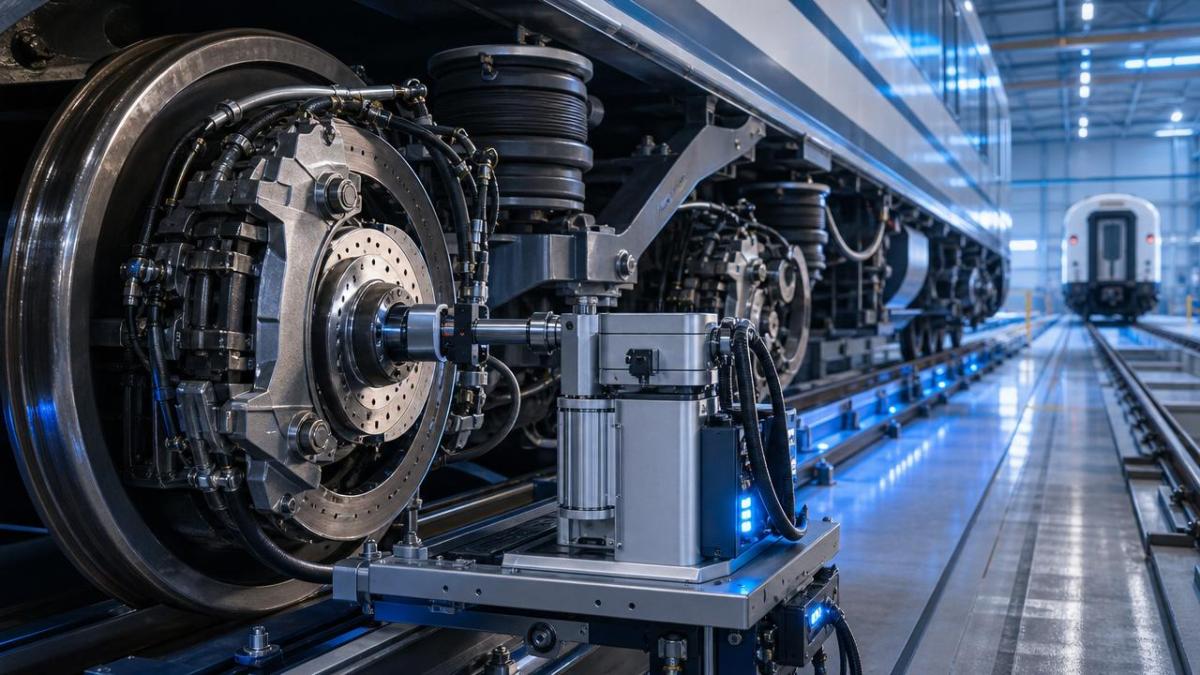
Reliable rail transit braking is essential for keeping daily operations safe, punctual, and predictable.
For drivers, depot technicians, and control-room teams, braking performance checks are frontline safeguards against wheel slide, delayed stopping, brake fade, and disruption.
Effective rail transit braking checks confirm that every train responds correctly under changing load, speed, gradient, and weather conditions.
GTOT observes this field through control logic, braking hardware, digital diagnostics, and safety assurance across modern land transport systems.
What does a rail transit braking performance check actually verify?
A rail transit braking performance check verifies whether a train can decelerate, hold, and stop within defined operational limits.
It is not only a visual inspection. It combines pressure, response time, brake force, control commands, and fault records.
The goal is to confirm that the braking system behaves consistently before service, during operation, and after maintenance intervention.
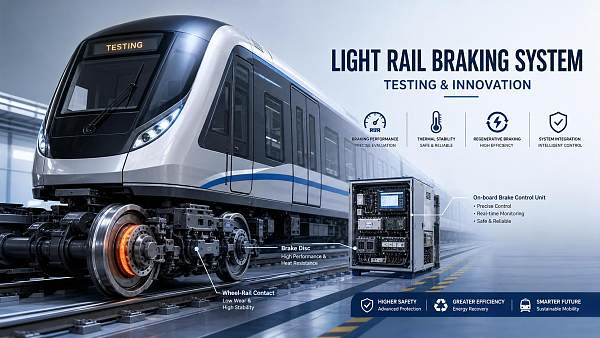
Modern rail transit braking usually integrates pneumatic, hydraulic, electrodynamic, regenerative, and friction braking functions.
Because these subsystems interact, a single weak signal can affect stopping accuracy across the whole trainset.
- Brake cylinder pressure stability during commanded application.
- Emergency brake response time under loaded conditions.
- Wheel slide protection reaction on low-adhesion rail.
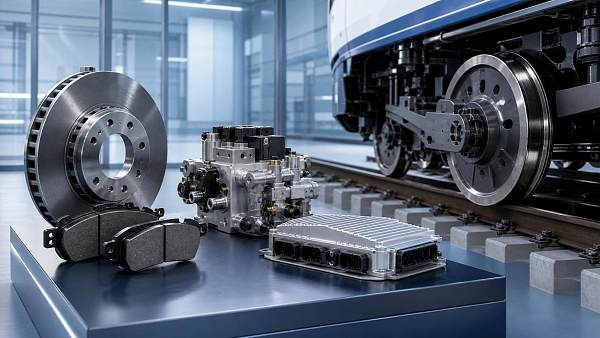
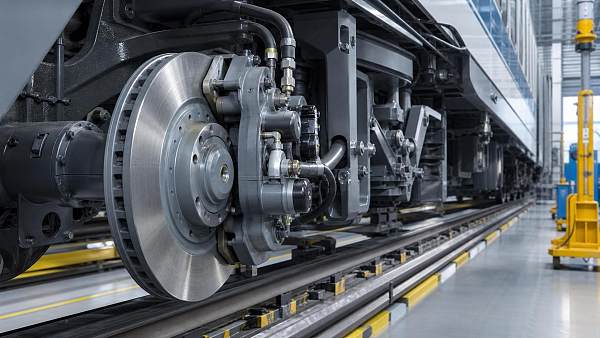
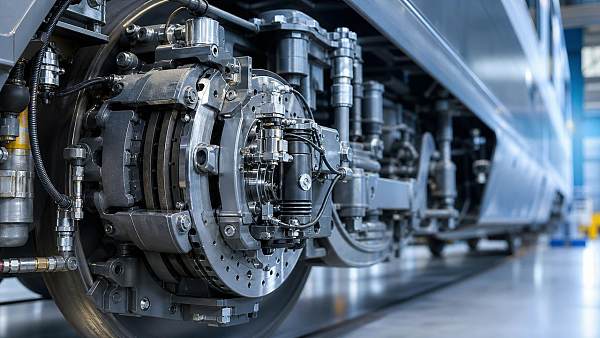
- Brake pad, disc, and caliper wear condition.
- Regenerative braking blending with friction braking.
A complete rail transit braking check should link measured data with route demands, vehicle history, and service timetable risk.
When should rail transit braking checks be performed?
Rail transit braking checks should follow a layered schedule rather than a single fixed routine.
Daily checks confirm immediate service readiness. Periodic checks identify wear trends and hidden degradation.
Event-based checks are needed after faults, abnormal stopping, wheel slide alarms, or harsh weather operation.
In dense metro operation, minor braking delay can quickly affect headway, platform safety, and energy consumption.
In regional rail, higher speeds and longer distances make stopping distance verification especially important.
Common check timing
- Pre-departure functional test before entering passenger service.
- Depot inspection after mileage or operating-hour thresholds.
- Post-maintenance validation after replacing brake components.
- Seasonal checks before rain, snow, leaf-fall, or extreme heat.
- Immediate diagnostics after fault codes or driver reports.
The strongest rail transit braking programs combine scheduled inspection with condition-based monitoring.
This approach reduces unnecessary downtime while still catching safety-critical deterioration early.
Which warning signs suggest braking performance is declining?
Declining rail transit braking performance often appears gradually before it becomes a formal failure.
Early signs may include longer stopping distance, unusual vibration, uneven pad wear, or inconsistent brake blending.
Drivers may notice delayed deceleration after command input, especially when trains are heavily loaded.
Maintenance data may show rising brake temperature, repeated wheel slide events, or pressure deviation between cars.
Control-room teams may see punctuality loss at stations where stopping precision was previously stable.
High-priority warning signs
- Emergency braking distance exceeds accepted tolerance.
- Wheel slide protection activates frequently on normal rail.
- Brake cylinder pressure fluctuates without clear command changes.
- Brake discs show heat cracking, scoring, or abnormal discoloration.
- Friction material wears unevenly across one bogie or trainset.
These symptoms require structured investigation, not isolated component replacement.
A rail transit braking fault may originate from sensors, valves, software, adhesion, or mechanical interfaces.
How can braking checks improve daily operation quality?
Rail transit braking checks do more than reduce accident risk. They support punctuality, comfort, energy efficiency, and asset life.
When deceleration is predictable, automatic train operation can keep tighter headways without unnecessary speed margins.
Stable rail transit braking also improves passenger comfort by reducing sudden jolts near platforms and signals.
Better brake blending allows regenerative braking to recover more energy before friction brakes finish the stop.
This reduces thermal stress on pads and discs, especially in stop-and-go metro service.
From an asset perspective, condition data helps plan replacement before expensive secondary damage appears.
GTOT follows this shift from reactive repair toward predictive rail transit braking assurance.
The direction is clear: braking data must be linked with signalling, traction, maintenance, and operating strategy.
What should a practical rail transit braking inspection include?
A practical inspection should start with safety isolation, documented test conditions, and calibrated measurement tools.
Then it should move from visible components to dynamic function and diagnostic data.
This sequence prevents missed faults and avoids unnecessary disassembly.
Inspection records should include train number, load condition, rail condition, temperature, speed, and test result.
Without these details, rail transit braking data becomes difficult to compare across days or fleets.
What mistakes weaken rail transit braking performance management?
One common mistake is treating brake checks as paperwork instead of risk control.
Another mistake is replacing visible wear parts while ignoring control signals and pressure behavior.
A third mistake is evaluating rail transit braking only in ideal depot conditions.
Real operation includes wet rails, gradients, tight schedules, emergency commands, and variable passenger load.
Risk control reminders
- Do not ignore repeated minor alarms.
- Do not compare braking data without matching conditions.
- Do not delay investigation after abnormal emergency braking.
- Do not assume regenerative braking can mask friction brake weakness.
- Do not reset fault codes without root-cause analysis.
Sound rail transit braking management depends on repeatable tests, trained interpretation, and clear escalation rules.
The strongest results come when depot findings, onboard diagnostics, and operating feedback are reviewed together.
FAQ table: daily rail transit braking questions
Conclusion: build safer braking checks into every operating day
Rail transit braking performance checks are essential to safe, punctual, and efficient transport operation.
They protect stopping distance, passenger comfort, wheel condition, energy recovery, and long-term equipment reliability.
The next practical step is to review current checklists against real operating risks and diagnostic evidence.
GTOT will continue tracking rail transit braking intelligence, control technology, and performance assurance for safer land transport systems.
Recommended News
 Jul 17, 2026How to Evaluate Rail Transit Braking Systems for Light RailRail transit braking systems for light rail: learn how to evaluate response time, thermal stability, safety integration, and lifecycle cost for smarter, safer urban transit decisions.
![]() Jul 07, 2026Rail Transit Braking Systems in Southeast Asia: Key Upgrade RisksRail transit braking systems Southeast Asia face hidden upgrade risks beyond stopping power. Explore compatibility, heat, humidity, integration, and lifecycle factors before costly project decisions.
Jul 07, 2026Rail Transit Braking Systems in Southeast Asia: Key Upgrade RisksRail transit braking systems Southeast Asia face hidden upgrade risks beyond stopping power. Explore compatibility, heat, humidity, integration, and lifecycle factors before costly project decisions. Jul 02, 2026How to Compare a Rail Transit Braking Systems SupplierCompare a rail transit braking systems supplier by safety certification, braking performance, integration, delivery reliability, and lifecycle support to reduce project risk.
 Jun 25, 2026Rail Braking Equipment Failures: Common Causes and Fast FixesRail braking equipment failures can trigger delays and safety risks fast. Discover common causes, practical troubleshooting steps, and quick fixes to restore reliable braking.
 Jun 08, 2026Rail Transit Braking: Key Failure Points and Maintenance PrioritiesRail transit braking failures often start at pads, discs, valves, sensors, and control links. Learn key warning signs and maintenance priorities to improve safety, reliability, and fleet uptime.
 Jun 02, 2026Rail Transit Braking Performance Checks for Safer Daily OperationRail transit braking checks help improve safety, punctuality, and asset reliability. Learn key warning signs, inspection steps, and smarter daily operation practices.
 May 16, 2026Rail Transit Braking Performance Checks Before Fleet UpgradesRail transit braking checks before fleet upgrades reveal safety gaps, compatibility risks, and lifecycle costs—helping operators modernize with confidence, compliance, and fewer delays.