



Search News
Industry Portal
Popular Tags
How to Evaluate Rail Transit Braking Systems for Light Rail
Author
Time
Click Count
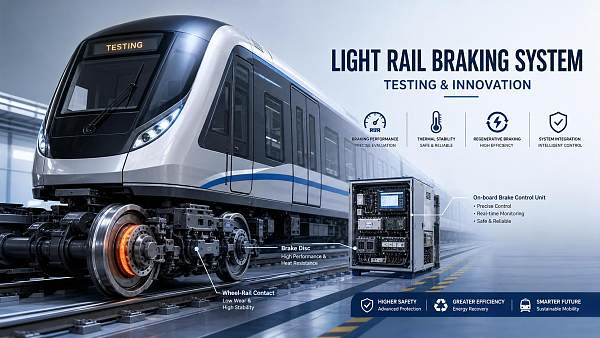
Evaluating rail transit braking systems for light rail starts with a simple fact: stopping distance is only the visible result of a deeper system decision.
Urban networks demand frequent deceleration, short headways, mixed gradients, and reliable recovery after repeated service cycles.
That means any serious review must look at response speed, thermal behavior, redundancy, maintainability, and control integration together.
This matters even more as light rail becomes part of wider transport modernization, where safety, digital diagnostics, and asset efficiency now sit on the same decision table.
Why braking assessment now carries more strategic weight
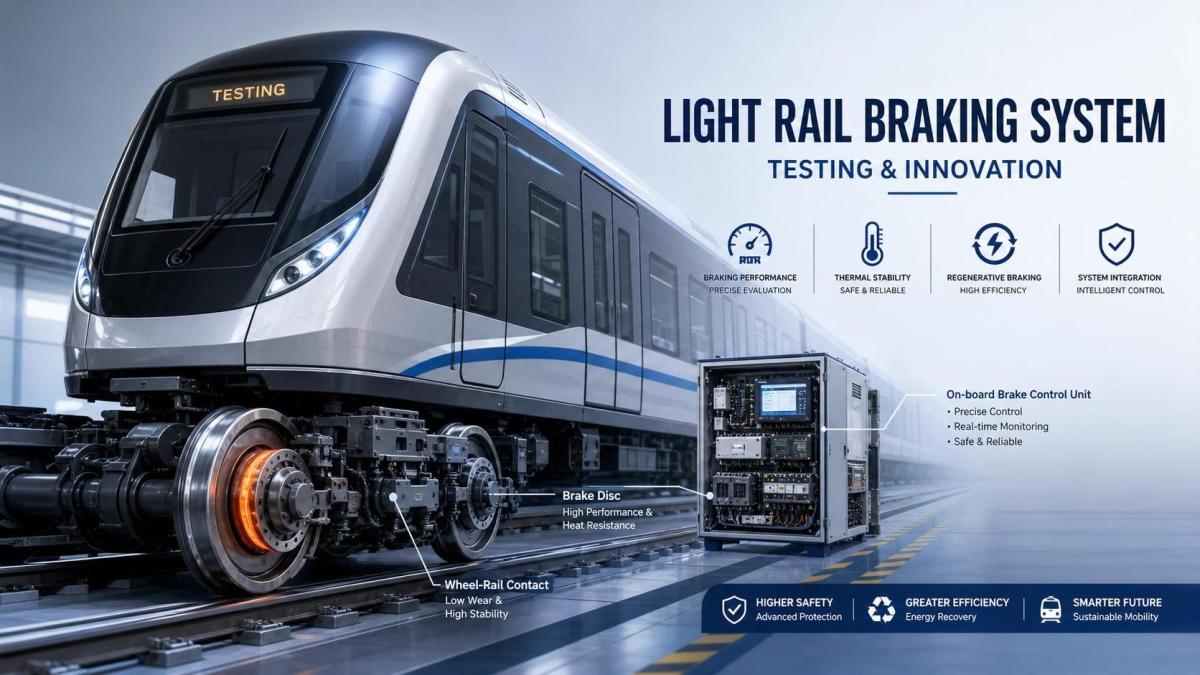
Light rail is no longer judged only by speed or capacity.
Operators increasingly compare energy recovery, reliability, passenger comfort, and compliance performance across the full asset lifecycle.
In that context, rail transit braking systems for light rail become a control issue as much as a mechanical one.
A braking package must interact cleanly with signaling, traction control, onboard diagnostics, and network operating rules.
That cross-system view aligns with the way GTOT tracks transport technology.
Braking performance does not stand alone.
It sits beside signaling logic, power collection stability, and the wider push toward digitalized, safety-critical transport infrastructure.
What should be included in the evaluation scope
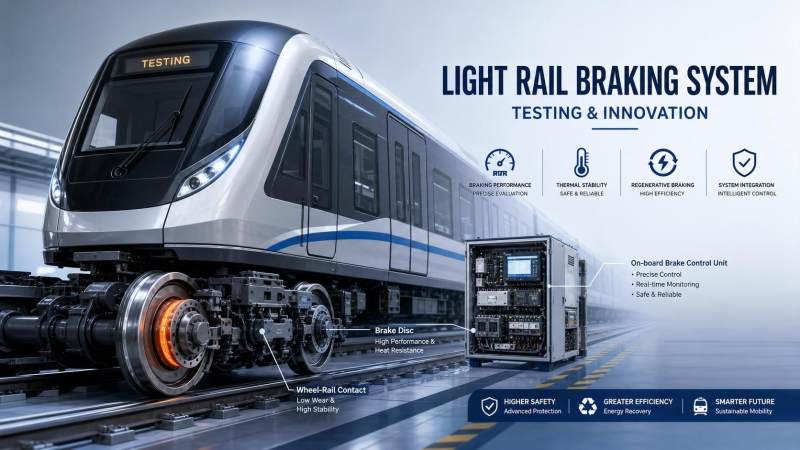
A complete review of rail transit braking systems for light rail should cover the full braking chain, not just a single subsystem.
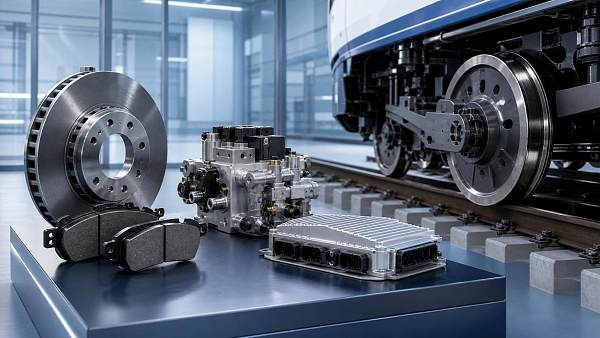
That usually includes friction brakes, regenerative braking, electro-pneumatic control, emergency braking logic, wheel slide protection, and condition monitoring.
The key question is whether these functions behave consistently under real operating stress.
A system can test well in ideal conditions and still show weaknesses during wet rail, peak-load service, or repeated downhill stopping.
Core evaluation objects
- Brake control unit architecture and fail-safe logic
- Friction material performance under heat and wear
- Blending strategy between regenerative and mechanical braking
- Emergency braking response and stopping consistency
- Sensor quality, diagnostics coverage, and fault isolation
- Maintenance intervals, spare parts exposure, and service tooling
This broader scope helps avoid a common mistake: approving a system because one performance number looks strong.
The performance criteria that actually separate strong systems
When comparing rail transit braking systems for light rail, several metrics deserve closer attention than brochure claims.
Response time and brake build-up
Fast response is critical in dense urban service.
Assess both command latency and the time needed to develop usable braking force across the trainset.
Uneven build-up can affect stopping precision and ride stability.
Thermal stability and fade resistance
Repeated stops generate heat quickly, especially on routes with close station spacing or gradients.
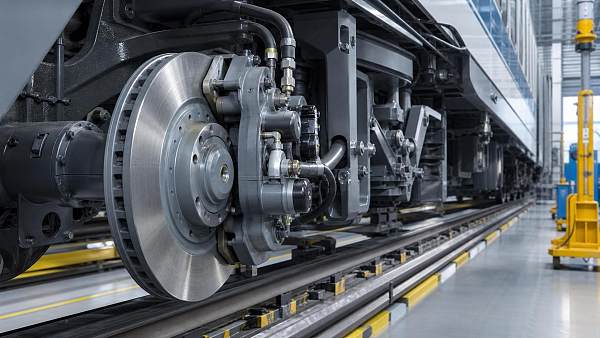
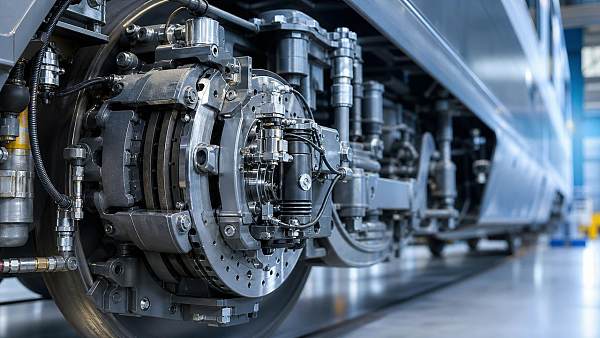
Composite pad behavior, disc heat dissipation, and cooling recovery need real validation.
Thermal fade should be assessed after consecutive duty cycles, not isolated single-stop tests.
Adhesion control and wheel protection
Low adhesion events can turn acceptable braking into operational risk.
Wheel slide protection must react quickly without causing unstable deceleration or flat spots.
This becomes especially important on wet leaves, street-running alignments, and contaminated rail surfaces.
Consistency under variable load
Passenger load changes vehicle mass and axle behavior.
A capable system maintains predictable deceleration whether the vehicle is near empty or heavily loaded.
Safety standards and integration cannot be checked separately
Compliance review should go beyond document collection.
For rail transit braking systems for light rail, the real issue is whether functional safety principles hold during actual operation and fault scenarios.
Relevant benchmarks may include EN, IEC, local metro authority rules, and project-specific validation protocols.
Where signaling reaches SIL4 expectations, braking interaction with train control commands also deserves careful review.
That is where a system-level intelligence perspective becomes useful.
GTOT often frames transport technology through connected operating logic, not isolated equipment descriptions.
For braking, that means asking how onboard control, fault reporting, and command authority work together when the network is under pressure.
Questions worth asking during compliance review
- Are failure modes clearly mapped to safe outcomes?
- Is degraded braking performance quantified, not vaguely described?
- Do validation tests reflect route gradients, dwell patterns, and weather exposure?
- Can diagnostics distinguish sensor drift from actuator faults?
- Is software update control documented for safety-relevant functions?
Operational context changes the right answer
Not all rail transit braking systems for light rail should be judged by the same weighting model.
Street-running tramways, segregated light rail corridors, airport connectors, and high-frequency urban loops create different stress profiles.
A system optimized for regenerative efficiency may not be the strongest option for extreme stop density or contaminated track conditions.
Likewise, a robust friction-heavy solution may increase wear cost where energy recovery could be captured effectively.
Typical operating scenarios
- Dense city routes with frequent stops and strict dwell control
- Mixed-gradient lines where thermal loading accumulates quickly
- Driverless or highly automated services needing tighter control integration
- Coastal or humid environments where corrosion and contamination affect reliability
This is one reason sector intelligence matters.
A braking system should be read against route conditions, maintenance capability, and investment priorities, not treated as a universal package.
Looking beyond acquisition price
A low upfront quote can distort the evaluation of rail transit braking systems for light rail.
Brake pad life, disc replacement cycles, software support, diagnostic depth, and workshop hours often shape the true cost more than procurement price alone.
Availability is equally important.
A system that meets performance targets but causes frequent downtime can undermine timetable stability and labor productivity.
In practical reviews, it helps to compare lifecycle assumptions line by line.
Wear items, mean time between failures, fault reset procedures, and remote troubleshooting capacity should all be visible.
A practical way to structure the assessment
A useful evaluation method combines technical evidence with route-specific weighting.
That keeps the review disciplined without turning it into a checklist exercise.
A workable sequence
- Define service profile, gradient, climate, headway, and automation level
- Set mandatory safety and compliance thresholds before price comparison
- Review test evidence for repeatability, degraded modes, and worst-case stopping
- Check maintenance assumptions against actual depot capability
- Score lifecycle impact, not just nominal technical performance
- Revisit integration with signaling, traction, and digital diagnostics
The strongest decisions usually come from comparing systems under identical operating assumptions.
That reduces the chance of selecting a technically impressive system that does not fit the route it will actually serve.
Where to focus next
Anyone reviewing rail transit braking systems for light rail should leave the first screening stage with a sharper framework, not just a shorter vendor list.
The next step is to build a route-based comparison matrix covering response, thermal endurance, fail-safe behavior, lifecycle exposure, and integration readiness.
From there, field data, validation records, and maintenance realities become easier to interpret.
In a transport environment shaped by digital control and stricter safety expectations, careful braking assessment is no longer a narrow component check.
It is a direct measure of whether a light rail system can sustain safe, efficient, and credible urban service over time.
Recommended News
 Jul 17, 2026How to Evaluate Rail Transit Braking Systems for Light RailRail transit braking systems for light rail: learn how to evaluate response time, thermal stability, safety integration, and lifecycle cost for smarter, safer urban transit decisions.
![]() Jul 07, 2026Rail Transit Braking Systems in Southeast Asia: Key Upgrade RisksRail transit braking systems Southeast Asia face hidden upgrade risks beyond stopping power. Explore compatibility, heat, humidity, integration, and lifecycle factors before costly project decisions.
Jul 07, 2026Rail Transit Braking Systems in Southeast Asia: Key Upgrade RisksRail transit braking systems Southeast Asia face hidden upgrade risks beyond stopping power. Explore compatibility, heat, humidity, integration, and lifecycle factors before costly project decisions. Jul 02, 2026How to Compare a Rail Transit Braking Systems SupplierCompare a rail transit braking systems supplier by safety certification, braking performance, integration, delivery reliability, and lifecycle support to reduce project risk.
 Jun 25, 2026Rail Braking Equipment Failures: Common Causes and Fast FixesRail braking equipment failures can trigger delays and safety risks fast. Discover common causes, practical troubleshooting steps, and quick fixes to restore reliable braking.
 Jun 08, 2026Rail Transit Braking: Key Failure Points and Maintenance PrioritiesRail transit braking failures often start at pads, discs, valves, sensors, and control links. Learn key warning signs and maintenance priorities to improve safety, reliability, and fleet uptime.
 Jun 02, 2026Rail Transit Braking Performance Checks for Safer Daily OperationRail transit braking checks help improve safety, punctuality, and asset reliability. Learn key warning signs, inspection steps, and smarter daily operation practices.
 May 16, 2026Rail Transit Braking Performance Checks Before Fleet UpgradesRail transit braking checks before fleet upgrades reveal safety gaps, compatibility risks, and lifecycle costs—helping operators modernize with confidence, compliance, and fewer delays.