



Search News
Industry Portal
Popular Tags
Thermal Fade Performance: When Brake Stability Starts to Drop
Author
Time
Click Count
Thermal Fade Performance: When Brake Stability Starts to Drop
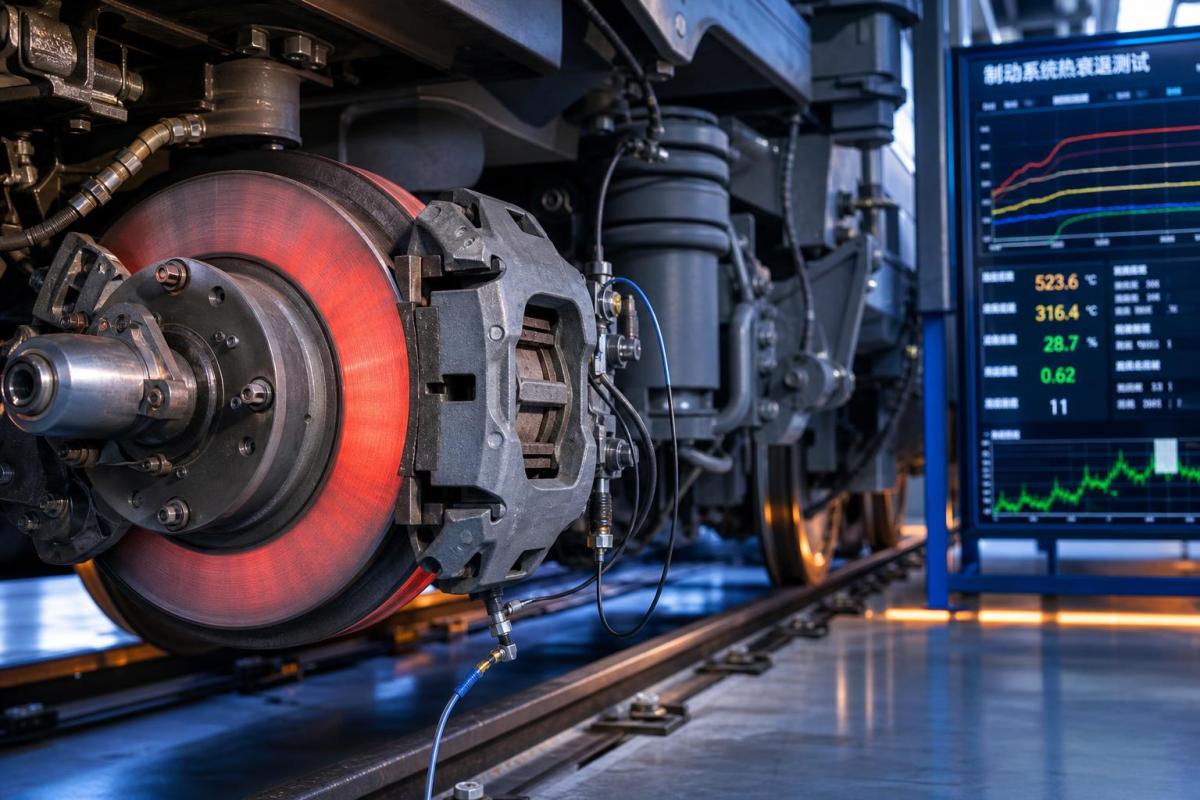
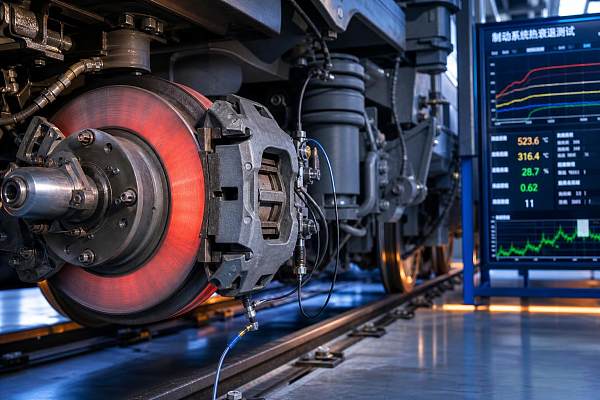
In braking-critical rail applications, thermal fade performance often reveals the first loss of stability under repeated heavy stops.
As temperature climbs, friction stops behaving like a fixed value.
That shift affects stopping distance, wheel condition, controller response, and service safety.
For GTOT, this topic sits at the center of rail transit braking system evaluation.
The reason is simple.
A brake system may look compliant in a single test, yet still lose control margin during repeated thermal loading.
This is exactly where thermal fade performance becomes a practical decision metric rather than a lab-only number.
In real fleets, fade is rarely sudden at first.
It usually starts as small inconsistency.
Then it grows into unstable deceleration, longer stopping windows, and less predictable wheel-rail behavior.
Understanding where that turning point appears is essential for technical comparison and risk control.
What thermal fade performance really measures
Thermal fade performance describes how well a braking interface maintains friction as heat builds during use.
That interface may include pad, disc, wheel tread, lining binder, surface film, and cooling path.
A strong result does not mean high friction alone.
It means stable friction across rising temperature, repeated cycles, and different speed bands.
This matters because control software assumes a braking response envelope.
When thermal fade performance drops, the actual response can move outside that envelope.
At that point, brake blending, wheel slide protection, and emergency stopping logic all face a tougher job.
More importantly, thermal fade performance is not only a material issue.
It is a system issue.
Ventilation, axle load, train mass, duty cycle, regenerative brake share, and maintenance condition all shape the result.
When brake stability starts to drop
Brake stability usually drops before visible damage appears.
The earlier signs are more subtle, but easier to manage if they are tracked well.
One clear signal is deceleration drift during repeated stops under similar conditions.
Another is a growing gap between commanded braking effort and measured response.
A third sign appears in recovery behavior.
If friction does not recover quickly after a cooling interval, thermal reserve is already limited.
In practical evaluation, brake stability starts to drop when these patterns become repeatable:
- Average friction declines as disc or tread temperature rises.
- Friction scatter widens between consecutive braking events.
- Hot-stop stopping distance grows faster than predicted.
- Wheel slide control intervenes more often under unchanged adhesion.
- Surface glazing, transfer film instability, or uneven wear becomes visible.
From a technical standpoint, these changes show that thermal fade performance is no longer robust enough for the duty cycle.
That is the moment where stability margin starts shrinking, even if formal failure has not occurred.
Why heat changes friction behavior
The root cause is heat concentration at the contact interface.
During high-energy braking, thermal input can rise faster than the system can dissipate it.
Once that happens, several friction-changing mechanisms appear at the same time.
Material softening and binder breakdown
Composite friction materials can lose structure as resin phases approach critical temperatures.
This reduces shear stability at the contact layer.
The immediate result is lower and less stable friction.
Surface film instability
Many brakes rely on a controlled transfer layer between contacting surfaces.
When temperature swings become too large, that layer turns patchy or breaks apart.
Then friction starts oscillating instead of staying smooth.
Local hot spots and uneven pressure
A contact surface is never perfectly uniform.
Minor geometry variation can create hot spots, especially during repeated high-speed stops.
Those zones accelerate wear and distort thermal fade performance further.
Cooling limitation at system level
Brake hardware may be technically sound, yet airflow, enclosure design, or route profile can trap heat.
That is why thermal fade performance must be judged in the real operating envelope, not in isolation.
How to evaluate thermal fade performance in a useful way
A useful assessment goes beyond one friction coefficient number.
It should show how the braking system behaves across heat accumulation, cooling intervals, and control interaction.
The most practical review framework includes five checkpoints:
- Measure friction stability across temperature bands, not only at room conditions.
- Compare first-stop and nth-stop deceleration under equal load and speed.
- Track recovery after cooling to judge retained thermal reserve.
- Review wear pattern, glazing tendency, and surface integrity after hot cycling.
- Verify controller compensation limits when thermal fade performance starts changing.
Standards and acceptance methods vary by platform, operator, and safety case.
Still, the decision logic is consistent.
The preferred design is the one with predictable thermal fade performance under the exact mission profile.
Predictability matters more than headline friction values that collapse under sustained energy input.
Decision factors for rail brake material and system selection
In actual procurement, thermal fade performance should be linked to route reality.
A metro line with frequent station stops faces a different heat pattern than a high-speed corridor.
The same goes for mixed-traffic fleets, mountain gradients, and emergency brake dependence.
A focused selection review usually compares the factors below:
This also explains why GTOT tracks composite brake pad trends and control integration together.
Thermal fade performance only becomes valuable intelligence when linked to system-level decisions.
Common mistakes in thermal fade performance review
Several review mistakes still appear in otherwise advanced projects.
- Treating peak friction as proof of brake safety.
- Ignoring recovery behavior after repeated hot stops.
- Reviewing material data without route-specific heat loading.
- Assuming control software can fully compensate for poor thermal fade performance.
- Using maintenance limits that react after stability has already dropped.
These mistakes often come from fragmented evaluation.
The material team reviews pads.
The controls team reviews algorithms.
The operator reviews stopping targets.
But thermal fade performance cuts across all three, so the assessment must do the same.
A practical way to act on the findings
The most useful next step is to define a fade threshold before procurement or retrofit approval.
That threshold should combine hot-stop deceleration loss, friction scatter, and recovery time.
Then match it to route duty, emergency scenarios, and maintenance capability.
If thermal fade performance approaches that threshold too early, the design is not truly stable.
At that point, the answer may involve material reformulation, better cooling, revised brake blending, or tighter condition monitoring.
What matters is catching the decline before it turns into operational unpredictability.
In other words, thermal fade performance should be read as an early-warning indicator.
When brake stability starts to drop, the data usually speaks first.
The strongest decisions come from listening early, comparing system behavior honestly, and selecting braking solutions that stay stable when heat becomes unavoidable.
Recommended News
 Jun 18, 2026Thermal Fade Performance: When Brake Stability Starts to DropThermal fade performance reveals when brake stability begins to decline under repeated heat loads. Learn the warning signs, evaluation points, and smarter rail braking decisions.
 Jun 05, 2026How Composite Brake Pads Affect Heat Fade and WearComposite brake pads affect more than stopping power—learn how they influence heat fade, wear stability, lifecycle cost, and safer braking performance in demanding rail and heavy transport.
 Jun 05, 2026Composite Brake Pads: Cost vs Service Life in Rail FleetsComposite brake pads in rail fleets are not just about price. Learn how service life, friction stability, wheel wear, and route conditions shape the best-value choice.
 Jun 01, 2026Composite Brake Pads: Key Wear and Noise ChecksComposite brake pads require precise wear and noise checks. Learn how QC and safety teams spot risks early, reduce downtime, and improve rail braking reliability.
 May 29, 2026Composite Brake Pads: Wear, Noise, and SafetyComposite brake pads affect rail safety, wear control, and noise performance. Learn key inspection points and scenario-based maintenance tips.
 May 22, 2026Composite Brake Pads: Key Checks Before SelectionComposite brake pads selection starts with friction stability, fade resistance, compliance, and lifecycle cost. Discover the key checks to choose safer, longer-lasting rail braking solutions.
 May 16, 2026Composite Brake Pads: Wear, Noise, and Lifecycle Cost ComparedComposite brake pads compared for wear, noise, thermal stability, and lifecycle cost across rail applications. See how to reduce downtime, improve reliability, and choose the right fit.