



Search News
Industry Portal
Popular Tags
Composite Brake Pads: Wear, Noise, and Lifecycle Cost Compared

Author
Time
Click Count
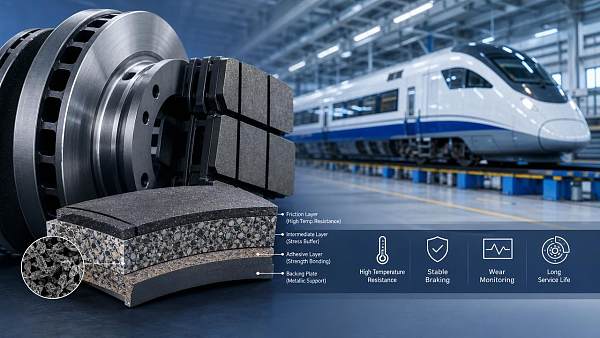
For procurement teams balancing safety, service life, and total cost, composite brake pads deserve a closer look. Beyond basic stopping performance, buyers need clear insight into wear rates, noise behavior, maintenance intervals, and long-term operating economics. This comparison outlines how composite brake pads perform across real-world rail applications, helping decision-makers reduce lifecycle cost while protecting reliability and compliance.
Why application context changes the value of composite brake pads

Composite brake pads are not judged by friction alone. Their real value appears when route profile, speed pattern, axle load, climate, and maintenance windows are assessed together.
In rail transit braking systems, the same pad can perform very differently on metro cars, regional multiple units, and heavy intercity fleets. Wear, noise, dust, and thermal stability shift with duty cycle.
That is why lifecycle cost analysis matters more than unit price. A lower-cost pad may increase wheel wear, inspection labor, or replacement frequency, eroding any short-term saving.
For GTOT readers following braking technologies, composite brake pads sit at the intersection of safety engineering, asset efficiency, and sustainable maintenance planning.
Scenario 1: Urban stop-and-go service where noise and dust matter most
Metro and light rail systems apply brakes frequently. Low-to-medium speed cycles create constant contact events, making noise comfort and pad consistency more visible than peak energy absorption.
In this scenario, composite brake pads often outperform conventional metallic options in acoustic behavior. They can reduce squeal risk when material pairing and caliper setup are optimized correctly.
Wear stability is another key point. Frequent braking rewards pads with predictable thickness loss, because stable wear supports planned maintenance instead of reactive depot interventions.
A useful judgment point is contamination sensitivity. If urban routes face water, fine dust, or seasonal leaf film, composite brake pads must retain friction consistency without rising noise.
Core checks for urban systems
- Squeal behavior during low-speed braking
- Wear rate per braking cycle
- Dust generation near passenger platforms
- Recovery after wet or contaminated rail conditions
Scenario 2: High-speed and intercity service where thermal fade is decisive
High-speed service changes the evaluation logic. Braking events may be less frequent, but each event carries far greater thermal energy and stricter stopping accuracy requirements.
Here, composite brake pads must show thermal fade resistance, friction stability, and limited crack formation after repeated high-energy stops. Surface integrity becomes as important as nominal friction coefficient.
Noise is still relevant, but secondary to heat management and operational repeatability. If pad material degrades under elevated temperature, replacement intervals can shorten sharply.
A strong candidate for intercity fleets should also limit rotor or disc aggression. Excessive counterface wear can convert an acceptable pad cost into a very high lifecycle burden.
Core checks for higher-speed duty
- Thermal fade performance after repeated emergency stops
- Pad structural integrity under heat cycling
- Disc compatibility and wear balance
- Consistency across seasonal temperature variation
Scenario 3: Freight and mixed-use fleets where lifecycle cost dominates
Freight and mixed-use operations often prioritize uptime, replacement labor, and broad network reliability. The most attractive composite brake pads in this case are rarely the cheapest per piece.
Long pad life matters, but it cannot be isolated from wheel condition, brake rigging tolerance, and route severity. Uneven wear can increase downtime even when average life looks acceptable.
Operators should compare total installed cost, not only procurement price. Labor hours, spare inventory, wheel reprofiling, and unplanned service removals all shape the true economic outcome.
Composite brake pads can deliver strong value when they extend inspection intervals and reduce secondary damage. That advantage is especially meaningful in large fleets with tight workshop capacity.
How wear, noise, and cost differ by rail application
This comparison shows why composite brake pads should be selected by route behavior, thermal load, and service model instead of generic catalog claims.
Practical selection guidance for composite brake pads
A reliable evaluation process starts with duty mapping. Brake energy, deceleration profile, environmental exposure, and wheel or disc material should be documented before material comparison begins.
Next, compare candidate composite brake pads using a shared scorecard. Weight noise, wear, fade, maintenance interval, and counterface effect according to actual operating priorities.
Recommended evaluation steps
- Define route-specific braking energy and stop frequency.
- Review compliance with relevant rail standards and approval pathways.
- Test wet, cold, and contaminated condition performance.
- Measure pad life together with disc or wheel wear.
- Calculate lifecycle cost using labor and downtime assumptions.
For strategic intelligence work, GTOT recommends pairing product trials with maintenance data review. Field evidence often reveals more than laboratory friction averages alone.
Common misjudgments when comparing composite brake pads
One frequent mistake is treating advertised service life as universal. Composite brake pads can last much longer or shorter depending on alignment, actuator condition, and route topography.
Another error is evaluating pad wear without checking disc wear. A pad that saves replacement cycles may still increase total cost through accelerated counterface consumption.
Noise is also misread. Some systems blame pad material first, while the real source is vibration mode, pressure distribution, or hardware stiffness.
A final blind spot is ignoring maintenance logistics. If composite brake pads require uncommon stocking or longer fitting time, operational savings may narrow.
Next-step actions for a lower lifecycle cost decision
Build a comparison sheet for current and candidate composite brake pads using five measures: wear rate, noise behavior, thermal fade, disc impact, and total installed cost.
Then validate results in one representative service pattern before wider deployment. A focused pilot reduces selection risk and improves confidence in long-term maintenance planning.
For rail technology observers and tender participants, the best composite brake pads are those matched to operating context, not simply those with the lowest purchase price.
Through disciplined application analysis, composite brake pads can support quieter service, slower wear, and stronger lifecycle economics across modern rail systems.
Recommended News
 Jun 18, 2026Thermal Fade Performance: When Brake Stability Starts to DropThermal fade performance reveals when brake stability begins to decline under repeated heat loads. Learn the warning signs, evaluation points, and smarter rail braking decisions.
 Jun 05, 2026How Composite Brake Pads Affect Heat Fade and WearComposite brake pads affect more than stopping power—learn how they influence heat fade, wear stability, lifecycle cost, and safer braking performance in demanding rail and heavy transport.
 Jun 05, 2026Composite Brake Pads: Cost vs Service Life in Rail FleetsComposite brake pads in rail fleets are not just about price. Learn how service life, friction stability, wheel wear, and route conditions shape the best-value choice.
 Jun 01, 2026Composite Brake Pads: Key Wear and Noise ChecksComposite brake pads require precise wear and noise checks. Learn how QC and safety teams spot risks early, reduce downtime, and improve rail braking reliability.
 May 29, 2026Composite Brake Pads: Wear, Noise, and SafetyComposite brake pads affect rail safety, wear control, and noise performance. Learn key inspection points and scenario-based maintenance tips.
 May 22, 2026Composite Brake Pads: Key Checks Before SelectionComposite brake pads selection starts with friction stability, fade resistance, compliance, and lifecycle cost. Discover the key checks to choose safer, longer-lasting rail braking solutions.
 May 16, 2026Composite Brake Pads: Wear, Noise, and Lifecycle Cost ComparedComposite brake pads compared for wear, noise, thermal stability, and lifecycle cost across rail applications. See how to reduce downtime, improve reliability, and choose the right fit.