



Search News
Industry Portal
Popular Tags
Composite Brake Pads: Cost vs Service Life in Rail Fleets
Author
Time
Click Count
Composite brake pads become a cost question only after the operating context is clear
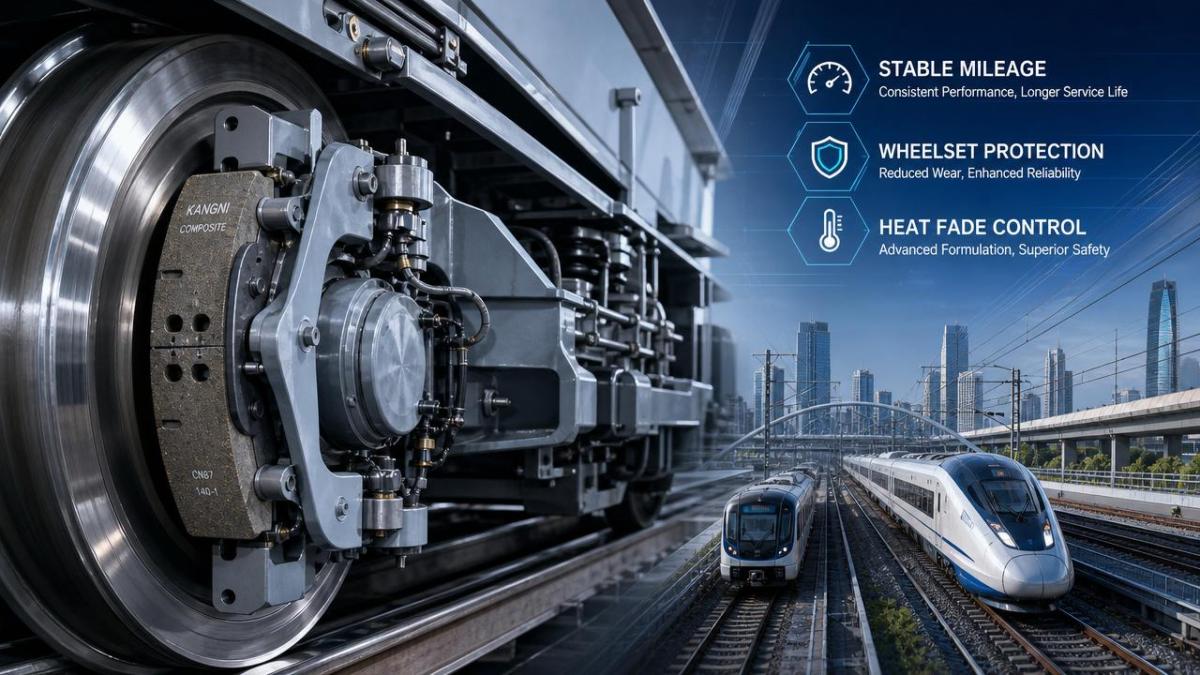
In rail fleets, composite brake pads are rarely judged well by invoice price alone.
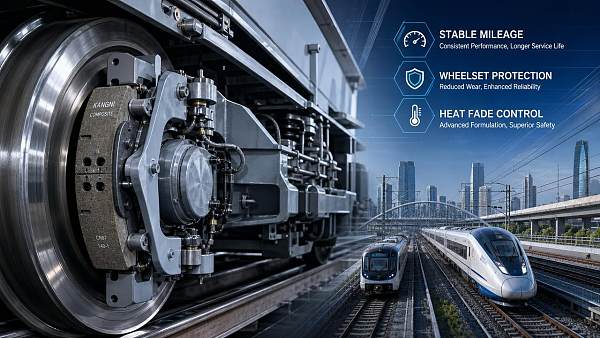
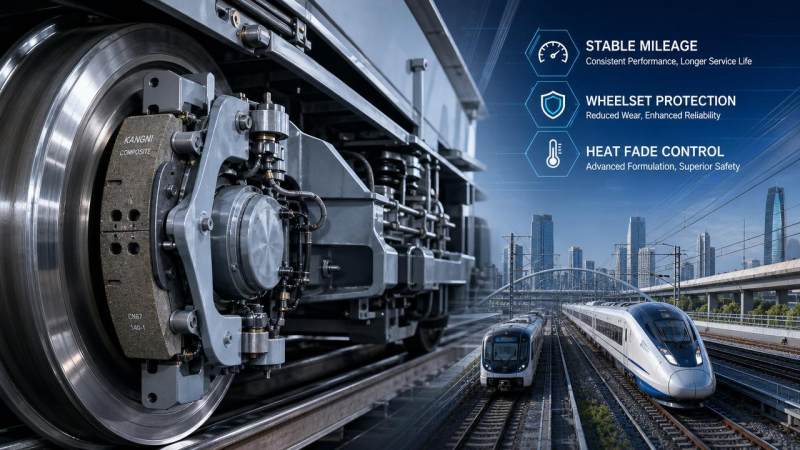
Their real value appears in mileage stability, wheel protection, maintenance rhythm, and braking consistency under repeated duty.
That matters even more in a transport ecosystem shaped by speed, automation, and tighter asset utilization.
GTOT tracks these links across railway control, traction, braking, and global logistics infrastructure.
Within that broader view, composite brake pads sit at a practical intersection of safety engineering and lifecycle economics.
A low initial price can look attractive during tender review.
Yet frequent replacement, unstable friction behavior, or higher wheel wear can reverse that advantage quickly.
In actual use, the better question is not “Which pad is cheapest?”
It is “Which composite brake pads match this route, this fleet, and this maintenance model most effectively?”
Why similar trains can need very different composite brake pads
Two fleets may share axle load, braking hardware, and operating speed, yet consume pads very differently.
The reason is usually duty cycle, not catalog specification.
Stop frequency changes thermal load.
Gradient changes sustained friction demand.
Climate changes contamination, moisture response, and cold-start behavior.
Maintenance windows also matter.
A fleet with night depot access can tolerate shorter service life more easily than one running long cycles between planned inspections.
Where service punctuality is strict, predictable wear often matters more than the absolute longest wear rate.
Another overlooked variable is system interaction.
Composite brake pads do not work in isolation.
They respond to wheel material, braking control logic, caliper condition, and driver or ATO braking patterns.
That is why field results often diverge from laboratory comparisons.
Urban metro service usually rewards stability more than headline wear life
Metro fleets operate with dense stops, frequent low-to-medium speed braking, and tight timetable recovery demands.
In this setting, composite brake pads must deliver repeatable friction across thousands of short braking events.
Pads that show strong bench life but unstable friction curves may create uneven stopping feel and inconsistent wear patterns.
More common evaluation points include noise behavior, dust level, low-speed smoothness, and resistance to glazing.
If regenerative braking handles most deceleration, friction braking becomes more intermittent.
That can reduce wear, but it may also create corrosion or surface conditioning issues.
In such cases, composite brake pads should be assessed for occasional heavy engagement after long light-duty intervals.
The better fit is often a formulation with balanced friction stability, moderate wear, and low maintenance variability.
Regional and commuter lines often shift the decision toward service interval control
Regional networks usually face mixed braking profiles.
There are fewer stops than metro routes, but longer distances, higher average speeds, and less frequent depot access.
Here, the cost of composite brake pads is closely tied to planned maintenance availability.
A pad that lasts 20 percent longer may reduce workshop visits enough to justify a higher purchase price.
This is especially true when fleet diagrams are tight and spare trainsets are limited.
Weather exposure also becomes more relevant.
Open-air storage, leaf contamination, moisture, and winter conditions can change pad behavior noticeably.
In practical terms, buyers often gain more from wear predictability than from peak performance claims.
Composite brake pads that support accurate replacement forecasting help control parts stock, labor scheduling, and service risk.
Heavy-duty and gradient routes test thermal fade more aggressively
Not every fleet lives in a mild braking environment.
Mountain corridors, steep approaches, heavy passenger loading, and repeated emergency margins create a different stress pattern.
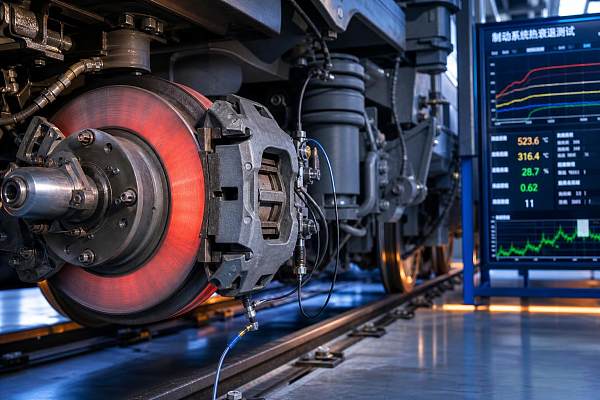
In these routes, composite brake pads should be judged first on thermal resilience.
Fade resistance, hot friction stability, and recovery after high-energy braking become more important than nominal wear rate.
A cheaper pad may appear acceptable in normal service, then degrade quickly during hot cycles.
That creates hidden cost through more inspections, wheel damage risk, and tighter operating restrictions.
GTOT’s focus on thermal fade performance is relevant here.
For high-demand braking systems, heat behavior often explains fleet economics better than price sheets do.
Different service environments change what “best value” actually means
A simple comparison helps clarify where composite brake pads create value under different operating realities.
This is why one “high-performance” pad does not automatically deliver the lowest lifecycle cost everywhere.
Mixed fleets and cross-border operations add another layer of selection risk
In larger rail systems, braking components often serve fleets built in different years or by different OEMs.
That complicates any composite brake pads decision.
Standardizing on one pad type can reduce inventory and training burden.
But forced standardization may sacrifice route-specific performance or shorten service life on certain units.
Cross-border and high-compliance projects raise another issue: documentation depth.
Material traceability, certification history, test standards, and field references can affect qualification speed as much as product performance.
In restricted rail tenders, technical credibility often depends on showing how composite brake pads behave under defined duty patterns, not generic claims.
Where cost assessments usually go wrong
The most frequent mistake is treating unit price as the main savings lever.
That ignores labor hours, wheel condition, inspection frequency, and unplanned withdrawals.
Another mistake is relying on average service life only.
Average life can look excellent while wear variation between vehicles remains high.
That weakens maintenance planning.
A third error is overlooking interface conditions.
Composite brake pads may pass formal tests, yet underperform when wheel roughness, actuator condition, or control calibration differs from test assumptions.
- Do not compare pads without route energy data.
- Do not accept wear claims without dispersion figures.
- Do not ignore wheel wear, noise events, and seasonal behavior.
- Do not separate pad selection from maintenance scheduling logic.
A practical way to choose composite brake pads before full rollout
A better evaluation model starts with grouping routes by braking reality, not by fleet name alone.
Then compare candidate composite brake pads against a small set of field-relevant indicators.
- Mileage or operating hours to replacement
- Wear variation across vehicles and axles
- Friction stability in wet, cold, and hot conditions
- Wheel impact, noise incidence, and dust behavior
- Workshop labor per replacement cycle
- Certification and documentation fit for future tenders
Pilot testing should include at least one demanding route, one average route, and one seasonally difficult route.
That approach reveals whether composite brake pads deliver balanced value or only isolated advantages.
The most useful next step is to build a route-based evaluation matrix.
List braking duty, maintenance interval, environmental exposure, compliance requirements, and wheel interface constraints.
Once those conditions are visible, cost versus service life becomes a measurable engineering decision.
For rail fleets operating within a wider land-and-sea logistics network, that kind of disciplined selection supports both reliability and long-term asset value.
Recommended News
 Jun 18, 2026Thermal Fade Performance: When Brake Stability Starts to DropThermal fade performance reveals when brake stability begins to decline under repeated heat loads. Learn the warning signs, evaluation points, and smarter rail braking decisions.
 Jun 05, 2026How Composite Brake Pads Affect Heat Fade and WearComposite brake pads affect more than stopping power—learn how they influence heat fade, wear stability, lifecycle cost, and safer braking performance in demanding rail and heavy transport.
 Jun 05, 2026Composite Brake Pads: Cost vs Service Life in Rail FleetsComposite brake pads in rail fleets are not just about price. Learn how service life, friction stability, wheel wear, and route conditions shape the best-value choice.
 Jun 01, 2026Composite Brake Pads: Key Wear and Noise ChecksComposite brake pads require precise wear and noise checks. Learn how QC and safety teams spot risks early, reduce downtime, and improve rail braking reliability.
 May 29, 2026Composite Brake Pads: Wear, Noise, and SafetyComposite brake pads affect rail safety, wear control, and noise performance. Learn key inspection points and scenario-based maintenance tips.
 May 22, 2026Composite Brake Pads: Key Checks Before SelectionComposite brake pads selection starts with friction stability, fade resistance, compliance, and lifecycle cost. Discover the key checks to choose safer, longer-lasting rail braking solutions.
 May 16, 2026Composite Brake Pads: Wear, Noise, and Lifecycle Cost ComparedComposite brake pads compared for wear, noise, thermal stability, and lifecycle cost across rail applications. See how to reduce downtime, improve reliability, and choose the right fit.