



Search News
Industry Portal
Popular Tags
Composite Brake Pads: Key Checks Before Selection
Author
Time
Click Count
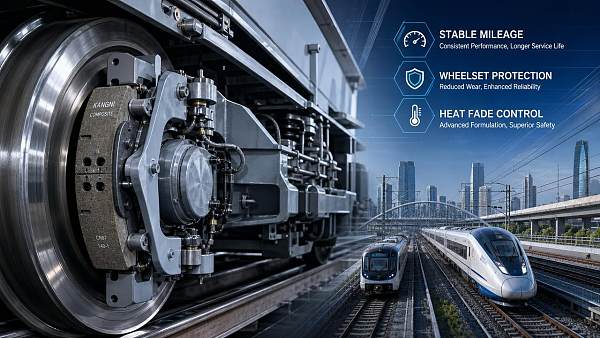
Selecting composite brake pads is not just a pricing decision. It directly shapes braking stability, fade resistance, service life, and compliance in demanding rail environments.
For high-speed rail, metro fleets, and heavy transport systems, the wrong friction material can increase wear, noise, downtime, and inspection risk.
This guide explains the key checks before choosing composite brake pads. It focuses on technical fit, safety verification, lifecycle value, and practical decision points.
What are composite brake pads, and why do they matter?
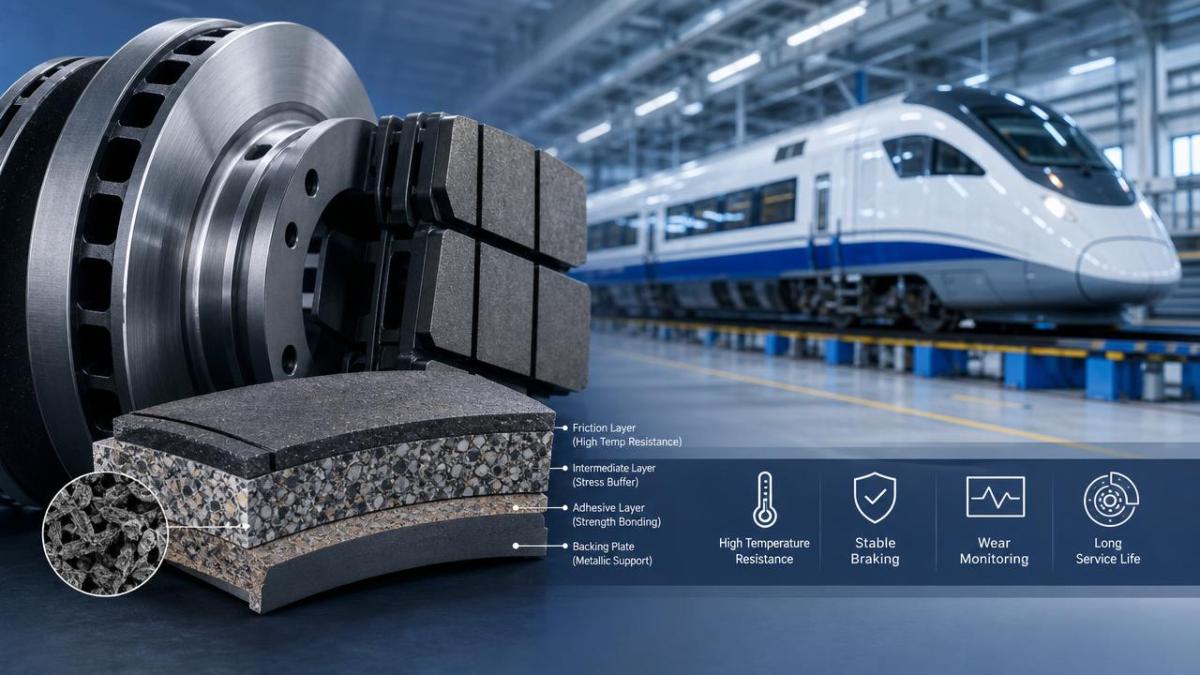
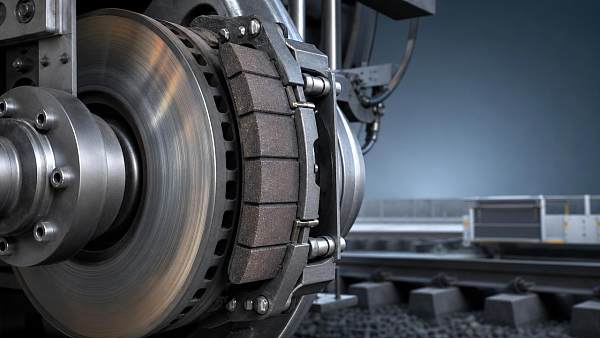
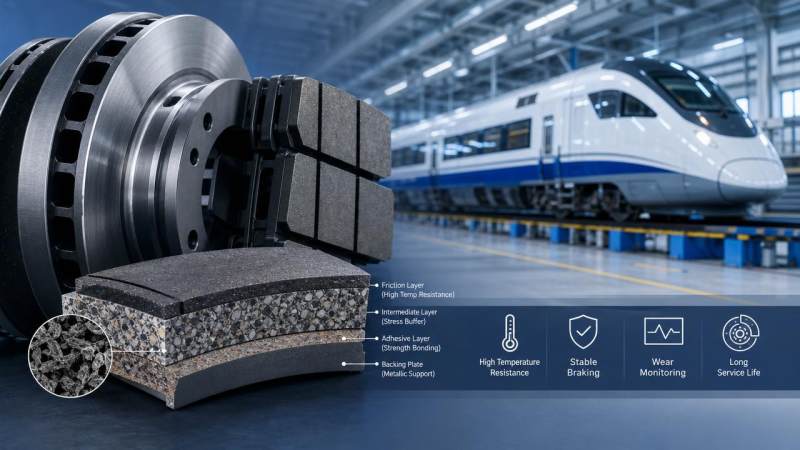
Composite brake pads are friction components made from engineered materials rather than traditional cast iron. Typical blends include fibers, binders, fillers, friction modifiers, and heat-resistant compounds.
Their purpose is simple but critical. They convert kinetic energy into heat while keeping braking force stable across changing speed, load, and weather conditions.
In rail transit braking systems, material behavior affects stopping distance, wheel condition, particulate output, and maintenance intervals. That is why composite brake pads receive close attention in modern fleet planning.
Compared with older materials, composite brake pads can offer lower noise, lower wheel wear, and improved controllability. However, these advantages depend on correct formulation and proper system matching.
A pad that performs well on one trainset may fail expectations on another. Speed profile, axle load, caliper pressure, and duty cycle all influence results.
Which technical checks should come first before selecting composite brake pads?
The first check is friction coefficient stability. A useful range on paper is not enough. The real question is how stable the value remains under heat, humidity, and repeated braking.
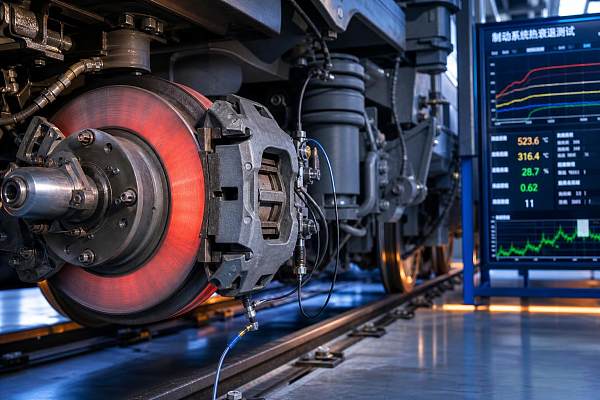
The second check is thermal fade resistance. Composite brake pads must keep predictable braking output when temperatures rise during emergency stops or dense urban cycles.
The third check is recovery performance. After high-temperature events, the pad should quickly regain its designed friction behavior without long instability.
The fourth check is wear rate. This includes pad wear, disc or wheel wear, and debris generation. A low pad price means little if wheel reprofiling costs rise.
The fifth check is NVH behavior. Noise, vibration, and harshness matter in metro systems, passenger comfort programs, and urban environmental reviews.
The sixth check is environmental tolerance. Moisture, salt spray, dust, and temperature swings can change braking consistency if the material system is poorly tuned.
A practical technical checklist includes:
- Friction coefficient across full operating temperatures
- Thermal fade and post-fade recovery data
- Wear rate under representative duty cycles
- Compatibility with discs, wheels, and actuators
- Noise and vibration test results
- Dust, smoke, and residue behavior
- Performance in wet and contaminated conditions
How do you judge whether composite brake pads match the application?
Application fit is often where selection errors begin. Composite brake pads should never be compared without understanding the real braking profile.
A metro system usually demands frequent low-to-medium speed braking. A high-speed rail platform faces intense thermal loads during deceleration from very high speeds.
Freight and mixed-traffic conditions create another challenge. Higher mass, variable loading, and longer routes can alter contact pressure and heat buildup.
Ask whether the proposed composite brake pads were validated in a comparable operating window. Lab data is useful, but route-specific data is stronger.
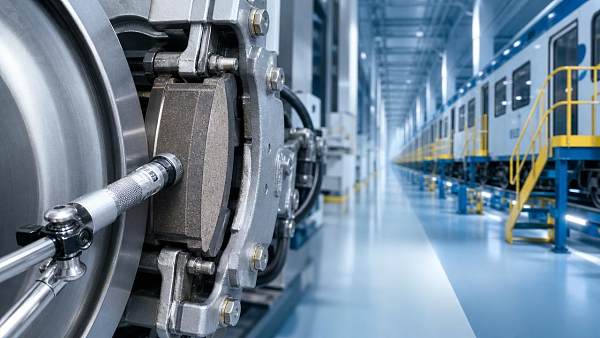
It also helps to examine interface geometry. Pad shape, backing plate design, mounting dimensions, and pressure distribution must align with the existing braking assembly.
Where onboard control systems are advanced, response predictability becomes even more important. Brake blending logic and control software assume stable mechanical behavior.
Use these application questions before approval:
- What is the train speed range and braking frequency?
- What axle load and stopping energy must the pad handle?
- Is the route dry, coastal, dusty, mountainous, or mixed?
- Does the system prioritize low noise, long life, or peak braking force?
- Are there local standards or fleet-specific homologation requirements?
What certifications, test evidence, and compliance records should be checked?
Documentation quality often separates reliable composite brake pads from high-risk alternatives. A supplier should provide traceable evidence, not broad claims.
Start with material specifications and batch consistency records. Friction products can vary if process control is weak or raw material sources change.
Then review dynamometer test reports, field trial summaries, and wear analysis. Data should show conditions, methods, temperature bands, and pass criteria.
Compliance may involve railway authority requirements, fire and smoke expectations, environmental restrictions, and product traceability. Exact standards differ by region and application.
For safety-critical systems, change control is essential. If the formula or process changes, retesting and notification procedures should be clearly defined.
The following table helps organize review priorities for composite brake pads.
How should cost be compared beyond unit price?
A lower price per set does not guarantee lower total cost. Composite brake pads should be evaluated through full lifecycle economics.
Start with service interval. If one pad lasts longer while protecting discs or wheels, replacement labor and downtime may drop significantly.
Then consider thermal reliability. Pads with stronger fade resistance can reduce safety incidents, route disruption, and emergency maintenance events.
Inventory efficiency matters too. Standardized composite brake pads across compatible fleets can simplify stocking and lower spare complexity.
Do not overlook installation time. A product requiring special fitting, longer bedding procedures, or more frequent inspections can quietly increase operating cost.
Useful cost comparison factors include:
- Unit price and minimum order terms
- Expected service life in actual routes
- Disc or wheel wear influence
- Inspection and replacement labor
- Failure risk and disruption exposure
- Warranty scope and technical support
What common mistakes lead to poor composite brake pads selection?
One common mistake is choosing by price alone. This often ignores fade behavior, wear patterns, and route-specific demands.
Another mistake is relying only on catalog values. Composite brake pads may look similar in brochures but behave differently under real heat cycles.
A third error is overlooking compatibility with the full braking system. Material performance cannot be separated from calipers, discs, control logic, and maintenance practices.
Some teams also skip field validation. Even strong bench data should be confirmed through monitored service trials before broad rollout.
Another risk is weak supplier auditing. If process consistency is poor, the first batch and the tenth batch may not perform the same.
To reduce selection mistakes, compare candidate composite brake pads through a weighted review model covering safety, wear, compliance, and operational fit.
Quick FAQ on composite brake pads
The best composite brake pads decision combines technical evidence, route fit, compliance clarity, and lifecycle economics. That balanced view supports safer braking and more reliable rail operations.
Before final selection, build a simple review sheet with friction data, fade results, wear impact, certifications, and field performance notes. That step makes comparison clearer and reduces avoidable risk.
For organizations tracking braking technology, thermal performance, and railway component intelligence, a structured evaluation of composite brake pads creates stronger long-term asset decisions.
Recommended News
 Jun 18, 2026Thermal Fade Performance: When Brake Stability Starts to DropThermal fade performance reveals when brake stability begins to decline under repeated heat loads. Learn the warning signs, evaluation points, and smarter rail braking decisions.
 Jun 05, 2026How Composite Brake Pads Affect Heat Fade and WearComposite brake pads affect more than stopping power—learn how they influence heat fade, wear stability, lifecycle cost, and safer braking performance in demanding rail and heavy transport.
 Jun 05, 2026Composite Brake Pads: Cost vs Service Life in Rail FleetsComposite brake pads in rail fleets are not just about price. Learn how service life, friction stability, wheel wear, and route conditions shape the best-value choice.
 Jun 01, 2026Composite Brake Pads: Key Wear and Noise ChecksComposite brake pads require precise wear and noise checks. Learn how QC and safety teams spot risks early, reduce downtime, and improve rail braking reliability.
 May 29, 2026Composite Brake Pads: Wear, Noise, and SafetyComposite brake pads affect rail safety, wear control, and noise performance. Learn key inspection points and scenario-based maintenance tips.
 May 22, 2026Composite Brake Pads: Key Checks Before SelectionComposite brake pads selection starts with friction stability, fade resistance, compliance, and lifecycle cost. Discover the key checks to choose safer, longer-lasting rail braking solutions.
 May 16, 2026Composite Brake Pads: Wear, Noise, and Lifecycle Cost ComparedComposite brake pads compared for wear, noise, thermal stability, and lifecycle cost across rail applications. See how to reduce downtime, improve reliability, and choose the right fit.