



Search News
Industry Portal
Popular Tags
Railway Safety Standards Updates That Impact Maintenance
Author
Time
Click Count
For after-sales maintenance teams, staying current with railway safety standards is no longer optional—it directly affects inspection cycles, component replacement, fault response, and compliance risk.
As rules evolve across signaling, braking, and power collection systems, maintenance plans must become more precise, traceable, and preventive.
This guide explains recent railway safety standards updates, what they change in daily work, and how to respond without disrupting reliability or operating efficiency.
What do recent railway safety standards updates actually change?
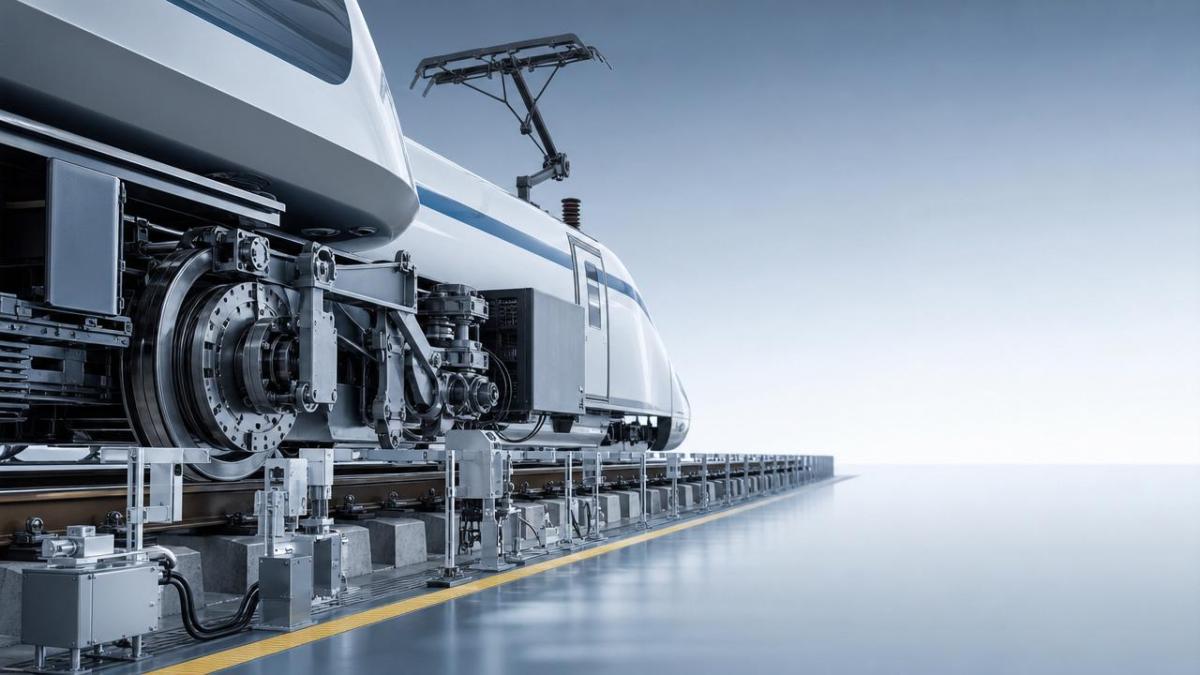
Recent railway safety standards updates are not limited to paperwork. They increasingly reshape inspection depth, maintenance evidence, fault logging, and life-cycle decision rules.
A major shift is the move from schedule-only maintenance toward risk-based and condition-based maintenance.
That means teams must combine manual inspection with data from onboard diagnostics, wayside monitoring, and event recorders.
Another change involves traceability. More railway safety standards now require clear records for parts origin, installation dates, software revisions, and test results.
This is especially important for safety-critical systems linked to SIL targets, braking performance, and train protection functions.
Standards updates also place more attention on interfaces. Failures often happen between subsystems, not inside one isolated component.
- Signaling and onboard control software compatibility
- Brake command transmission and response verification
- Pantograph and catenary interaction under dynamic loads
- Cybersecurity effects on safety-related maintenance access
For maintenance teams, the message is simple. Railway safety standards now expect technical proof, not just routine completion marks.
Which maintenance areas are most affected by railway safety standards?
The strongest impact appears in signaling, braking, pantographs, and safety documentation.
1. Signaling and control components
Railway safety standards for signaling increasingly focus on software control integrity, fail-safe behavior, and change management.
Maintenance work now needs stricter version control, test validation after updates, and stronger handling of intermittent faults.
Even a small replacement may require functional verification across connected subsystems.
2. Braking systems
Brake system standards are paying closer attention to stopping consistency, thermal fade, response timing, and degraded-mode safety.
This raises the importance of pad wear tracking, pneumatic leakage checks, sensor calibration, and post-maintenance brake testing.
A pass-fail approach is no longer enough when trend deterioration can be measured earlier.
3. Pantographs and power collection
At higher operating speeds, railway safety standards increasingly examine contact force stability, carbon strip condition, uplift behavior, and arc management.
Maintenance teams must watch dynamic wear patterns, not just visible damage.
Data from sensors and line inspections now supports safer replacement timing and reduced overhead line risk.
4. Records and competence
Many railway safety standards updates strengthen expectations for technician competence, work authorization, and digital maintenance logs.
If records are weak, compliance risk rises even when equipment is physically healthy.
How should inspection cycles change under updated railway safety standards?
Inspection cycles should become more differentiated. Not every asset needs the same interval anymore.
Updated railway safety standards support a layered approach based on criticality, duty cycle, environment, and failure consequences.
A useful model is to divide assets into three groups.
- Safety-critical assets needing fixed minimum inspections
- Condition-monitored assets needing trend-based intervention
- Support assets suitable for extended periodic reviews
This reduces wasted labor while protecting systems where latent failure is unacceptable.
However, extending intervals should never happen without evidence. Railway safety standards usually expect risk assessment, baseline data, and controlled approval.
Practical triggers for cycle adjustment include repeated faults, new operating speeds, route changes, climate exposure, or updated supplier guidance.
For mixed fleets, different generations of hardware may require different cycles even on the same line.
What are the biggest compliance risks and common mistakes?
The biggest mistake is assuming that past maintenance routines remain compliant after a standard revision.
Another common risk is treating documentation as separate from technical safety. Updated railway safety standards connect the two closely.
The most frequent problem areas include the following.
- Unapproved substitute parts in safety-related positions
- Incomplete test records after software or hardware replacement
- Missed calibration windows for sensors and measurement devices
- Poor control of temporary fixes and deferred defects
- Weak root-cause analysis after repeated failures
There is also a growing interface risk between safety and cybersecurity.
If maintenance laptops, remote access tools, or software uploads are not controlled, a compliance issue can quickly become an operational hazard.
Good practice means linking every corrective action to evidence, authorization, and verification.
How can teams adapt without sharply increasing cost or downtime?
The answer is smarter planning, not simply more tasks.
Updated railway safety standards favor maintenance systems that connect field data, fault history, and asset criticality in one workflow.
A practical response plan usually includes five steps.
- Map each standard update to affected assets and procedures
- Review maintenance intervals against actual failure behavior
- Upgrade digital traceability for parts, tests, and revisions
- Train teams on changed acceptance criteria and reporting rules
- Audit a sample of completed work for compliance proof
Condition monitoring can lower cost when applied carefully.
For example, brake wear trends, pantograph contact behavior, and signaling event logs can reduce unnecessary replacements.
GTOT closely tracks these cross-system trends because high-value transport assets increasingly depend on integrated intelligence, not isolated maintenance decisions.
How do updated railway safety standards affect long-term asset strategy?
Railway safety standards now influence far more than workshop activity. They affect spare strategy, retrofit timing, vendor qualification, and life extension decisions.
If one subsystem repeatedly struggles to meet updated criteria, continued repair may cost more than modernization.
This is common with legacy signaling electronics, aging brake controls, and older pantograph assemblies operating under newer speed and reliability demands.
A standards-led asset strategy should compare:
- Compliance effort versus replacement cost
- Failure exposure versus upgrade benefit
- Fleet commonality versus special maintenance burden
- Supplier supportability versus obsolescence risk
When these factors are reviewed early, railway safety standards become a planning tool rather than a last-minute constraint.
FAQ summary table: what changes, what to check, what to do next?
Railway safety standards are evolving toward measurable safety assurance, not basic routine completion.
The strongest maintenance response is to combine technical discipline, digital traceability, and subsystem-level risk awareness.
Start with one action this month: review one safety-critical maintenance procedure against the latest railway safety standards and document every gap.
That single step can improve compliance readiness, reduce hidden failure risk, and support better long-term performance across the rail asset life cycle.
Recommended News
 May 23, 20262026 Railway Safety Standards: What Is ChangingRailway safety standards in 2026 are shifting toward automation, digital monitoring, and stricter compliance. Learn the key changes and how to strengthen audits, inspections, and safer rail operations.
 May 22, 2026International Shipbuilding Cost Shifts in 2026International shipbuilding in 2026 faces rising costs from materials, labor, compliance, and digital upgrades. Explore smart vessel, LNG, and fleet renewal scenarios to plan better and reduce lifecycle risk.
 May 20, 2026LNG Carriers for Energy Security: 2026 Fleet Risks and Capacity OutlookLNG carriers for energy security face 2026 fleet risks from aging tonnage, shipyard delays, and charter tightness. Explore capacity outlook and smart procurement moves now.
 May 18, 2026Railway Safety Standards Updates That Impact MaintenanceRailway safety standards updates are reshaping inspections, traceability, braking, signaling, and pantograph maintenance. Learn the key changes, compliance risks, and practical actions to cut downtime.
 May 17, 2026High-speed Rail Technology: Key Upgrade Signals for 2026High-speed rail technology is reshaping 2026 rail upgrades. Discover key signals in signaling, pantographs, and braking systems to improve safety, capacity, and lifecycle value.
 May 16, 2026How International Voice Shapes Rail Technology Market AccessInternational voice drives rail market access by turning technical proof into trust. See how stronger global credibility helps win tenders, approvals, and long-term cross-border projects.