Search News
Industry Portal
Popular Tags
High-speed Rail Technology: Key Upgrade Signals for 2026
Author
Time
Click Count
As global mobility enters a new upgrade cycle, high-speed rail technology is becoming a practical benchmark for infrastructure quality, operational resilience, and future asset value.
Toward 2026, upgrade signals are no longer limited to top speed. They increasingly appear in control intelligence, braking precision, power collection stability, and lifecycle efficiency.
For the wider transport industry, these signals matter because rail projects now compete on safety, digital readiness, decarbonization, and interoperability across regional and cross-border networks.
Why high-speed rail technology signals matter before 2026
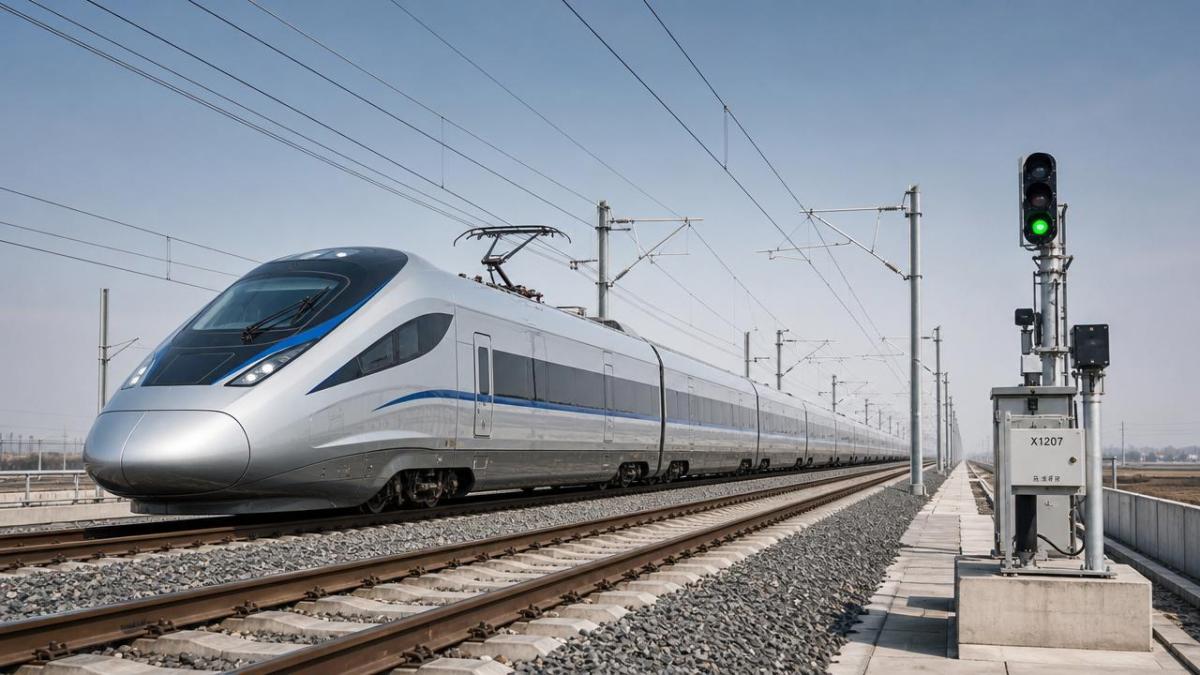
The most useful reading of high-speed rail technology is scenario-based. Different operating environments reveal different upgrade priorities and investment risks.
A mature corridor may value automation and maintenance prediction. A new line may prioritize signaling compatibility, traction efficiency, and scalable braking architecture.
This is where GTOT’s intelligence focus becomes relevant. Railway signal control systems, pantographs, and braking systems together define whether speed remains stable, safe, and commercially sustainable.
By 2026, the market will likely reward solutions that reduce downtime, support denser traffic, and maintain SIL4-level safety performance under harsher operational expectations.
Scenario one: upgrading dense intercity corridors
In dense intercity corridors, high-speed rail technology is judged less by headline velocity and more by throughput, punctuality, and timetable recovery after disruptions.
The key signal here is advanced railway signal control. Modern interlocking, automatic train protection, and communication-based management increase capacity without compromising safety margins.
Core judgment points for this scenario
- Can the control system support high-frequency scheduling with reliable fail-safe behavior?
- Does the architecture allow future automation upgrades without major reconstruction?
- Are diagnostic functions strong enough to reduce unplanned service interruptions?
- Can onboard and trackside systems remain interoperable across suppliers and network sections?
For this corridor type, signaling modernization often delivers more value than pure speed expansion. Better train spacing and cleaner traffic control can unlock hidden capacity already built into the route.
Scenario two: cross-border and multi-standard rail expansion
Cross-border projects expose another side of high-speed rail technology. Here, the central challenge is compatibility across power systems, standards, maintenance practices, and operating rules.
The strongest upgrade signal is modularity. Trains and infrastructure must adapt to different electrification environments, signaling interfaces, and national compliance frameworks.
What deserves closer attention
Pantograph performance becomes critical in this scenario. Stable current collection at very high speed directly affects efficiency, component life, and operational reliability.
Wind resistance, vibration tolerance, and contact strip durability should be reviewed as strategic indicators, not as secondary component details.
A line may appear advanced on paper, yet weak compatibility between power collection and route conditions can reduce actual service quality and increase maintenance burdens.
Scenario three: extreme climate and heavy-demand operations
Some networks face large temperature swings, crosswinds, dust, coastal corrosion, or steep gradients. In these settings, high-speed rail technology must prove environmental resilience.
Braking systems become a major decision factor. Performance consistency under repeated high-load deceleration matters more than nominal stopping figures alone.
Operational signals that indicate a stronger solution
- Stable braking response across temperature variation and wet conditions
- Low thermal fade under repeated service cycles
- Tight coordination between aerodynamic braking and electronic control
- Predictive maintenance data for wear components and control modules
In these scenarios, resilient high-speed rail technology reduces lifecycle uncertainty. It also improves timetable confidence when networks cannot afford weather-related performance drift.
How scenario demands differ across rail applications
The same technology label can hide very different requirements. A useful evaluation should compare operating context, upgrade purpose, and technical risk exposure side by side.
Practical adaptation advice for evaluating high-speed rail technology
A good 2026 evaluation model should connect technical detail with business outcomes. The goal is not collecting features, but identifying where value is durable.
Recommended evaluation actions
- Map each route scenario before comparing solutions.
- Prioritize control, traction, and braking integration over isolated component claims.
- Review lifecycle diagnostics, not only commissioning performance.
- Check whether safety architecture supports future density growth.
- Measure environmental fit for wind, heat, corrosion, and vibration conditions.
This approach aligns well with GTOT’s sector lens. Signal control systems, pantographs, and rail transit braking systems should be evaluated as one operational chain.
When that chain is balanced, high-speed rail technology produces safer service, better energy efficiency, and stronger long-term tender credibility.
Common misjudgments that weaken 2026 upgrade decisions
One common error is treating maximum speed as the primary sign of technical leadership. In reality, many performance failures start in interfaces, not in headline capability.
Another mistake is underestimating the importance of signal control maturity. Without robust control logic, capacity expansion often creates operational fragility instead of resilience.
A third oversight involves braking systems. Some assessments focus on stopping distance but ignore thermal fade, control precision, and repeated high-load stability.
Power collection is also frequently undervalued. Yet unreliable pantograph behavior can amplify wear, interrupt supply quality, and erode the practical benefits of advanced high-speed rail technology.
Finally, short-term cost comparisons can hide long-term service penalties. Maintenance access, diagnostic visibility, and upgrade flexibility strongly influence total infrastructure value.
Next-step actions for reading upgrade signals with confidence
The clearest path forward is to translate broad trends into route-specific checks. Ask which corridors need more capacity, which lines need compatibility, and which environments demand resilience.
Then assess whether the proposed high-speed rail technology strengthens signaling intelligence, pantograph stability, and braking precision as a connected system.
Toward 2026, the strongest upgrade signals will come from solutions that combine safety, digital visibility, operational flexibility, and lifecycle efficiency.
That is also where strategic transport intelligence adds lasting value. In a market shaped by land-sea interconnection, rigorous technical judgment will increasingly separate durable infrastructure from expensive complexity.
For anyone tracking future-ready mobility assets, high-speed rail technology should be evaluated not as a single trend, but as a set of upgrade signals tied to real operating scenarios.
Recommended News
 May 23, 20262026 Railway Safety Standards: What Is ChangingRailway safety standards in 2026 are shifting toward automation, digital monitoring, and stricter compliance. Learn the key changes and how to strengthen audits, inspections, and safer rail operations.
 May 22, 2026International Shipbuilding Cost Shifts in 2026International shipbuilding in 2026 faces rising costs from materials, labor, compliance, and digital upgrades. Explore smart vessel, LNG, and fleet renewal scenarios to plan better and reduce lifecycle risk.
 May 20, 2026LNG Carriers for Energy Security: 2026 Fleet Risks and Capacity OutlookLNG carriers for energy security face 2026 fleet risks from aging tonnage, shipyard delays, and charter tightness. Explore capacity outlook and smart procurement moves now.
 May 18, 2026Railway Safety Standards Updates That Impact MaintenanceRailway safety standards updates are reshaping inspections, traceability, braking, signaling, and pantograph maintenance. Learn the key changes, compliance risks, and practical actions to cut downtime.
 May 17, 2026High-speed Rail Technology: Key Upgrade Signals for 2026High-speed rail technology is reshaping 2026 rail upgrades. Discover key signals in signaling, pantographs, and braking systems to improve safety, capacity, and lifecycle value.
 May 16, 2026How International Voice Shapes Rail Technology Market AccessInternational voice drives rail market access by turning technical proof into trust. See how stronger global credibility helps win tenders, approvals, and long-term cross-border projects.