



Search News
Industry Portal
Popular Tags
2026 Railway Safety Standards: What Is Changing
Author
Time
Click Count
As 2026 approaches, railway safety standards are entering a new phase shaped by automation, digital monitoring, stricter compliance, and higher system reliability demands. For quality control and safety management professionals, understanding what is changing is essential to reducing operational risk, meeting regulatory expectations, and ensuring safer rail networks. This article outlines the key updates and what they mean for inspection, maintenance, and long-term safety performance.
For B2B operators, EPC contractors, component suppliers, and rail asset managers, the shift is not only regulatory. It affects procurement criteria, inspection intervals, software validation, braking performance verification, pantograph monitoring, and the documentation needed to pass audits across multi-country projects.
From GTOT’s perspective as an intelligence portal covering signalling, traction, braking, and broader transport systems, 2026 railway safety standards point toward one clear direction: safety assurance is becoming more data-driven, lifecycle-based, and tightly integrated with digital operating environments.
Why 2026 Railway Safety Standards Matter More Than Previous Updates
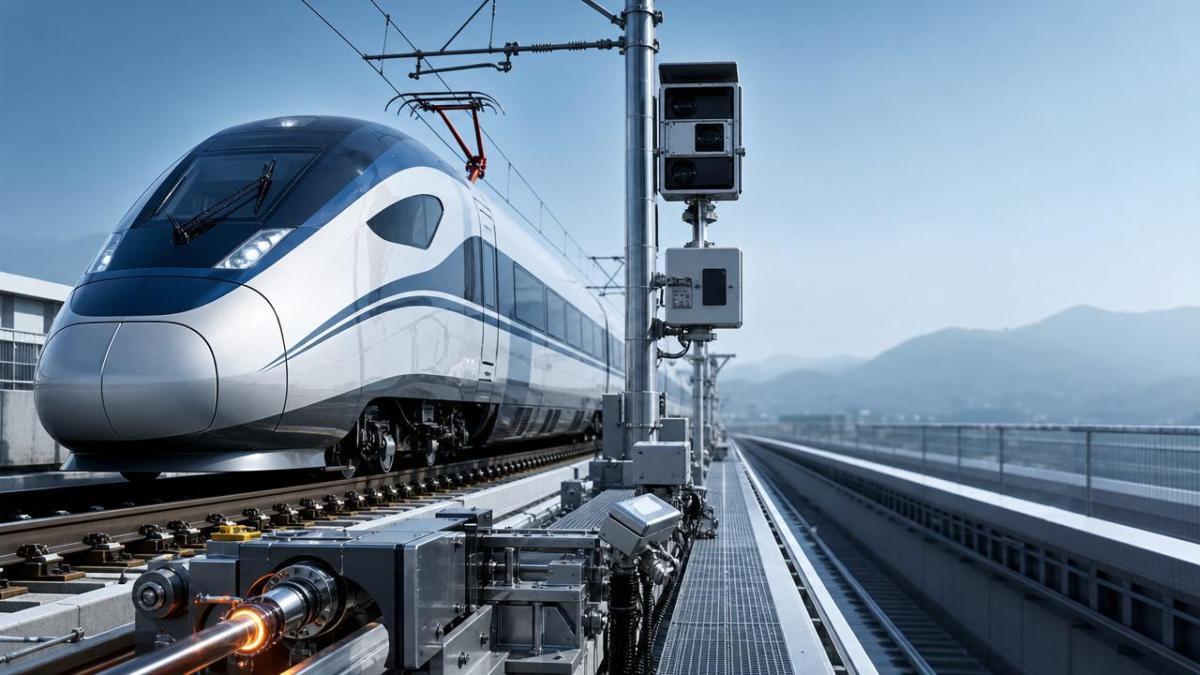
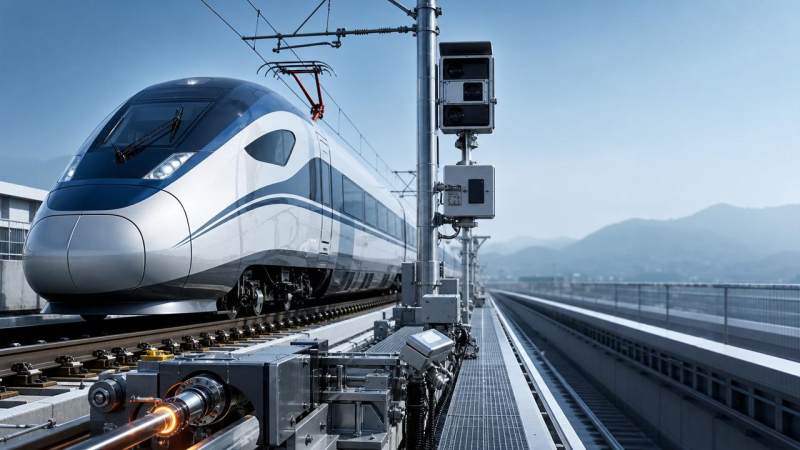
The upcoming changes in railway safety standards are not limited to one subsystem. They are spreading across signalling logic, rolling stock diagnostics, braking consistency, cyber-resilience, and condition-based maintenance. For quality control teams, this means that a pass/fail inspection model is being replaced by a traceable risk-control model.
In practical terms, safety management professionals will face 4 major pressures in 2026: shorter response windows, higher evidence requirements, tighter software oversight, and more frequent cross-functional coordination between engineering, operations, and compliance teams.
The transition from component safety to system safety
Traditional railway safety reviews often focused on whether a single part met a specified tolerance, such as braking force stability, insulation resistance, or mechanical wear limits. Under 2026 railway safety standards, regulators and operators increasingly care about interaction effects between subsystems.
For example, a pantograph that performs within mechanical limits may still trigger safety concern if vibration patterns degrade power quality, interfere with onboard electronics, or increase downstream maintenance events by 15% to 20% over a 12-month operating cycle.
Automation raises the reliability threshold
As urban rail and mainline networks deploy higher levels of automation, acceptable failure rates become lower. In high-density corridors, a delay of 3 to 5 minutes may no longer be treated as a simple service issue if root cause analysis shows degraded safety redundancy or inadequate fault isolation.
This is especially relevant for SIL-oriented control architecture, interlocking systems, train detection, and remote monitoring platforms. Quality teams will need stronger validation records for firmware revisions, sensor calibration cycles, and fail-safe switching behavior under abnormal conditions.
Core implications for safety managers
- More inspection checkpoints will move from monthly review to weekly or event-triggered review.
- Data retention periods may need to extend from 90 days to 180 days or longer for incident traceability.
- Supplier qualification will increasingly include software change control, not only hardware conformity.
- Acceptance testing will require stronger linkage between lab verification and field performance.
The following table highlights how operational expectations are shifting under 2026 railway safety standards for common rail safety functions.
The key takeaway is that railway safety standards are becoming operational rather than purely documentary. Passing an annual audit is no longer enough if daily control logic, data quality, and maintenance evidence cannot support a defensible safety case.
What Is Changing in Key Technical Domains
For quality control and safety management personnel, the most important question is where the practical changes will appear first. In 2026, the strongest effects are likely in signalling assurance, rolling stock monitoring, braking system verification, power collection safety, and cybersecurity governance.
Signalling systems: stronger software assurance and event traceability
Railway signal control systems remain the central nervous system of network safety. In modern high-density and automated operations, 1 undocumented software patch or 1 unresolved event log anomaly can create disproportionate risk. That is why 2026 railway safety standards are expected to tighten software lifecycle controls.
Safety teams should expect more rigorous requirements in 3 areas: version control, verification after updates, and evidence retention. A firmware upgrade that once required a basic functional test may now require structured regression testing, fault simulation, and rollback planning before release approval.
Recommended controls for signalling compliance
- Maintain a software and configuration register updated within 24 to 48 hours of any change.
- Use a 3-stage validation workflow: bench test, integration test, and controlled field observation.
- Retain event logs, alarm records, and corrective actions in a searchable archive for at least 6 to 12 months.
- Define escalation thresholds for repeated anomalies, such as 3 similar faults within 30 days.
Braking systems: performance consistency under real operating loads
Rail transit braking systems are under closer scrutiny because train speed, axle load, and service density are increasing together. A brake system can meet nominal specifications in static testing yet still underperform in repeated deceleration cycles, wet conditions, or thermal stress.
In 2026, railway safety standards are likely to place more emphasis on stopping consistency, thermal fade behavior, and electronic control response. For heavy or high-speed formations, a deviation of even a few percentage points in brake response can alter safe stopping margins across long-distance routes.
Pantographs and traction interface: moving beyond visual inspection
Pantographs are critical for power continuity, particularly in high-speed rail above 250 km/h and urban systems with frequent acceleration cycles. Under updated railway safety standards, operators are expected to monitor more than carbon strip wear. Dynamic contact quality, uplift force stability, and vibration behavior will matter more.
This change is important because unstable current collection can create cumulative system risk. It may increase arcing events, accelerate catenary wear, disrupt onboard electronics, and raise maintenance demand across multiple assets rather than a single component alone.
Cybersecurity becomes a safety input
One of the clearest shifts in railway safety standards is the growing overlap between digital security and operational safety. Remote diagnostics, LTE-M connectivity, cloud reporting, and predictive maintenance platforms all improve visibility, but they also expand the attack surface.
For safety managers, this means cyber controls can no longer sit only with IT teams. Access rights, patch discipline, data integrity checks, and incident recovery procedures should become part of regular safety governance, especially where remote commands or automated alerts influence traffic operations.
How Quality Control Teams Should Adapt Inspection and Maintenance Programs
Compliance in 2026 will depend less on isolated inspection results and more on whether the entire maintenance program can prove risk reduction over time. This requires a structured approach to inspection frequency, acceptance thresholds, digital records, and supplier coordination.
Shift from fixed intervals to risk-based intervals
Many railway operators still rely on time-based or mileage-based inspection plans, such as every 30 days, every 10,000 km, or every quarter. These remain useful, but 2026 railway safety standards are pushing toward risk-based adjustment where asset condition, environment, and fault history influence interval length.
A pantograph running in coastal humidity, strong crosswind corridors, or polluted urban sections may need shorter review cycles than one in a cleaner operating envelope. The same logic applies to brake pads, onboard sensors, and safety relays exposed to repeated thermal stress.
Build a layered inspection model
A practical way to adapt is to divide maintenance assurance into 3 layers: routine monitoring, periodic technical inspection, and trigger-based investigation. This helps safety teams prioritize resources instead of treating every anomaly with the same level of urgency.
Routine monitoring can include daily remote data checks, periodic inspection can occur every 2 to 8 weeks depending on asset criticality, and trigger-based investigation should begin immediately after threshold breaches, unusual vibration signatures, or repeated alarm patterns.
The table below provides a practical inspection framework aligned with typical 2026 railway safety standards expectations.
This layered model helps quality teams reduce unnecessary maintenance while improving response speed where risk is genuinely rising. It also creates stronger audit evidence because each action is tied to a defined trigger and documented follow-up.
Tighten supplier and incoming quality controls
Under stricter railway safety standards, incoming inspection cannot rely only on dimensional checks or certificate review. Buyers increasingly need batch traceability, software revision confirmation, test records, and proof that change notifications are controlled across the supply chain.
For safety-critical components, 5 incoming quality checks are especially useful: identification verification, configuration review, test report matching, packaging integrity, and nonconformance escalation procedure. These controls are particularly valuable when sourcing signalling parts, brake components, or sensor-enabled assemblies from multiple regions.
Procurement, Documentation, and Audit Readiness Under New Requirements
Procurement teams and safety managers are increasingly linked. If purchased parts, software packages, or service contracts do not support the required evidence chain, compliance risk appears long before installation. That is why 2026 railway safety standards should influence supplier selection criteria from the start.
What buyers should request from suppliers
For safety-relevant products, a strong supplier package should include configuration identification, inspection records, test summaries, maintenance recommendations, and change management commitments. For digital or intelligent subsystems, cybersecurity responsibilities and update procedures should also be defined in writing.
In many projects, a 6-document minimum is a practical baseline: product specification, inspection/test record, traceability sheet, installation guidance, maintenance schedule, and deviation handling process. This does not guarantee compliance by itself, but it greatly improves audit readiness.
Common procurement mistakes to avoid
- Selecting components only on upfront cost without reviewing lifecycle inspection burden.
- Accepting software-enabled equipment without update and rollback procedures.
- Using mixed documentation formats that delay fault investigation during audits.
- Failing to align spare parts strategy with safety-critical lead times of 4 to 12 weeks.
Create an audit-ready evidence chain
An effective evidence chain links 5 elements: requirement, inspection, result, corrective action, and closure verification. When railway safety standards tighten, organizations that can connect these steps quickly are in a much stronger position during regulatory reviews, incident investigations, and customer due diligence.
This is one area where digital platforms add clear value. Centralized records reduce time spent searching across departments, improve consistency, and support trend analysis over 6-month, 12-month, or multi-year asset cycles. For large networks, this can materially improve decision speed during service disruptions.
What Safety Managers Should Prioritize in the Next 12 Months
The best response to changing railway safety standards is not to rewrite every procedure at once. It is to prioritize the highest-risk areas, close documentation gaps, and build a staged roadmap that operations teams can actually execute.
A practical 90-day to 12-month roadmap
In the first 90 days, review critical asset categories, supplier controls, and incident data. Within 3 to 6 months, update inspection triggers, configuration records, and escalation rules. Within 6 to 12 months, integrate data sources, train teams, and test audit response workflows through drills or simulation exercises.
This staged method is particularly useful for organizations managing mixed fleets, legacy signalling, or cross-border projects where equipment ages, documentation systems, and operational assumptions vary significantly.
Priority checklist
- Map the 10 to 20 most safety-critical assets or subsystems.
- Review whether inspection intervals are still aligned with actual failure modes.
- Check if software, firmware, and sensor configuration records are current.
- Verify that anomaly response deadlines are defined, such as 4 hours, 24 hours, and 72 hours by severity.
- Confirm suppliers can support traceability, updates, and technical clarification during audits.
For organizations involved in signalling, braking, pantograph systems, and intelligent transport infrastructure, 2026 railway safety standards should be treated as an opportunity to improve long-term asset value, not only as a compliance burden. Better traceability, faster fault isolation, and more accurate maintenance decisions reduce both risk exposure and operational waste.
GTOT continues to track the technical and commercial evolution of rail control, traction power, braking performance, and connected infrastructure across global transport markets. If your team is evaluating safer component strategies, tighter quality workflows, or smarter compliance preparation, now is the right time to review your roadmap.
To explore tailored insights on railway safety standards, supplier evaluation, and inspection optimization, contact GTOT for a customized solution, product consultation, or deeper industry intelligence aligned with your next project.
Recommended News
 May 23, 20262026 Railway Safety Standards: What Is ChangingRailway safety standards in 2026 are shifting toward automation, digital monitoring, and stricter compliance. Learn the key changes and how to strengthen audits, inspections, and safer rail operations.
 May 22, 2026International Shipbuilding Cost Shifts in 2026International shipbuilding in 2026 faces rising costs from materials, labor, compliance, and digital upgrades. Explore smart vessel, LNG, and fleet renewal scenarios to plan better and reduce lifecycle risk.
 May 20, 2026LNG Carriers for Energy Security: 2026 Fleet Risks and Capacity OutlookLNG carriers for energy security face 2026 fleet risks from aging tonnage, shipyard delays, and charter tightness. Explore capacity outlook and smart procurement moves now.
 May 18, 2026Railway Safety Standards Updates That Impact MaintenanceRailway safety standards updates are reshaping inspections, traceability, braking, signaling, and pantograph maintenance. Learn the key changes, compliance risks, and practical actions to cut downtime.
 May 17, 2026High-speed Rail Technology: Key Upgrade Signals for 2026High-speed rail technology is reshaping 2026 rail upgrades. Discover key signals in signaling, pantographs, and braking systems to improve safety, capacity, and lifecycle value.
 May 16, 2026How International Voice Shapes Rail Technology Market AccessInternational voice drives rail market access by turning technical proof into trust. See how stronger global credibility helps win tenders, approvals, and long-term cross-border projects.