



Search News
Industry Portal
Popular Tags
International Shipbuilding Cost Shifts in 2026
Author
Time
Click Count
International shipbuilding is entering 2026 under pressure from material inflation, labor constraints, energy-transition compliance, and changing trade routes. For capital planning, these shifts influence timing, specifications, financing structure, and lifetime vessel economics.
For GTOT, tracking international shipbuilding means reading cost signals across smart container ships, LNG carriers, and connected logistics systems. The key question is not only what costs more, but which project scenarios justify higher upfront spending.
When international shipbuilding costs move, scenario context matters first
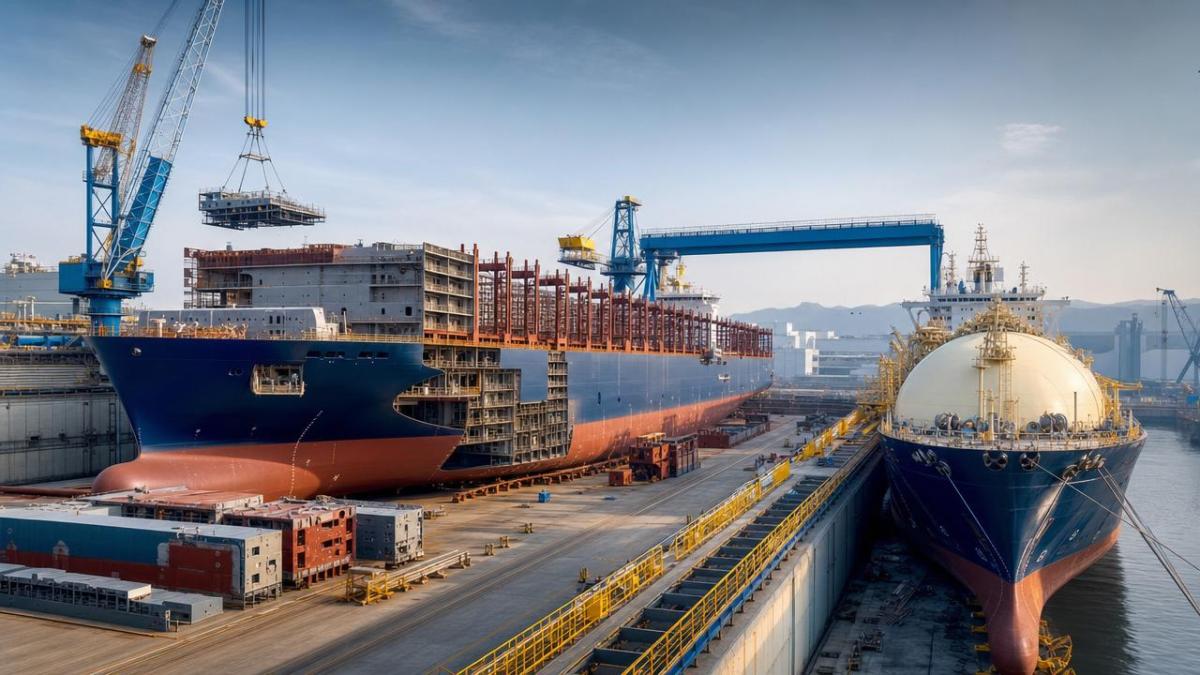
International shipbuilding costs do not rise evenly. Yard location, vessel type, compliance target, and delivery urgency create different outcomes. A standard bulk carrier and a digitalized LNG carrier face very different cost curves.
In 2026, the market is shaped by five linked forces. Steel prices remain volatile. Skilled labor remains tight. Environmental rules raise equipment complexity. Financing costs stay selective. Supply chains still reward flexible delivery slots.
This makes scenario judgment essential. International shipbuilding decisions now depend on route exposure, fuel pathway, automation depth, and expected charter performance. Without that framing, CAPEX comparisons can become misleading.
Scenario one: Smart container ship programs under route and digital pressure
Smart container ship orders face rising costs from integrated software, sensors, cybersecurity, and energy-saving systems. Hull cost still matters, but digital architecture now changes bid values and acceptance testing timelines.
International shipbuilding in this scenario is affected by port connectivity requirements. Ships designed for AI routing, predictive maintenance, and shore integration often need stronger onboard data infrastructure and redundancy.
Core judgment points for this scenario
- Whether route density supports fuel-saving software payback.
- Whether ports on the network can use data-rich vessel integration.
- Whether cyber compliance adds hidden certification expense.
- Whether delay risk at selected yards offsets lower quoted prices.
In many bids, the cheapest base hull is not the lowest-cost option. International shipbuilding economics improve when digital systems cut fuel burn, idle time, and unplanned maintenance over the ship’s operating life.
Scenario two: LNG carrier investment where containment and compliance drive premiums
LNG carrier construction remains one of the clearest examples of specialized international shipbuilding cost escalation. Membrane systems, cryogenic materials, and dual-fuel propulsion create high barriers in engineering and yard capacity.
A small change in containment design, boil-off management, or reliquefaction capability can significantly change total project value. Here, technical maturity often matters more than headline yard discounting.
Core judgment points for this scenario
- Whether cargo route duration supports advanced boil-off recovery systems.
- Whether chosen yards have proven containment installation quality.
- Whether emissions rules could shorten the design’s commercial relevance.
- Whether financing favors established technical configurations.
For this segment, international shipbuilding costs in 2026 are likely to stay elevated because high-end yards remain capacity constrained. The premium often reflects execution certainty, not only equipment inflation.
Scenario three: Fleet renewal decisions when older vessels face efficiency gaps
Another important international shipbuilding scenario involves replacing aging tonnage. This is not purely a newbuild question. It is a comparison between retrofit economics and full renewal under future compliance rules.
If older ships need major engine upgrades, hull improvements, and digital monitoring retrofits, the total spend can approach a large share of newbuild cost. Then lifetime efficiency becomes the deciding factor.
Core judgment points for this scenario
- Remaining structural life versus expected retrofit expenditure.
- Fuel cost sensitivity across planned trade lanes.
- Commercial penalties from lower cargo efficiency or slower speed.
- Future resale value under stricter emissions standards.
This scenario highlights why international shipbuilding analysis must include lifecycle cost. A higher 2026 build price may still outperform repeated retrofit cycles on less efficient legacy vessels.
How different scenarios change international shipbuilding requirements
The table below shows how international shipbuilding priorities shift by application setting. It helps separate visible cost items from deeper commercial consequences.
Practical adaptation strategies for 2026 shipyard cost shifts
International shipbuilding budgets need more than a fixed CAPEX estimate. They need scenario-based controls that connect technical scope, yard strategy, and commercial timing.
- Separate base hull pricing from compliance, digital, and propulsion packages.
- Model at least three delivery timing cases for shipyard slot selection.
- Stress-test lifecycle returns against fuel, carbon, and utilization swings.
- Check yard specialization, not only total bid value.
- Use route-specific performance assumptions for efficiency technologies.
- Link financing assumptions to technical maturity and certification confidence.
For GTOT readers, this is where intelligence matters. International shipbuilding should be compared through operational outcomes, not isolated equipment line items or short-term price impressions.
Common misreads that distort international shipbuilding decisions
Several recurring mistakes can weaken planning quality. They usually begin with incomplete scenario definition and end with unexpected lifecycle cost expansion.
- Treating all yard quotes as equivalent despite different execution depth.
- Assuming green compliance equipment has the same payback on every route.
- Ignoring software integration cost on advanced smart vessels.
- Comparing retrofit and newbuild options without residual value analysis.
- Overlooking delivery delay risk in tight international shipbuilding cycles.
In 2026, these misreads matter more because international shipbuilding is no longer driven by steel and labor alone. Technical interoperability and policy compliance increasingly shape the real cost base.
What to do next as 2026 international shipbuilding signals become clearer
Start with a scenario map. Define vessel purpose, route logic, fuel pathway, compliance horizon, and digital integration level. Then compare yards and specifications using the same operating assumptions.
Next, build a decision sheet covering build cost, delivery risk, lifecycle efficiency, and technical adaptability. This creates a more reliable view of international shipbuilding value than headline price alone.
GTOT’s cross-sector intelligence approach is useful here. Lessons from smart rail control, high-reliability braking, and maritime automation all reinforce one principle: integrated systems planning reduces expensive surprises.
As international shipbuilding enters 2026, the strongest decisions will come from matching each vessel program to its real operating scenario. Cost pressure is rising, but so is the value of better technical judgment.
Recommended News
 May 23, 20262026 Railway Safety Standards: What Is ChangingRailway safety standards in 2026 are shifting toward automation, digital monitoring, and stricter compliance. Learn the key changes and how to strengthen audits, inspections, and safer rail operations.
 May 22, 2026International Shipbuilding Cost Shifts in 2026International shipbuilding in 2026 faces rising costs from materials, labor, compliance, and digital upgrades. Explore smart vessel, LNG, and fleet renewal scenarios to plan better and reduce lifecycle risk.
 May 20, 2026LNG Carriers for Energy Security: 2026 Fleet Risks and Capacity OutlookLNG carriers for energy security face 2026 fleet risks from aging tonnage, shipyard delays, and charter tightness. Explore capacity outlook and smart procurement moves now.
 May 18, 2026Railway Safety Standards Updates That Impact MaintenanceRailway safety standards updates are reshaping inspections, traceability, braking, signaling, and pantograph maintenance. Learn the key changes, compliance risks, and practical actions to cut downtime.
 May 17, 2026High-speed Rail Technology: Key Upgrade Signals for 2026High-speed rail technology is reshaping 2026 rail upgrades. Discover key signals in signaling, pantographs, and braking systems to improve safety, capacity, and lifecycle value.
 May 16, 2026How International Voice Shapes Rail Technology Market AccessInternational voice drives rail market access by turning technical proof into trust. See how stronger global credibility helps win tenders, approvals, and long-term cross-border projects.