



Search News
Industry Portal
Popular Tags
How International Voice Shapes Rail Technology Market Access
Author
Time
Click Count
In the rail technology market, international voice is more than visibility. It is the trust layer behind market access, qualification review, and project continuity across borders.
When rail systems involve SIL4 safety, traction stability, braking precision, and lifecycle service, buyers rarely decide on price alone. They evaluate language clarity, technical proof, and global credibility.
For GTOT, this topic matters because advanced transport equipment now competes inside tightly regulated ecosystems. A stronger international voice helps technical value travel faster than market barriers.
When Cross-Border Rail Projects Raise the Entry Bar
Not every rail opportunity demands the same level of global communication strength. The need for international voice increases when projects are public, safety-critical, or linked to multilateral financing.
High-speed rail, metro automation, and intercity upgrades often involve layered reviews. Technical files, compliance records, and service commitments must all be understood by international evaluators.
In these cases, market access depends on how clearly a company explains product maturity, failure control, maintainability, and compatibility with legacy systems.
A weak international voice does not always mean weak technology. It often means strong engineering is presented without enough evidence, localization, or strategic framing.
Signals, traction, and braking face different review pressure
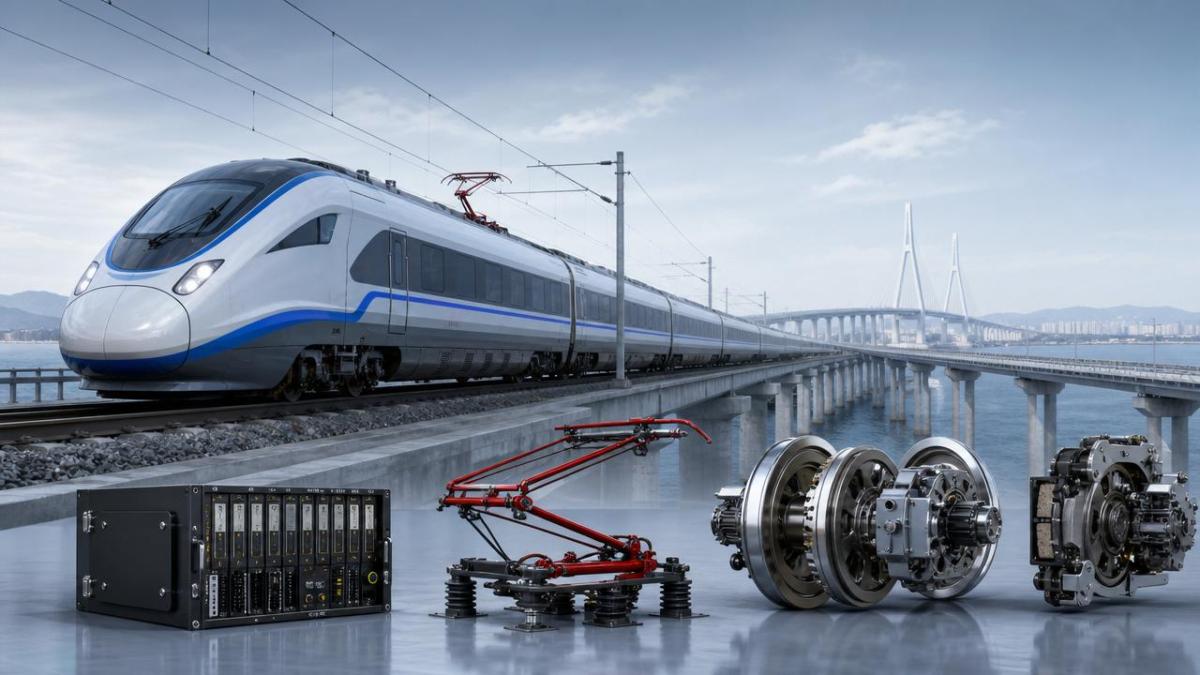
Railway signal control systems are treated as the network’s central nervous system. Buyers expect transparent safety logic, interface standards, redundancy architecture, and incident response methods.
Pantographs and traction-related parts are judged by speed stability, contact reliability, and environmental endurance. Testing language must connect laboratory results with real operating conditions.
Braking systems face scrutiny around stopping accuracy, heat fade, electronic control coordination, and long-term maintenance. Here, international voice supports both safety trust and lifecycle confidence.
Typical Market Access Scenarios Where International Voice Becomes Decisive
Scenario 1: Entering a new national rail tender
A first entry into a foreign tender usually begins with doubt. Review teams ask whether the technology is proven beyond its domestic base.
Here, international voice must convert technical depth into tender-ready language. That includes standards mapping, translated validation data, and a clear explanation of local adaptation limits.
Scenario 2: Joining a consortium-led infrastructure project
Large rail projects often involve EPC firms, design institutes, operators, and financing bodies. Each party reads value through a different lens.
In this setting, international voice means alignment. The same product story must satisfy technical reviewers, risk evaluators, and delivery planners without contradiction.
Scenario 3: Supplying components for upgrade of existing lines
Retrofit projects focus less on novelty and more on compatibility. Buyers need assurance that new parts will integrate with installed systems safely.
A credible international voice should explain interface boundaries, migration steps, shutdown risks, and maintenance training in practical terms.
Scenario 4: Building long-term channels in restricted markets
Some markets are hard to access because approvals are slow, local references are limited, and documentation expectations are strict.
In such environments, international voice grows through continuity. Consistent technical publishing, visible expert interpretation, and disciplined after-sales messaging create accumulated trust.
How Demand Changes Across Rail Application Scenarios
The same keyword can mean different priorities in different rail settings. A useful market access strategy starts by identifying which scenario shapes buyer expectations.
This is why GTOT’s intelligence approach matters. Strategic insight helps separate what must be said for market entry from what only sounds impressive.
What Strengthens International Voice in Real Access Scenarios
A strong international voice is built, not declared. In rail technology, it usually comes from five practical layers working together.
- Evidence language: translate test results into buyer decisions, not only engineering terms.
- Standards alignment: explain how products map to EN, IEC, IRIS, SIL, and local requirements.
- Scenario cases: show where the product worked under similar speed, climate, density, or maintenance conditions.
- Expert interpretation: let specialists explain design logic, not only marketing teams.
- Service credibility: define spare parts response, diagnostics support, and lifecycle commitment early.
For example, a pantograph supplier should not only state stable current collection at 350 km/h. It should also explain wind resistance behavior, wear patterns, and maintenance intervals.
A braking solution should not stop at force metrics. It should connect thermal fade performance with operating frequency, route profile, and digital control coordination.
That is where international voice turns from publicity into market access capability.
Scenario-Based Recommendations for Better Rail Market Access
Different project contexts require different communication priorities. A single global brochure rarely works across all rail opportunities.
Common Misjudgments That Weaken International Voice
One frequent mistake is assuming certificates alone open doors. Certificates matter, but market access also depends on interpretation, context, and project-specific relevance.
Another mistake is presenting all products with the same message. Signal control systems, pantographs, braking systems, and marine-linked logistics equipment need different narratives.
Some teams also overlook continuity. A short campaign cannot replace a durable international voice built through regular insights, technical commentary, and visible domain expertise.
There is also risk in overusing broad claims like innovation or leadership. In rail technology, credibility grows faster through exact operating data and clear scenario fit.
From Intelligence to Action: The Next Step for Global Rail Positioning
The most effective way to strengthen international voice is to start with scenario mapping. Identify where access friction appears, then match content, proof, and expert language to that barrier.
For rail technology, that may mean reorganizing technical archives into tender-ready assets, building comparative compliance notes, or publishing insight on safety and lifecycle topics.
GTOT supports this path by linking industry intelligence with practical communication needs. The goal is not louder promotion, but clearer authority in markets where trust decides entry.
When advanced transport equipment is judged across borders, international voice becomes a working asset. It helps technology move from being understood to being accepted, specified, and selected.
Recommended News
 May 23, 20262026 Railway Safety Standards: What Is ChangingRailway safety standards in 2026 are shifting toward automation, digital monitoring, and stricter compliance. Learn the key changes and how to strengthen audits, inspections, and safer rail operations.
 May 22, 2026International Shipbuilding Cost Shifts in 2026International shipbuilding in 2026 faces rising costs from materials, labor, compliance, and digital upgrades. Explore smart vessel, LNG, and fleet renewal scenarios to plan better and reduce lifecycle risk.
 May 20, 2026LNG Carriers for Energy Security: 2026 Fleet Risks and Capacity OutlookLNG carriers for energy security face 2026 fleet risks from aging tonnage, shipyard delays, and charter tightness. Explore capacity outlook and smart procurement moves now.
 May 18, 2026Railway Safety Standards Updates That Impact MaintenanceRailway safety standards updates are reshaping inspections, traceability, braking, signaling, and pantograph maintenance. Learn the key changes, compliance risks, and practical actions to cut downtime.
 May 17, 2026High-speed Rail Technology: Key Upgrade Signals for 2026High-speed rail technology is reshaping 2026 rail upgrades. Discover key signals in signaling, pantographs, and braking systems to improve safety, capacity, and lifecycle value.
 May 16, 2026How International Voice Shapes Rail Technology Market AccessInternational voice drives rail market access by turning technical proof into trust. See how stronger global credibility helps win tenders, approvals, and long-term cross-border projects.