



Search News
Industry Portal
Popular Tags
How to Evaluate Foundation Brakes for Rail Vehicles by Safety, Wear, and Lifecycle Cost
Author
Time
Click Count
Evaluating foundation brakes for rail vehicles starts with a simple fact: stopping force alone does not decide whether a brake system is right.
In active rail networks, the better question is how safely that force is delivered, how quickly parts wear, and what the system costs across years of service.
That matters even more in a transport landscape shaped by automation, tighter maintenance windows, and higher expectations for asset reliability.
For a platform like GTOT, where braking sits beside signalling, traction, and broader land-sea logistics intelligence, foundation brakes for rail vehicles are not isolated hardware.
They are part of a larger performance chain that influences safety, fleet availability, tender competitiveness, and lifetime asset value.
What foundation brakes really include
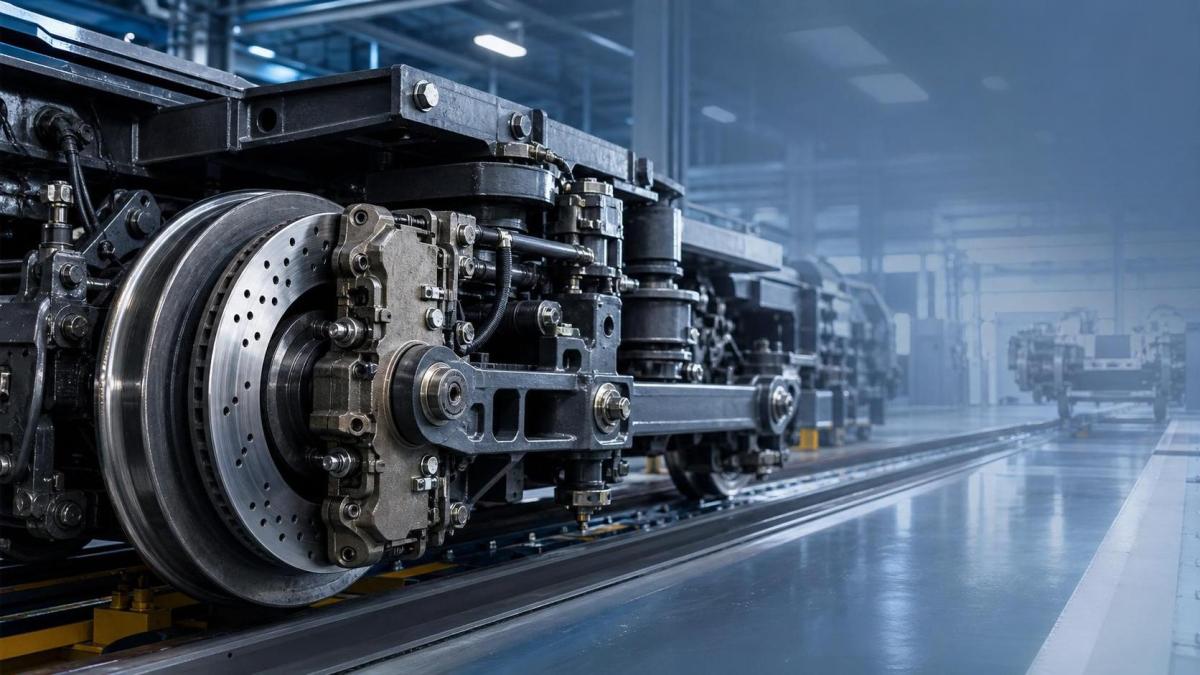
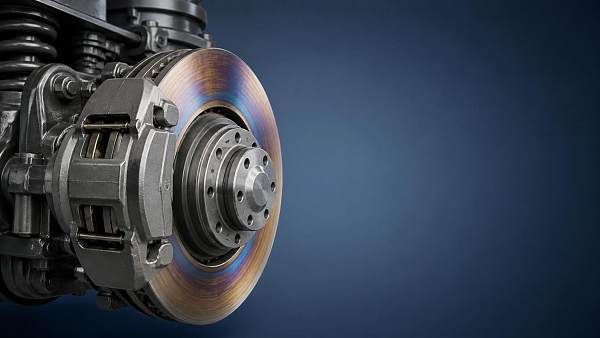
The image above fits the hardware layer where braking performance is physically created.
Foundation brakes for rail vehicles refer to the mechanical components that convert brake command into friction at the wheel or disc.
This usually includes brake rigging, calipers or brake units, cylinders, slack adjusters, pads or blocks, mounting structures, and transmission links.
The electronic brake control system may decide when and how braking is applied, but the foundation brake determines how that demand reaches the train physically.
That distinction is important during evaluation.
A control algorithm can look excellent in simulation, while the underlying brake hardware may still suffer from heat concentration, uneven wear, or poor maintainability.
In practice, assessment should compare wheel tread brake systems, disc brake arrangements, and mixed architectures against vehicle duty, axle load, and service pattern.
Why the topic now deserves closer attention
Railway operators are under pressure to move more passengers and freight with fewer disruptions.
That changes the way foundation brakes for rail vehicles are judged.
Assessment is no longer limited to type approval or peak braking performance under fresh components.
Attention has shifted toward degraded conditions, thermal stability, noise, particulate emissions, and maintenance efficiency.
There is also a stronger connection between brake design and broader digitalization goals.
Condition monitoring, predictive maintenance, and life extension strategies only work when the brake system provides stable, interpretable wear behavior.
That is one reason GTOT’s cross-disciplinary perspective matters.
As with signal control or pantograph systems, brake performance now has to be read as part of an interconnected operational system, not as a standalone spare part issue.
Safety should be measured beyond nominal braking force
A safe brake is not simply a strong brake.
The better measure is whether the system delivers predictable deceleration under the full range of real service conditions.
Several safety questions are worth putting at the center of any review.
- How does braking force change with speed, temperature, and contamination?
- What is the margin against thermal fade during repeated stops?
- How evenly is force distributed across axles and bogies?
- What happens if one actuator, adjuster, or linkage degrades?
- How reliably does the system recover after emergency braking?
Emergency stopping distance is still essential, but it should be read together with brake consistency.
A configuration that meets target distance only when components are new may create hidden operational risk later.
For foundation brakes for rail vehicles, mechanical tolerance stack-up is another issue often underestimated.
Small deviations in rigging geometry or pad clearance can gradually reduce effective response, especially in dense service cycles.
Useful safety evidence during comparison
Wear behavior often decides long-term value
Wear is where many promising brake solutions become expensive ones.
The question is not only how fast pads, blocks, discs, or wheels wear.
It is how evenly they wear, how visible that wear is during inspection, and how strongly wear rates vary across routes and seasons.
Foundation brakes for rail vehicles working in commuter service face frequent low-to-medium speed stops.
Freight or mixed traffic may expose brakes to heavier loads, longer idle periods, and more environmental contamination.
High-speed service raises thermal demands and may shift wear risk from pad loss to disc cracking or heat checking.
It helps to separate wear into three layers.
- Consumable wear: pads, blocks, pins, bushings, and adjusters.
- Interface wear: discs, wheel treads, mounting faces, and linkage joints.
- System wear effects: vibration, looseness, rising clearances, and longer adjustment cycles.
The most useful evaluation data usually comes from service-equivalent testing rather than ideal laboratory points.
Look for wear spread, not only wear average.
A brake package with moderate average wear but extreme axle-to-axle variation often creates more downtime than one with slightly higher uniform wear.
Lifecycle cost is broader than purchase price
A low initial quote can make foundation brakes for rail vehicles appear competitive, yet lifecycle cost usually tells a different story.
The practical cost model should include direct and indirect elements over the full maintenance horizon.
Direct cost includes units, consumables, replacement labor, wheel or disc reprofiling, and overhaul intervals.
Indirect cost includes train downtime, spare stock complexity, workshop access time, and operational penalties from unscheduled removals.
A better brake arrangement may reduce total cost even when the hardware itself is more expensive.
That can happen when inspection is faster, pad exchange is simpler, and wear is stable enough for maintenance planning.
Cost questions that change the conclusion
- How many labor minutes are needed for routine replacement?
- Can wear parts be standardized across fleet variants?
- How often does brake wear trigger wheel turning or disc replacement?
- What stock levels are required to protect availability?
- Is the brake system easy to inspect without major disassembly?
This is where intelligence-led evaluation becomes useful.
GTOT’s wider focus on asset value, decarbonization, and technical credibility in complex tenders mirrors the way brake decisions are actually made.
The winning option is usually the one that aligns engineering performance with procurement discipline and long-range operational economics.
Different service scenarios need different evaluation priorities
The same checklist should not be applied with the same weighting in every fleet.
Foundation brakes for rail vehicles should be reviewed against route profile, climate, operating density, and maintenance model.
This kind of scenario-based evaluation prevents over-specification.
It also avoids selecting a brake package optimized for a duty cycle the fleet never actually sees.
A practical evaluation framework
A useful review process for foundation brakes for rail vehicles usually combines technical data, field evidence, and cost assumptions in one matrix.
That matrix should be simple enough to compare options, but detailed enough to reveal trade-offs.
Core steps
- Define service duty clearly, including speed bands, gradients, stop frequency, and ambient conditions.
- Set minimum safety thresholds before discussing cost.
- Compare wear data using route-relevant duty cycles, not generic supplier averages.
- Model maintenance burden with actual workshop assumptions.
- Check parts access, adjustment simplicity, and inspection visibility physically where possible.
- Test sensitivity to degraded states, because real fleets never remain in perfect condition.
When two solutions look close on paper, maintainability often becomes the tie-breaker.
That is especially true where fleet uptime matters as much as raw technical performance.
What to do next with the findings
A sound decision on foundation brakes for rail vehicles usually begins with a sharper internal baseline.
List the operating scenarios that matter most, then rank safety stability, wear predictability, and lifecycle cost by actual fleet impact.
From there, compare candidate brake configurations using the same duty assumptions and the same maintenance logic.
Where data is incomplete, that gap should be treated as a technical risk, not as a neutral point.
The strongest evaluations are rarely the ones with the most claims.
They are the ones that connect safety evidence, wear behavior, and whole-life economics into one consistent decision path.
For organizations tracking rail component intelligence through GTOT, that approach makes brake selection more defensible in procurement, more practical in operation, and more resilient over the asset lifecycle.
Recommended News
 Aug 25, 2026How thermal fade performance disc brakes hold up in repeated high-load stopsThermal fade performance disc brakes in repeated high-load stops: learn what affects heat stability, recovery, and braking consistency for safer, smarter system evaluation.
 Jul 16, 2026How to Evaluate Foundation Brakes for Rail Vehicles by Safety, Wear, and Lifecycle CostFoundation brakes for rail vehicles: learn how to compare safety, wear patterns, and lifecycle cost to choose brake systems that improve reliability, availability, and long-term value.
 Jul 11, 2026Rail Brake Linings: Common Wear Issues and How to Prevent Early FailureRail brake linings wear issues often start with heat, misalignment, or contamination. Learn the warning signs, root causes, and practical steps to prevent early failure.
 Jul 10, 2026How to Evaluate a Rail Brake Components Manufacturer for Lifecycle CostRail brake components manufacturer selection should focus on lifecycle cost, safety compliance, reliability data, and support. Learn how to compare suppliers for lower risk and better fleet uptime.
 May 16, 2026Absolute Safety Benchmarks for Modern Rail Brake System ReviewsAbsolute safety defines every modern rail brake system review. Explore benchmarks for braking force, fail-safe design, thermal stability, and diagnostics to assess real-world reliability.