



Search News
Industry Portal
Popular Tags
Rail Brake Linings: Common Wear Issues and How to Prevent Early Failure
Author
Time
Click Count
Why do rail brake linings fail earlier than expected?
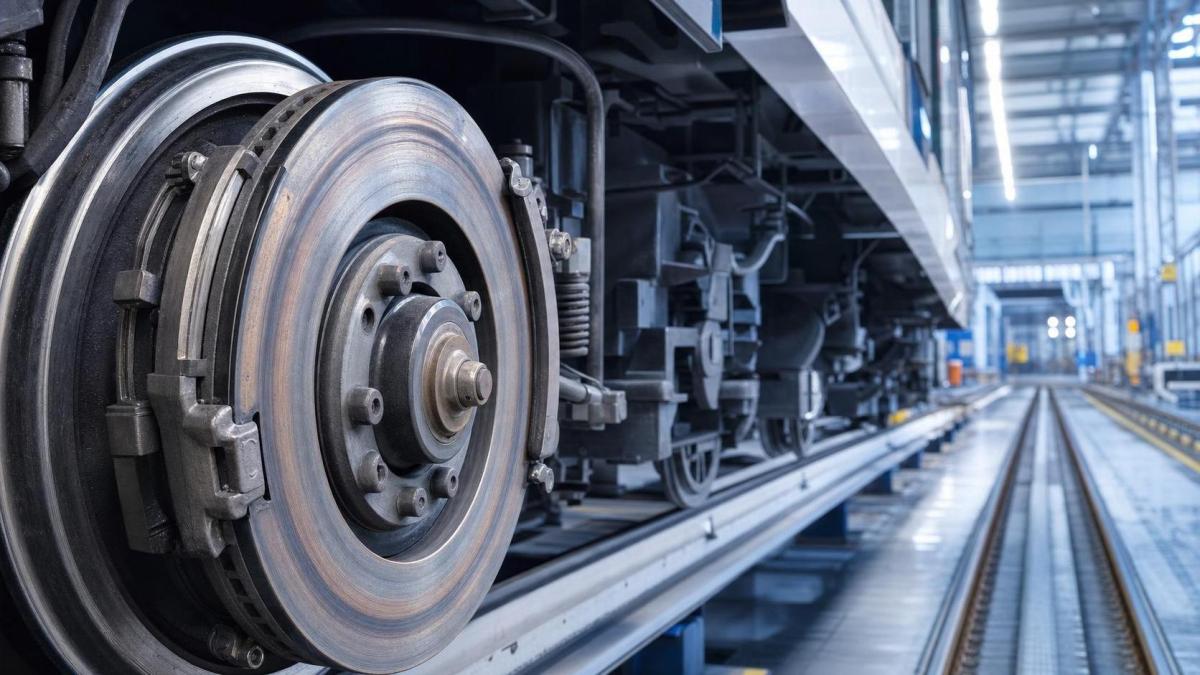
Rail brake linings rarely fail without warning. The problem is that the earliest signs are easy to miss during routine service.
In practice, premature wear usually starts with heat imbalance, contact irregularity, contamination, or unstable braking cycles.
That matters because rail brake linings sit at the center of stopping performance, wheel protection, and maintenance planning.
A lining can still look usable by thickness alone, yet already be losing friction stability, bonding integrity, or thermal resistance.
For high-duty fleets, that hidden decline often leads to longer stopping distances, disc scoring, vibration, or repeated replacements.
This is one reason rail braking systems receive close attention across transport intelligence platforms such as GTOT.
The wider transport picture is connected. Reliable braking protects timetable stability, asset value, and supply chain continuity across land corridors.
A useful way to think about rail brake linings is simple: they are wear parts, but their wear should remain predictable.
Once wear becomes uneven, accelerated, or heat-damaged, the issue is no longer normal consumption. It becomes a system condition.
Which wear patterns usually point to a real problem?
Not every worn surface means immediate failure. The key is recognizing patterns that suggest the brake interface is no longer working evenly.
The most common warning signs are easier to judge when grouped by appearance and likely cause.
More often than not, early lining damage is tied to one of these patterns, not simply to high mileage.
If rail brake linings are wearing differently from axle to axle, compare operating history before replacing parts in isolation.
A single bad lining can come from material stress. A repeated pattern usually points to application or hardware behavior.
Is the cause usually the lining material, or something around it?
It is tempting to blame the friction material first. In reality, surrounding conditions are responsible for many early failures.
Rail brake linings work inside a chain of variables: disc metallurgy, actuator force, suspension behavior, route profile, and braking logic.
When any of those shift, the lining absorbs the symptom.
Heat is still the main enemy
Thermal overload changes the friction surface first. Then it affects wear rate, crack resistance, and bonding stability.
Repeated mountain routes, stop-dense urban service, and frequent corrective braking all raise the heat burden.
Where braking control is uneven, one bogie or axle may carry more thermal work than the rest.
Mechanical fit matters more than many expect
Poor seating, seized guides, uneven piston action, or disc runout can cause only part of the lining to work properly.
That creates concentrated pressure. Pressure concentration then produces hot spots, noise, and premature material loss.
Contamination is often underestimated
Water, oil mist, metallic dust, and maintenance residue can alter friction behavior even before visible surface damage appears.
This is especially relevant where rail systems operate in mixed climate zones, coastal corridors, tunnels, or heavy particulate environments.
GTOT often frames transport assets as connected systems. Rail brake linings deserve the same treatment during failure analysis.
What should be checked before replacing rail brake linings again?
If the same position keeps consuming linings too fast, replacing parts alone will rarely fix the root cause.
A short diagnostic routine usually saves more time than another early swap.
- Measure wear across the full lining face, not only at the thinnest edge.
- Check disc surface for scoring, hot bands, hardness variation, and runout.
- Verify that brake release is complete after each cycle.
- Inspect guides, pins, pistons, and mounting points for free movement.
- Review route duty, speed profile, load changes, and emergency brake records.
- Confirm the installed lining grade matches the thermal and friction requirement.
This step is where many maintenance decisions improve. The best indicator is not part age alone, but pattern consistency.
When rail brake linings fail early after a recent retrofit, review compatibility between friction material and disc surface finish.
Some composite linings need stable bedding conditions. If they are pushed straight into severe service, wear can spike early.
How can early failure be prevented in day-to-day maintenance?
Prevention is usually less about one dramatic fix and more about disciplined control of small variables.
In actual operation, the following practices have the biggest effect on rail brake linings life.
Track wear trends, not only discard limits
A lining that drops from stable wear to accelerated wear is already telling you something changed upstream.
Trend logs by axle, route, and braking profile make abnormal consumption visible much earlier.
Use thermal evidence whenever possible
Temperature crayons, handheld thermal checks, or condition monitoring data can reveal dragging brakes and overload zones.
That is often more reliable than visual judgment alone.
Protect installation quality
Correct torque, clean contact areas, proper hardware condition, and verified free movement all influence lining wear behavior.
A rushed installation can create the next failure before the vehicle leaves the depot.
Match material to duty, not just to dimensions
Two rail brake linings may fit the same assembly but behave differently under heat, humidity, and repeated high-energy stops.
Selection should consider friction stability, fade resistance, wear rate, and disc compatibility.
That selection logic reflects the broader GTOT view of transport assets: component choice should support reliability across the full operating chain.
When is replacement timing too early, and when is it already too late?
This is one of the most searched maintenance questions because thickness alone does not answer it.
Replacing rail brake linings too early raises cost and wastes useful life. Waiting too long risks disc damage and unstable braking.
A balanced judgment usually comes from combining dimensional limits with condition-based signals.
A practical rule is this: if the surface condition threatens braking consistency, replacement should not wait for minimum thickness.
On the other hand, if wear is even and behavior is stable, planned replacement can follow monitored service intervals.
What is the smartest next step if wear issues keep returning?
Start by narrowing the problem to pattern, location, and operating condition. Repeat failures become manageable once they are categorized properly.
Build a short review sheet covering lining grade, axle position, route duty, disc condition, release behavior, and thermal evidence.
That turns rail brake linings from a replacement item into a measurable performance indicator.
For organizations following GTOT intelligence across rail systems and connected transport infrastructure, this approach fits the larger reliability model.
Asset value improves when wear data, operating context, and component choice are reviewed together rather than separately.
The most effective next move is usually straightforward: standardize inspections, log abnormal wear by position, and compare material performance against actual duty.
Once those basics are in place, decisions about replacement intervals, lining selection, and brake hardware correction become far more accurate.
Recommended News
 Aug 25, 2026How thermal fade performance disc brakes hold up in repeated high-load stopsThermal fade performance disc brakes in repeated high-load stops: learn what affects heat stability, recovery, and braking consistency for safer, smarter system evaluation.
 Jul 16, 2026How to Evaluate Foundation Brakes for Rail Vehicles by Safety, Wear, and Lifecycle CostFoundation brakes for rail vehicles: learn how to compare safety, wear patterns, and lifecycle cost to choose brake systems that improve reliability, availability, and long-term value.
 Jul 11, 2026Rail Brake Linings: Common Wear Issues and How to Prevent Early FailureRail brake linings wear issues often start with heat, misalignment, or contamination. Learn the warning signs, root causes, and practical steps to prevent early failure.
 Jul 10, 2026How to Evaluate a Rail Brake Components Manufacturer for Lifecycle CostRail brake components manufacturer selection should focus on lifecycle cost, safety compliance, reliability data, and support. Learn how to compare suppliers for lower risk and better fleet uptime.
 May 16, 2026Absolute Safety Benchmarks for Modern Rail Brake System ReviewsAbsolute safety defines every modern rail brake system review. Explore benchmarks for braking force, fail-safe design, thermal stability, and diagnostics to assess real-world reliability.