



Search News
Industry Portal
Popular Tags
How to Evaluate a Rail Brake Components Manufacturer for Lifecycle Cost
Author
Time
Click Count
How to Evaluate a Rail Brake Components Manufacturer for Lifecycle Cost
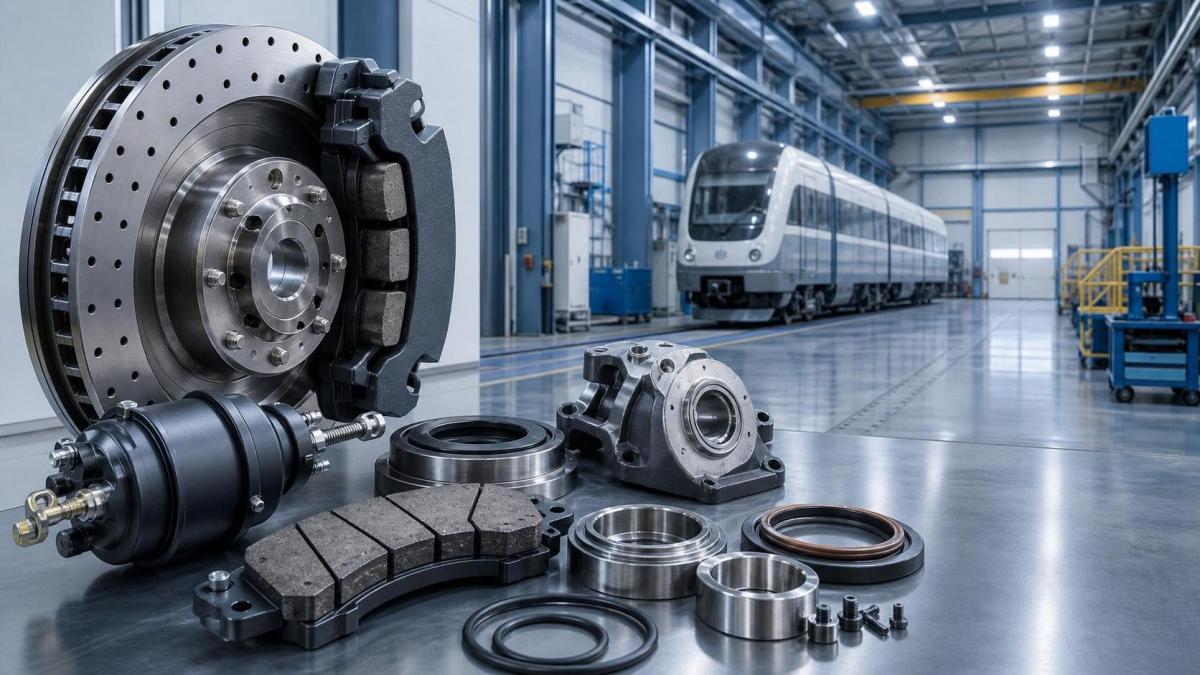
Choosing a rail brake components manufacturer is no longer only about unit price.
It now affects lifecycle cost, fleet uptime, maintenance intervals, and operational risk.
In rail transit, braking performance sits close to safety, asset value, and service reliability.
That is why a rail brake components manufacturer should be reviewed as a long-term operating partner.
A low entry quote can look attractive in tenders.
But weak materials, unstable quality, and slow field support usually cost more later.
The better approach is to compare suppliers through total cost of ownership.
This includes purchase cost, wear life, downtime exposure, spare parts strategy, and technical response speed.
In practical terms, the right rail brake components manufacturer helps reduce unplanned replacement, service disruption, and compliance risk.
Start With Lifecycle Cost, Not Piece Price
The first filter should be cost over the full service cycle.
A rail brake components manufacturer may offer a lower unit price but still increase annual spending.
This happens when parts wear faster, create more inspections, or shorten overhaul windows.
Look at cost drivers in a structured way:
- Average service life of pads, discs, actuators, valves, and seals
- Labor hours required for inspection and replacement
- Downtime cost during scheduled and unscheduled maintenance
- Inventory carrying cost for critical spares
- Failure risk under heavy load, high humidity, or extreme temperature
A serious rail brake components manufacturer should provide lifecycle data, not only catalog claims.
Ask for performance evidence from similar trainsets, duty cycles, and track conditions.
This is especially important for metro, intercity, and heavy-haul applications, where braking loads differ sharply.
Check Safety Compliance and Technical Certification
Certification is not a paperwork formality.
For any rail brake components manufacturer, it is a direct signal of process discipline and product consistency.
Review whether the supplier can support relevant standards, testing protocols, and traceability requirements.
Common review points include:
- Quality management systems such as ISO 9001
- Rail-specific manufacturing and validation records
- Material certificates and batch traceability
- Brake dynamometer test results
- Compliance with customer or operator approval procedures
More importantly, confirm how often the rail brake components manufacturer updates validation after design changes.
A supplier with weak change control can create hidden risk across multiple fleets.
From a tender perspective, complete documentation also reduces qualification delays.
Assess Material Performance in Real Operating Conditions
Material performance usually separates a dependable rail brake components manufacturer from a low-cost trader.
Brake pads, discs, friction blocks, and sealing materials must handle heat, vibration, dust, and repeated load cycles.
Recent market changes make this even more relevant.
Operators want longer intervals, lower noise, and more predictable wear behavior.
When reviewing a rail brake components manufacturer, ask practical questions:
- How stable is friction coefficient across temperature ranges?
- What is the wear rate in stop-and-go service versus high-speed service?
- How does the product perform under rain, snow, sand, or salt exposure?
- Is there field data on thermal fade, cracking, or abnormal noise?
Suppliers should also explain design tradeoffs clearly.
For example, a harder material may extend wear life but increase counter-surface damage.
That changes total maintenance cost across the brake system.
Measure Reliability Through Data, Not Sales Claims
A credible rail brake components manufacturer should have usable reliability data.
That includes failure rates, mean time between failures, warranty records, and root cause reports.
Do not stop at generic references.
Request case evidence from fleets with matching speed profile, axle load, and climate conditions.
Useful signals include:
- Stable replacement cycles across multiple years
- Low rate of emergency component changeouts
- Documented corrective action process after field issues
- Predictable lead times for urgent spare demand
A rail brake components manufacturer with transparent failure analysis usually performs better over time.
That is because engineering feedback is already built into production control.
Review Engineering Support and Aftermarket Capability
Technical support has a direct cost impact, especially after commissioning.
A rail brake components manufacturer should support installation, diagnostics, training, and failure response.
This matters even more when fleets operate across regions with different maintenance capabilities.
Check whether the supplier can offer:
- Application engineering during part selection and system matching
- On-site or remote troubleshooting support
- Maintenance manuals with clear replacement thresholds
- Training for depot teams and service contractors
- Spare parts planning based on fleet size and duty pattern
In actual operations, a responsive rail brake components manufacturer can shorten outage duration significantly.
That saving rarely appears in the initial quote, but it shows up fast in service KPIs.
Examine Supply Chain Resilience and Lead-Time Risk
Lead time is now a strategic factor in supplier evaluation.
A capable rail brake components manufacturer should have stable sourcing, clear production planning, and realistic delivery commitments.
This is where many procurement decisions break down.
The sample passes testing, but serial supply becomes inconsistent.
Review the supplier on these points:
A reliable rail brake components manufacturer should be able to discuss these issues in detail.
Use a Practical Evaluation Scorecard
To compare suppliers fairly, build a weighted scorecard before final negotiation.
This keeps the decision focused on measurable value.
A useful model for selecting a rail brake components manufacturer may include:
- Lifecycle cost projection: 30%
- Technical compliance and certification: 20%
- Field reliability and reference performance: 20%
- Engineering support and service response: 15%
- Supply stability and lead-time control: 15%
You can adjust the weight by project type.
For metro fleets, downtime and service support may deserve more emphasis.
For export tenders, documentation quality and approval history may matter more.
The point is simple.
The best rail brake components manufacturer is rarely the one with the cheapest first invoice.
Make the Final Decision With Operating Reality in Mind
A strong purchasing decision balances cost, safety, and operational continuity.
When you evaluate a rail brake components manufacturer, look beyond brochures and one-time discounts.
Focus on verified wear life, test credibility, field reliability, response capability, and supply resilience.
That is where lifecycle cost is really controlled.
In a market where uptime, safety margins, and tender competitiveness are all under pressure, the choice of rail brake components manufacturer carries long-term consequences.
A disciplined evaluation process helps reduce uncertainty and supports stronger asset performance over the full fleet life.
The most practical next step is to request lifecycle data, reference cases, and service commitments from shortlisted suppliers, then compare them through a weighted cost-and-risk model.
Recommended News
 Aug 25, 2026How thermal fade performance disc brakes hold up in repeated high-load stopsThermal fade performance disc brakes in repeated high-load stops: learn what affects heat stability, recovery, and braking consistency for safer, smarter system evaluation.
 Jul 16, 2026How to Evaluate Foundation Brakes for Rail Vehicles by Safety, Wear, and Lifecycle CostFoundation brakes for rail vehicles: learn how to compare safety, wear patterns, and lifecycle cost to choose brake systems that improve reliability, availability, and long-term value.
 Jul 11, 2026Rail Brake Linings: Common Wear Issues and How to Prevent Early FailureRail brake linings wear issues often start with heat, misalignment, or contamination. Learn the warning signs, root causes, and practical steps to prevent early failure.
 Jul 10, 2026How to Evaluate a Rail Brake Components Manufacturer for Lifecycle CostRail brake components manufacturer selection should focus on lifecycle cost, safety compliance, reliability data, and support. Learn how to compare suppliers for lower risk and better fleet uptime.
 May 16, 2026Absolute Safety Benchmarks for Modern Rail Brake System ReviewsAbsolute safety defines every modern rail brake system review. Explore benchmarks for braking force, fail-safe design, thermal stability, and diagnostics to assess real-world reliability.