



Search News
Industry Portal
Popular Tags
Absolute Safety Benchmarks for Modern Rail Brake System Reviews
Author
Time
Click Count
In modern rail brake system reviews, absolute safety is not a slogan but the decisive benchmark guiding every evaluation.
For quality control and safety management, braking performance must be judged as a complete risk-control system, not a single component result.
Stopping force, electronic precision, thermal stability, redundancy, and fail-safe logic together define whether a system deserves trust under real operating pressure.
Within the broader transport intelligence landscape, GTOT tracks these benchmarks because rail brake reliability directly shapes network efficiency, passenger protection, and asset resilience.
Core Meaning of Absolute Safety in Rail Brake System Reviews
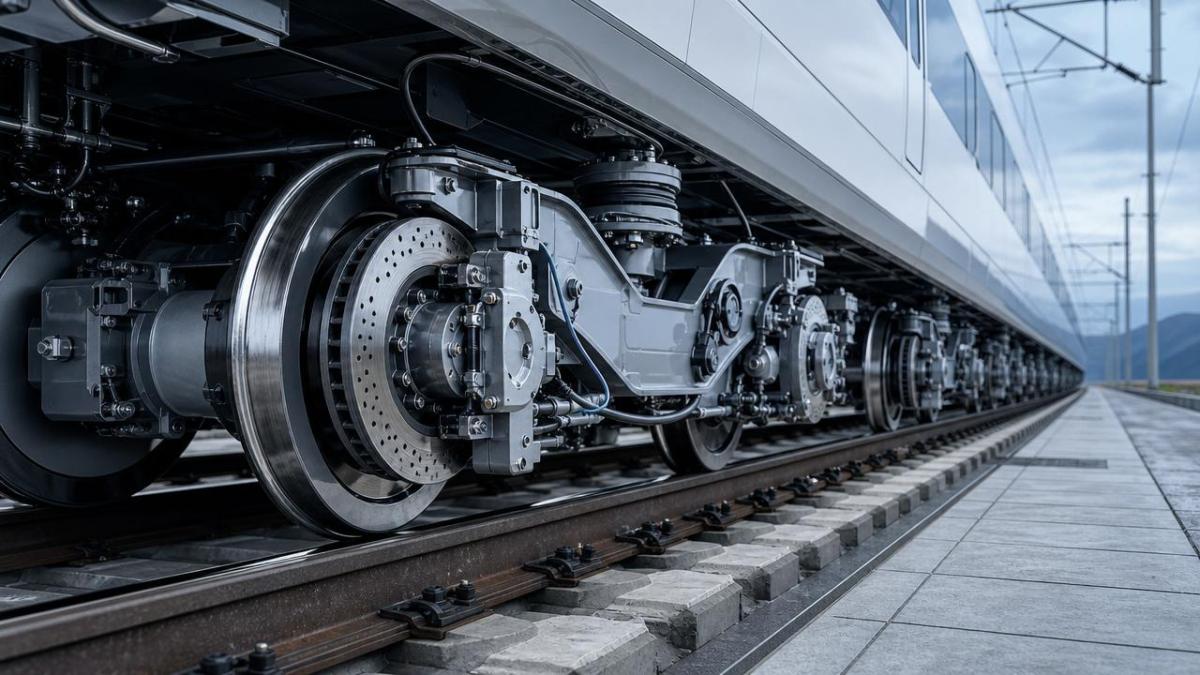
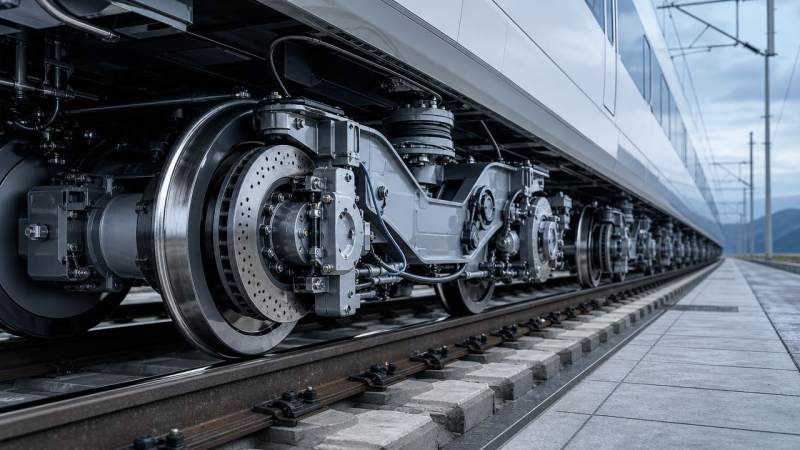
Absolute safety in rail braking means the system remains controllable, predictable, and recoverable during normal, degraded, and emergency conditions.
A review should never focus only on nominal stopping distance.
It must also verify response time, braking consistency, wheel-slide protection, fault detection, and performance after repeated heavy duty cycles.
For modern fleets, absolute safety also covers software integrity, sensor validation, communication reliability, and compatibility with train control architecture.
This is especially important where high-speed rail, metro automation, and mixed traffic corridors operate under tight headways.
Essential Review Dimensions
- Braking distance accuracy under dry, wet, and contaminated rail conditions
- Command response speed from control input to brake force delivery
- Thermal fade resistance during repeated service and emergency events
- Redundancy across pneumatic, electronic, and mechanical subsystems
- Fail-safe behavior after power loss, sensor drift, or communication interruption
Industry Context and Current Safety Attention Points
Rail brake system reviews are changing because train speed, axle load, automation level, and maintenance complexity are all increasing.
At the same time, transport operators expect lower lifecycle cost without compromising absolute safety.
This pressure makes benchmark-based evaluation more valuable than simple catalog comparison.
Across global transport systems, these factors connect directly to reliability expectations seen in other safety-critical sectors tracked by GTOT.
Whether on land or sea, intelligent equipment must keep control under stress, uncertainty, and long-duration duty.
Technical Benchmarks That Define Trusted Brake Performance
A strong review framework translates absolute safety into measurable criteria.
That helps distinguish a robust braking platform from one that performs well only in laboratory conditions.
1. Braking Force Control
Brake force must be accurately modulated across speed ranges, load states, and adhesion conditions.
Over-braking can trigger wheel damage, while under-braking weakens absolute safety margins in critical deceleration windows.
2. Electronic Control Precision
Modern systems depend on control units, sensors, and communication pathways that must remain synchronized and fault-aware.
Reviewers should examine signal latency, self-diagnostics, and safe fallback modes after abnormal data inputs.
3. Thermal Stability
Repeated braking produces severe heat loads in pads, discs, resistors, and surrounding structures.
Thermal fade testing is essential because absolute safety declines when friction materials lose stability under prolonged energy absorption.
4. Fail-Safe and Redundancy Design
A brake system review should confirm safe performance after single-point failure, not only full-system health.
Redundant channels, spring-applied emergency functions, and independent monitoring protect absolute safety when unexpected faults appear.
5. Maintainability and Diagnostics
Reliable braking is sustained through maintenance visibility.
Good systems provide condition indicators, event logs, wear prediction, and fault isolation that reduce hidden degradation.
Operational Value of Absolute Safety Benchmarks
Absolute safety benchmarks support better decisions far beyond technical acceptance testing.
They improve lifecycle planning, contract evaluation, incident prevention, and long-term asset reliability.
- They reduce uncertainty when comparing different brake architectures
- They reveal hidden risk in software-dependent braking logic
- They support evidence-based maintenance intervals
- They strengthen compliance with national and international safety expectations
- They help align safety, punctuality, and whole-life cost targets
For intelligence platforms like GTOT, these benchmarks also create a common language between engineering performance and strategic infrastructure evaluation.
Typical Brake System Review Scenarios
The meaning of absolute safety changes slightly with service profile, but the benchmark logic stays consistent.
In each case, absolute safety requires field-relevant testing rather than generic performance declarations.
Review depth should reflect actual route conditions, braking frequency, and control system integration level.
Practical Review Guidance and Risk Checks
A disciplined review process turns abstract safety goals into actionable verification steps.
- Check braking performance across full load, speed, and weather envelopes.
- Verify diagnostic coverage for sensors, actuators, and control electronics.
- Review thermal test evidence for repeated service and emergency braking.
- Confirm fail-safe behavior during power interruption and communication loss.
- Assess maintainability, spare strategy, and inspection accessibility.
- Compare laboratory data with route-level operational validation.
One common mistake is treating software-controlled braking as a purely mechanical subsystem.
Another is overlooking performance drift after wear, contamination, or seasonal temperature extremes.
Absolute safety depends on how the full system behaves after time, heat, vibration, and repeated intervention.
Closing Direction for Safer Rail Brake Evaluations
Absolute safety remains the clearest benchmark for modern rail brake system reviews because it unites performance, resilience, and recoverability.
The most reliable evaluations measure not only how a brake system stops, but how it continues protecting control under stress.
Using structured benchmarks for thermal behavior, electronic precision, redundancy, and diagnostics creates stronger technical confidence.
For ongoing transport intelligence, GTOT follows these signals to connect component-level evidence with wider land-and-sea infrastructure performance decisions.
The next practical step is to review brake systems against route-specific risk conditions and demand verifiable proof of absolute safety in real service environments.
Recommended News
 Aug 25, 2026How thermal fade performance disc brakes hold up in repeated high-load stopsThermal fade performance disc brakes in repeated high-load stops: learn what affects heat stability, recovery, and braking consistency for safer, smarter system evaluation.
 Jul 16, 2026How to Evaluate Foundation Brakes for Rail Vehicles by Safety, Wear, and Lifecycle CostFoundation brakes for rail vehicles: learn how to compare safety, wear patterns, and lifecycle cost to choose brake systems that improve reliability, availability, and long-term value.
 Jul 11, 2026Rail Brake Linings: Common Wear Issues and How to Prevent Early FailureRail brake linings wear issues often start with heat, misalignment, or contamination. Learn the warning signs, root causes, and practical steps to prevent early failure.
 Jul 10, 2026How to Evaluate a Rail Brake Components Manufacturer for Lifecycle CostRail brake components manufacturer selection should focus on lifecycle cost, safety compliance, reliability data, and support. Learn how to compare suppliers for lower risk and better fleet uptime.
 May 16, 2026Absolute Safety Benchmarks for Modern Rail Brake System ReviewsAbsolute safety defines every modern rail brake system review. Explore benchmarks for braking force, fail-safe design, thermal stability, and diagnostics to assess real-world reliability.