



Search News
Industry Portal
Popular Tags
LNG Carriers Technology Advancements: What Improves Cost and Boil-Off Control
Author
Time
Click Count
Why are LNG carriers technology advancements now central to vessel economics?
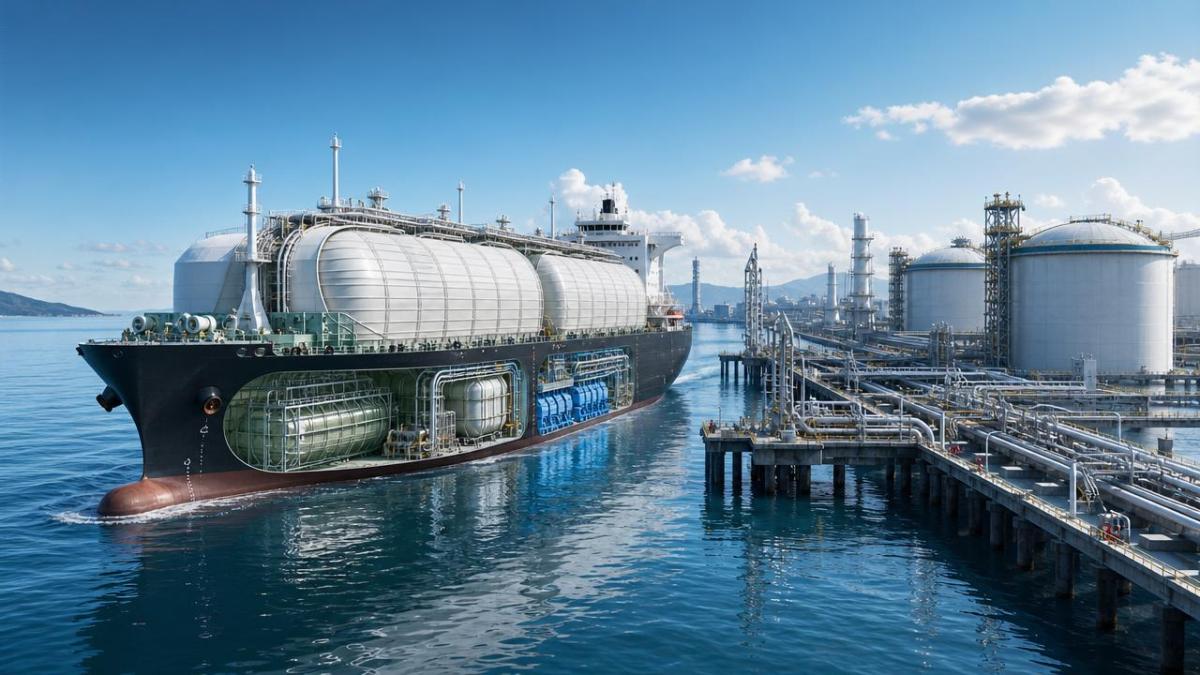
LNG shipping used to be judged mainly by capacity and charter rate. That is no longer enough. Today, technical design directly shapes delivered cargo value and operating margin.
For LNG carriers, every fraction of boil-off gas matters. Lost cargo, inefficient fuel use, and off-hire risk can quickly change a project’s commercial case.
This is why LNG carriers technology advancements attract attention across the wider transport industry. They connect ship design, fuel strategy, port flexibility, and long-cycle asset competitiveness.
At GTOT, LNG carriers sit beside rail signaling, braking, pantographs, and smart container ships for one reason. In all these sectors, intelligence and control quality determine asset value.
In practical terms, the most valuable upgrades are not always the most visible ones. Better containment, propulsion integration, and digital monitoring often produce the clearest cost effects.
A useful starting point is simple. Ask which technologies improve cargo retention, reduce fuel penalty, and preserve flexibility under changing trade patterns.
Which onboard technologies have the biggest impact on boil-off control?
The short answer is containment design comes first. If thermal losses are lower, the vessel begins every voyage with a better economic baseline.
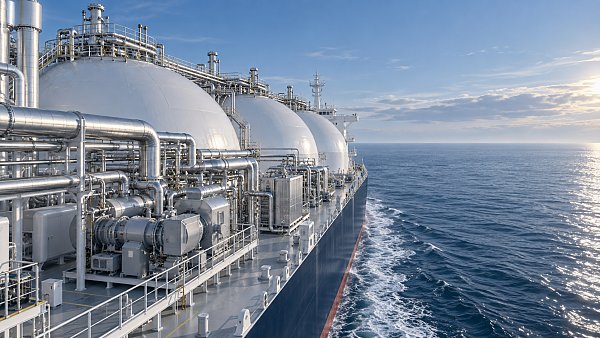
Modern membrane systems, improved insulation layers, and more precise stress management help reduce boil-off gas generation. That matters especially on long-haul routes with uneven weather exposure.
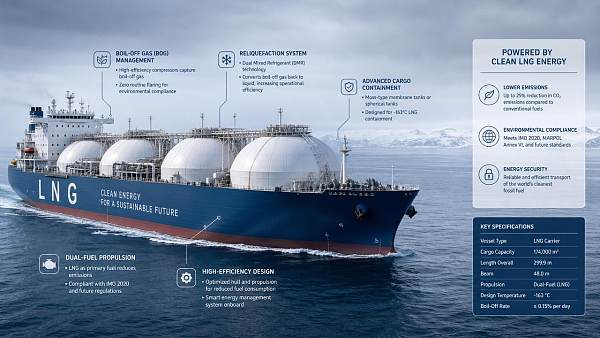
Cargo handling equipment also matters more than many expect. Reliquefaction units, pressure management systems, and advanced compressors shape how efficiently vapor is processed onboard.
Some ships can use boil-off gas directly as fuel with high efficiency. Others benefit more from partial or full reliquefaction, depending on route profile and bunker strategy.
The more common mistake is evaluating boil-off only as a technical percentage. Commercially, the question is how that percentage behaves across real voyages, idle periods, and port delays.
That is where LNG carriers technology advancements become decision tools rather than engineering headlines. Stable control in service usually matters more than laboratory peak performance.
A quick comparison table helps frame the discussion
When comparing vessel options, it helps to map each technology to a specific commercial effect rather than treating all upgrades as equal.
This kind of breakdown supports more disciplined comparison. It also aligns with GTOT’s broader approach of linking technical data to operating consequences.
How do propulsion and fuel systems change the cost equation?
Propulsion is where LNG carriers technology advancements move from cargo preservation into voyage economics. The decision is not just engine type. It is energy management across the full mission profile.
Dual-fuel diesel electric systems improved flexibility for many operators. More recent configurations aim for better efficiency, lower methane slip, and stronger compatibility with changing emissions expectations.
In practice, the best system depends on route length, expected waiting time, terminal infrastructure, and fuel price exposure. A vessel optimized for one trading pattern may underperform in another.
There is also a less obvious issue. Better propulsion integration can stabilize cargo tank pressure management, which then supports more predictable boil-off handling.
That is why commercial reviews should look at the whole chain. Engine efficiency, shaft design, power management, and cargo system interaction should be assessed together.
- Check methane slip performance under partial load, not only rated conditions.
- Review fuel flexibility when LNG price spreads change.
- Ask how propulsion choice affects maintenance intervals and spare parts planning.
- Confirm whether efficiency claims include real weather and sea-state assumptions.
For cost control, these questions usually matter more than headline speed figures. Freight economics on LNG carriers are often won by consistency, not peak output.
What should be compared when two advanced LNG carrier designs both look strong on paper?
This is where many evaluations become too narrow. Similar capacity and similar fuel claims do not mean similar lifecycle value.
A more reliable approach is to compare performance under stress. Look at boil-off behavior during delays, warm-climate loading, ballast legs, and speed changes.
It also helps to review technology maturity. Some LNG carriers technology advancements are already proven at fleet scale. Others remain attractive but less bankable in conservative financing environments.
Another practical factor is service ecosystem depth. A technically advanced vessel can still become costly if software support, spare availability, or specialist repair access is weak.
GTOT often frames this as an intelligence question, not only a ship question. Just as rail control systems are judged by safety logic and field reliability, LNG carrier upgrades should be judged by repeatable operating evidence.
A useful decision filter
- Proven containment stability across multiple delivered vessels.
- Clear fuel savings under realistic loading and weather patterns.
- Digital diagnostics that support early intervention, not only reporting.
- Repairability and class acceptance without unusual downtime risk.
- Residual value outlook if environmental rules tighten faster than expected.
Where do buyers usually misread lifecycle risk?
One common misread is assuming lower boil-off automatically means lower total cost. Sometimes a highly optimized system adds complexity that increases maintenance burden or energy consumption elsewhere.
Another blind spot is digital capability. Performance monitoring is often treated as an optional add-on. In reality, it can protect value by identifying insulation degradation, compressor anomalies, or inefficient fuel use early.
There is also the contract structure issue. If technical guarantees are not tied to measurable voyage conditions, comparison becomes difficult and later disputes become more likely.
In actual deployment, lifecycle risk also comes from network fit. A vessel built for one trade may face weaker returns if terminals, charter patterns, or emissions rules shift.
That broader systems view matches the GTOT lens across land and sea. Whether the asset is a braking system or an LNG carrier, the question is how control technology behaves under real operational pressure.
- High efficiency claims without route-specific data support.
- Limited field references for key cargo handling technologies.
- Weak clarity on software updates, cybersecurity, and remote diagnostics.
- Support networks concentrated in too few repair locations.
- Payback models that ignore waiting time and off-spec operating days.
So what is the smartest next step when assessing LNG carriers technology advancements?
Start by narrowing the evaluation to three commercial outcomes. Cargo retention, fuel flexibility, and downtime resilience usually provide the clearest comparison base.
Then match each technology claim to a route scenario. A strong design should show value not only in ideal voyages, but also in delays, climate variation, and fuel price swings.
It is also worth building a small decision matrix before moving deeper. Include containment performance, propulsion efficiency, digital visibility, maintenance support, and residual value assumptions.
The most useful reading of LNG carriers technology advancements is not whether a vessel looks modern. It is whether the technology can protect margin across changing global energy flows.
That is why intelligence platforms such as GTOT matter in the background. They help connect engineering detail with transport economics, which is exactly where better selection decisions begin.
If the next review round is approaching, focus on comparable operating assumptions, not marketing language. That single shift usually improves decision quality more than any brochure comparison.
Recommended News
 Sep 18, 2026How shipboard cryogenic systems prevent LNG boil-off gas lossesShipboard cryogenic systems reduce LNG boil-off gas losses through insulation, pressure control, fuel integration, reliquefaction, and reliable BOG handling.
 Jun 11, 2026LNG Carriers Technology Advancements: What Improves Cost and Boil-Off ControlLNG carriers technology advancements now drive cargo retention, fuel efficiency, and boil-off control. Explore how smarter containment, propulsion, and digital monitoring improve vessel economics.
 May 27, 2026LNG Carriers Technology Advancements That Improve Boil-Off ControlLNG carriers technology advancements improve boil-off control through better insulation, reliquefaction, and smart propulsion integration—learn which solutions boost efficiency and vessel value.
 May 19, 2026LNG Carriers Technology Advancements Improving Boil-Off Gas ControlLNG carriers technology advancements improve boil-off gas control with smarter containment, reliquefaction, and digital monitoring—boosting cargo efficiency, safety, and fleet performance.
 May 07, 2026When LNG Carriers Need Reliquefaction UpgradesLNG carriers need reliquefaction upgrades when boil-off losses, fuel inefficiency, and charter pressure cut value. Learn the key technical and commercial signs to assess retrofit ROI.