



Search News
Industry Portal
Popular Tags
LNG Carriers Technology Advancements Improving Boil-Off Gas Control
Author
Time
Click Count
LNG carriers technology advancements are reshaping boil-off gas control across modern maritime transport. Under minus 163°C cargo conditions, every percentage of vapor matters.
For the wider transport industry, stronger boil-off management supports energy security, fleet efficiency, emissions control, and safer integration with global supply chains.
Within GTOT’s land-sea intelligence perspective, LNG carriers technology advancements also reflect a broader shift toward digitalized, high-reliability equipment systems.
Technical Foundation of Boil-Off Gas Control
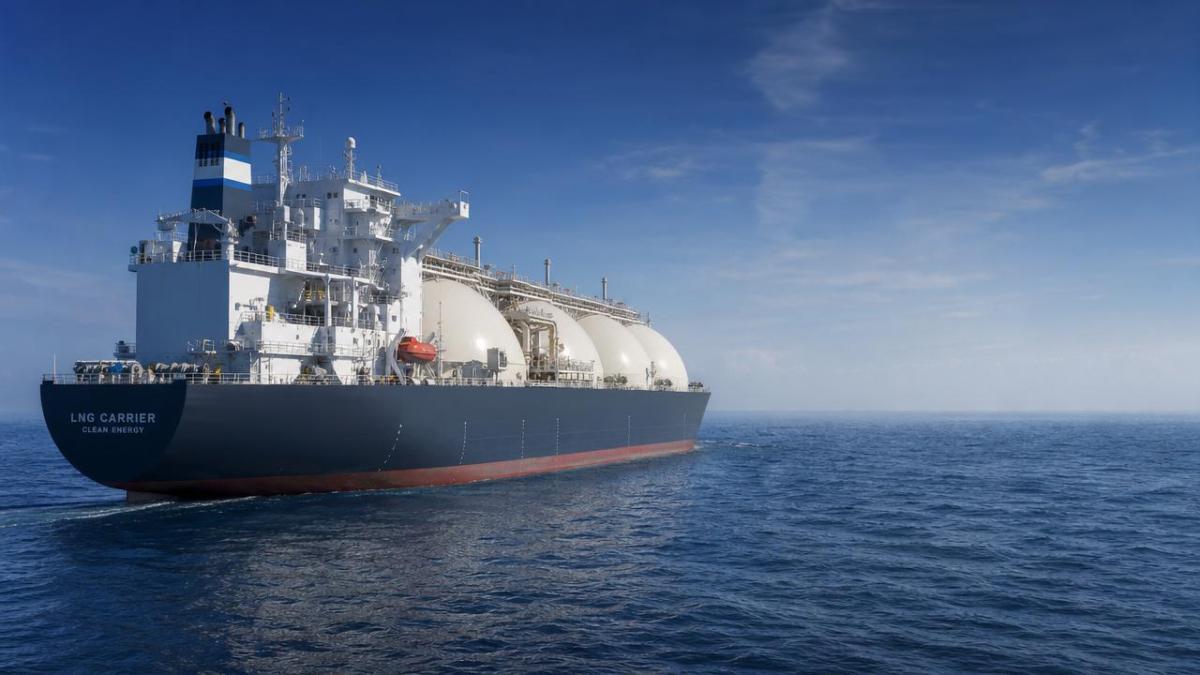
Boil-off gas, often called BOG, forms when small heat ingress reaches liquefied natural gas during storage and transit.
Even with advanced insulation, complete elimination of heat transfer is impossible. The engineering goal is controlled vapor generation, handling, and reuse.
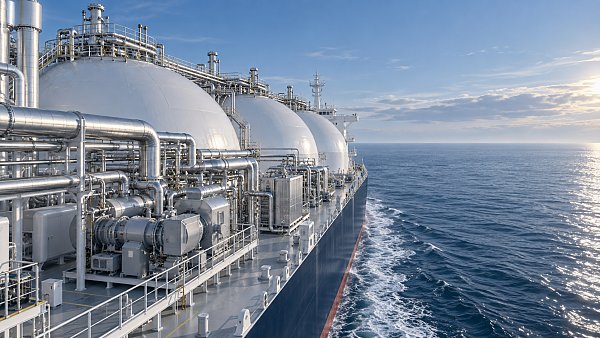
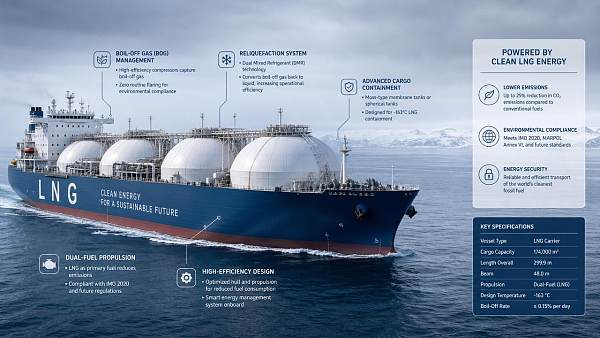
LNG carriers technology advancements mainly target four linked areas: containment, reliquefaction, propulsion integration, and continuous monitoring.
Containment systems reduce cargo evaporation. Reliquefaction units return vapor to liquid form. Dual-fuel engines consume gas productively. Digital platforms stabilize operations.
This combination improves cargo retention while reducing fuel waste, tank pressure excursions, and unnecessary venting risk.
Why control quality matters
- Preserves delivered cargo volume over long voyages
- Supports stable tank pressure and thermal balance
- Improves fuel flexibility for dual-fuel propulsion
- Strengthens compliance with emissions and safety rules
- Reduces lifecycle operating cost and machinery stress
Industry Background and Current Focus Areas
The LNG trade has expanded alongside energy diversification, floating import terminals, and long-haul route complexity.
As vessel sizes grow and charter performance tightens, LNG carriers technology advancements attract attention far beyond ship design teams.
Today’s market focus is not only lower boil-off rates. It is also better system coordination under changing weather, speed, and terminal schedules.
This is why LNG carriers technology advancements are increasingly evaluated as integrated system improvements rather than isolated component upgrades.
Core Technology Advancements Driving Better Performance
Advanced containment systems
Membrane and Moss-type systems continue to improve through stronger insulation layers, lower thermal bridges, and better structural stress distribution.
These upgrades reduce natural boil-off rates and help maintain cargo temperature stability during speed changes and rough sea states.
High-efficiency reliquefaction
Modern reliquefaction plants recover vapor with better compressor efficiency, improved heat exchangers, and smarter partial-load control.
This makes it easier to balance fuel demand against cargo preservation, especially on slow steaming or ballast legs.
Dual-fuel propulsion integration
Dual-fuel diesel-electric and two-stroke dual-fuel engines now use BOG more predictably, with tighter combustion control and better load response.
The best results appear when engine settings, tank pressure strategy, and reliquefaction operation are optimized together.
Digital sensing and predictive control
Sensor networks track tank pressure, vapor composition, insulation performance, compressor status, and weather-driven heat loads.
Analytics platforms convert that data into voyage-specific operating guidance. This is one of the most practical LNG carriers technology advancements today.
Operational Value Across Shipping and Broader Transport Systems
Better boil-off gas control creates value beyond the ship itself. It affects contract fulfillment, port planning, bunkering strategy, and asset utilization.
For integrated transport intelligence platforms such as GTOT, LNG carriers technology advancements illustrate how equipment precision supports macro logistics reliability.
- Higher cargo delivery efficiency over time-sensitive voyages
- Lower fuel penalties from unmanaged vapor losses
- Improved machinery life through steadier thermal conditions
- Better environmental performance through controlled gas handling
- More reliable arrival readiness for import and export terminals
In commercial terms, these gains support stronger fleet competitiveness under charter scrutiny and rising decarbonization expectations.
Typical Vessel Scenarios and Technology Fit
Not every vessel profile needs the same BOG control architecture. The optimal solution depends on route, engine type, and cargo management priorities.
This scenario-based view helps explain why LNG carriers technology advancements should be assessed by operating profile, not by specification sheet alone.
Implementation Considerations and Practical Recommendations
Successful adoption requires matching hardware capability with operational discipline, maintenance quality, and data interpretation routines.
Priority checkpoints
- Verify actual natural boil-off rates under realistic voyage conditions.
- Review how propulsion demand interacts with vapor generation patterns.
- Assess reliquefaction performance at partial load, not only design load.
- Check sensor accuracy, calibration intervals, and alarm logic integration.
- Confirm maintenance access for compressors, valves, and cryogenic lines.
- Track methane slip, energy consumption, and cargo loss together.
Another key point is crew-machine interface quality. Advanced systems underperform when dashboards are fragmented or response logic is unclear.
In practice, the strongest LNG carriers technology advancements combine mechanical reliability with transparent operating intelligence.
Strategic Outlook for Fleet Efficiency and Safety
The next stage of LNG carriers technology advancements will likely center on deeper automation, lower methane emissions, and stronger digital twins.
Future designs may connect weather routing, tank thermodynamics, engine load forecasting, and terminal windows in one control architecture.
That direction fits the broader industrial movement toward intelligent, safety-critical transport systems across rail and ocean sectors.
For organizations tracking complex equipment evolution, LNG carriers technology advancements provide a clear benchmark of how precision engineering translates into resilient global mobility.
To move forward, compare vessel profiles, BOG handling pathways, and digital monitoring depth before planning upgrades, retrofits, or newbuild evaluations.
A structured review of containment, propulsion, reliquefaction, and data systems will reveal where boil-off gas control can deliver the highest operational return.
Recommended News
 Sep 18, 2026How shipboard cryogenic systems prevent LNG boil-off gas lossesShipboard cryogenic systems reduce LNG boil-off gas losses through insulation, pressure control, fuel integration, reliquefaction, and reliable BOG handling.
 Jun 11, 2026LNG Carriers Technology Advancements: What Improves Cost and Boil-Off ControlLNG carriers technology advancements now drive cargo retention, fuel efficiency, and boil-off control. Explore how smarter containment, propulsion, and digital monitoring improve vessel economics.
 May 27, 2026LNG Carriers Technology Advancements That Improve Boil-Off ControlLNG carriers technology advancements improve boil-off control through better insulation, reliquefaction, and smart propulsion integration—learn which solutions boost efficiency and vessel value.
 May 19, 2026LNG Carriers Technology Advancements Improving Boil-Off Gas ControlLNG carriers technology advancements improve boil-off gas control with smarter containment, reliquefaction, and digital monitoring—boosting cargo efficiency, safety, and fleet performance.
 May 07, 2026When LNG Carriers Need Reliquefaction UpgradesLNG carriers need reliquefaction upgrades when boil-off losses, fuel inefficiency, and charter pressure cut value. Learn the key technical and commercial signs to assess retrofit ROI.