



Search News
Industry Portal
Popular Tags
When LNG Carriers Need Reliquefaction Upgrades
Author
Time
Click Count
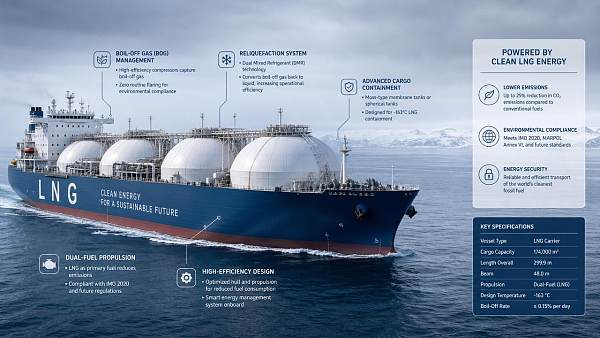
As LNG carriers age and trade patterns evolve, reliquefaction upgrades are becoming a critical topic for technical evaluators. Beyond reducing boil-off gas losses, these retrofits can improve fuel efficiency, cargo retention, and compliance with stricter operational demands. This article examines when LNG carriers truly need reliquefaction upgrades and how to assess their technical and commercial value.
For most technical evaluators, the key question is not whether reliquefaction is beneficial in theory, but whether a specific vessel has reached the point where the upgrade is technically justified and economically defensible. In practice, LNG carriers need reliquefaction upgrades when cargo loss, fuel strategy, charter requirements, and machinery configuration begin to expose clear performance gaps.
The strongest evaluation framework combines five factors: vessel age, containment system behavior, propulsion type, voyage profile, and expected charter economics. If these factors consistently show avoidable boil-off gas consumption, lower cargo delivery efficiency, or operational inflexibility, an upgrade moves from optional improvement to strategic necessity.
What usually triggers a reliquefaction upgrade decision on LNG carriers?
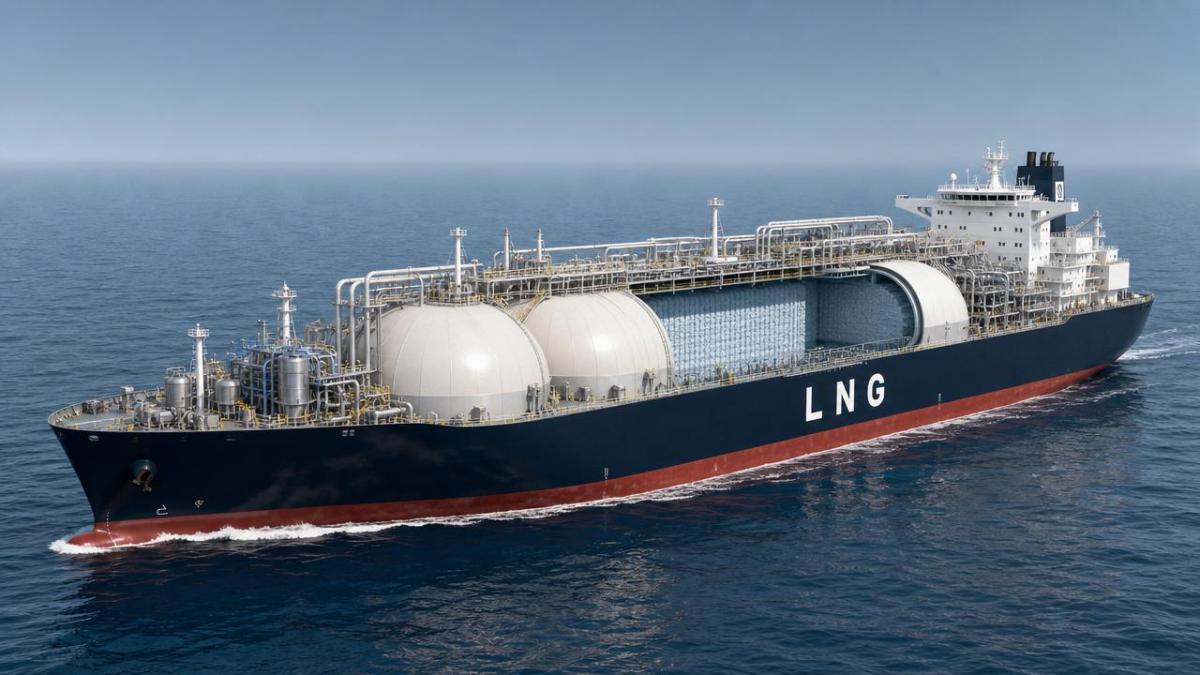
Technical evaluations normally start when an operator sees a mismatch between the vessel’s original design assumptions and its current trading reality. Many older LNG carriers were built for long-term routes, stable boil-off gas handling, and propulsion concepts that no longer align with today’s market expectations. Once trading patterns become more variable, boil-off management becomes more valuable.
One major trigger is rising cargo value. When LNG prices are strong or voyage optimization is tight, every unit of boil-off gas matters. If the vessel cannot effectively return excess vapor to the tanks as liquid, owners may be forced to burn gas that could otherwise be delivered as cargo. That directly affects delivered volume and voyage profitability.
Another trigger is the shift in charter requirements. Charterers increasingly compare LNG carriers not just on capacity and availability, but on fuel flexibility, cargo retention, emissions profile, and technical reliability. A vessel without modern reliquefaction capability may still be seaworthy and commercially active, yet become less competitive in premium tenders or long-haul employment.
Age-related machinery issues also matter. As compressors, heat exchangers, control systems, and associated gas handling equipment age, operators may face declining efficiency or increasing maintenance burdens. At that point, the question often becomes whether to continue supporting legacy systems or to invest in a more integrated reliquefaction upgrade with broader lifecycle benefits.
Which LNG carriers are the strongest candidates for upgrade?
Not all LNG carriers need the same solution, and not every ship is a good retrofit candidate. The strongest candidates are usually vessels with sufficient remaining service life, viable containment performance, stable structural condition, and operating patterns that reward better boil-off gas management.
Steam turbine LNG carriers are often reviewed first. Many of these ships were designed around the assumption that boil-off gas would be consumed as fuel. That design logic made sense historically, but it can become less efficient in a market that values lower fuel consumption, lower emissions, and higher cargo delivery performance. For such ships, reliquefaction can help reduce dependence on forced gas burning.
Dual-fuel diesel electric and other later-generation vessels may also require upgrades, but for different reasons. On these ships, the issue is not always basic gas utilization. Instead, it may involve improving operating flexibility, handling changing load conditions, minimizing methane slip exposure, or aligning the ship with newer charter expectations for cargo preservation and energy efficiency.
Vessels serving long-haul routes, floating storage roles, partial-load operations, or irregular trading patterns often gain more from reliquefaction than ships on short and highly predictable runs. The more variable the operating envelope, the more valuable it becomes to actively control boil-off gas rather than simply consume or manage it passively.
Technical evaluators should also consider remaining asset life carefully. If an LNG carrier has only a short commercial horizon left, the upgrade case may be weak even if the technical logic is strong. Conversely, if the vessel can trade competitively for another decade or more, a reliquefaction retrofit may materially improve long-term earnings and asset attractiveness.
How do technical evaluators know the existing boil-off management system is no longer enough?
The clearest sign is repeated operational compromise. If the ship regularly burns more gas than necessary, struggles to optimize tank pressure across voyage phases, or cannot maintain cargo retention performance expected by charterers, the existing system may no longer be adequate for the vessel’s commercial mission.
Data trends are more useful than isolated incidents. Evaluators should review actual boil-off rates, tank pressure behavior, compressor loading, fuel gas demand patterns, engine operating modes, weather-adjusted voyage data, and delivered cargo figures. A retrofit decision should be based on recurring inefficiency rather than on theoretical design limitations alone.
It is also important to separate normal boil-off behavior from correctable system inefficiency. Some losses are intrinsic to LNG transport. However, if vapor handling depends too heavily on operational workaround, manual intervention, or non-optimal engine consumption, then the vessel is likely leaving value on the table. That is where upgraded reliquefaction capability can make a measurable difference.
Another warning sign is reduced flexibility under off-design conditions. If the ship performs acceptably on one standard route but becomes inefficient on alternate voyages, slow steaming profiles, waiting periods, or partial cargo scenarios, the gas handling arrangement may be too narrow for present-day operations. Modern LNG carriers increasingly need adaptability, not just compliance with original specifications.
What technical areas should be reviewed before approving a reliquefaction retrofit?
A credible evaluation goes well beyond the reliquefaction unit itself. Technical evaluators should study the full integration picture, because the success of the retrofit depends on how well the new system fits with the vessel’s existing machinery, controls, power balance, safety case, and cargo handling philosophy.
Start with containment system performance. The actual thermal behavior of the cargo tanks determines baseline boil-off gas generation. Membrane systems and Moss-type tanks have different operational characteristics, and insulation aging can influence the retrofit case. If boil-off generation is already elevated due to containment degradation, that issue must be understood before sizing the upgrade.
Next, assess compressor capacity, refrigeration architecture, and available machinery space. Reliquefaction retrofits often involve constraints in layout, deck penetration, utility routing, and skid integration. On older LNG carriers, space availability and installation complexity can become decisive factors in project feasibility, schedule, and cost.
Power demand is another critical area. The reliquefaction process requires energy, and the net benefit depends on how that power is generated and managed onboard. Evaluators should examine generator margins, propulsion-load interactions, fuel mode impacts, and whether auxiliary systems need upgrading to support stable operation without undermining the efficiency gains.
Control system integration deserves particular attention. Modern reliquefaction is not just equipment; it is a control strategy that coordinates tank pressure, compressor operation, engine demand, and cargo conditions. Poor automation integration can reduce operational reliability and increase crew burden, even if the core hardware is technically sound.
Class compliance, hazardous area design, and safety studies must also be included early. A retrofit involving cryogenic process equipment, gas handling modifications, and electrical changes will require detailed review of failure modes, shutdown logic, ventilation, fire and gas detection, and class approval pathways. Delaying these considerations often leads to costly redesign later.
How should the commercial value of a reliquefaction upgrade be measured?
For technical evaluators supporting investment decisions, commercial value should be framed in operational terms that management can verify. The most direct measures are improved cargo retention, reduced avoidable gas consumption, greater route flexibility, and stronger charter competitiveness. These outcomes are easier to defend than broad claims about modernization.
Cargo retention is usually the anchor metric. If the upgraded ship can deliver more LNG at discharge rather than consume it en route, the financial value can be modeled against expected voyage frequency, cargo prices, and historical operating profiles. Even modest improvements per voyage can accumulate meaningfully across a year of trading.
Fuel efficiency must be analyzed carefully. Reliquefaction reduces cargo loss, but it also adds electrical or mechanical load. The real question is whether the vessel’s total energy balance improves under its actual operating modes. A sound model compares pre-retrofit and post-retrofit fuel strategies across different speeds, ambient conditions, and engine configurations.
Charter impact may be equally important. Some LNG carriers secure better employment opportunities when they demonstrate more modern cargo handling capability or lower operating inefficiency. In certain markets, the upgrade does not just save cost; it protects market access. For older vessels especially, this can be one of the strongest arguments in favor of retrofit.
Downtime and installation risk must be included in the business case. A technically attractive project can lose value if shipyard time is excessive, procurement is uncertain, or commissioning delays disrupt revenue schedules. Evaluators should test the economics against realistic outage assumptions rather than ideal retrofit timelines.
What are the main risks and limitations of upgrading older LNG carriers?
The biggest risk is assuming that reliquefaction alone solves a broader vessel competitiveness problem. If the ship also suffers from weak propulsion efficiency, high maintenance demand, limited automation, or looming regulatory retrofit needs in other systems, the overall investment case may be less attractive than it first appears.
Integration risk is especially important on older LNG carriers. Legacy piping arrangements, control system architecture, available electrical capacity, and structural interfaces may complicate installation. These constraints can increase cost, extend yard time, or reduce the final performance benefits relative to initial projections.
Operational reliability is another concern. A reliquefaction system adds process complexity, and its value depends on stable real-world operation. If spare parts support, crew familiarization, automation tuning, or vendor service capability are weak, the upgrade may create new operational dependencies that offset part of the expected gain.
There is also a strategic timing risk. Market conditions may favor an upgrade today, but technical evaluators should test whether those assumptions remain valid over the asset’s remaining life. Freight rates, LNG price differentials, fuel policy, emissions rules, and charter preferences can all shift. A robust recommendation accounts for uncertainty, not just current conditions.
How should technical evaluators build a practical decision framework?
The most effective approach is to use a staged screening model rather than a simple yes-or-no judgment. First, confirm baseline eligibility: vessel age, remaining service horizon, class condition, containment performance, and retrofit space. If these fundamentals are weak, deeper analysis may not be justified.
Second, quantify the operational gap. Compare actual boil-off gas handling performance against present trading needs. Look at cargo losses, gas consumption patterns, route flexibility limits, and charter feedback. This defines whether the ship has a manageable inefficiency or a structural capability deficit.
Third, test technical feasibility in integrated form. Review machinery interfaces, power balance, control logic, safety engineering, and shipyard execution risk. At this stage, conceptual engineering should identify whether the upgrade is straightforward, constrained, or likely to trigger major secondary modifications.
Fourth, build a scenario-based value model. Use conservative, base, and upside cases for LNG prices, charter assumptions, voyage profiles, and downtime. A retrofit that only works under ideal assumptions is not a strong candidate. A retrofit that remains value-positive under realistic variability deserves serious consideration.
Finally, translate the conclusion into decision language that operators, owners, and commercial teams can use. Technical evaluators create the most value when they move beyond equipment description and explain whether the upgrade improves asset competitiveness, extends useful life, or supports a clearer market position.
Final assessment: when do LNG carriers truly need reliquefaction upgrades?
LNG carriers truly need reliquefaction upgrades when their current boil-off gas handling strategy starts to erode cargo value, fuel efficiency, operating flexibility, or charter competitiveness in a measurable and recurring way. The need is strongest when this gap appears on vessels with enough remaining life to recover the investment and benefit from improved market positioning.
For technical evaluators, the right conclusion is rarely based on a single metric. It comes from connecting cryogenic performance, propulsion logic, commercial route profile, integration risk, and lifecycle economics into one clear judgment. In other words, the real issue is not whether reliquefaction is modern, but whether it solves a specific vessel’s most important operational weakness.
As global LNG shipping becomes more efficiency-driven and commercially selective, reliquefaction upgrades will remain an important lever for many LNG carriers. The best decisions will come from disciplined evaluation: identify the real constraint, test the retrofit against operating reality, and approve the project only when technical fit and commercial return align.
Recommended News
 Sep 18, 2026How shipboard cryogenic systems prevent LNG boil-off gas lossesShipboard cryogenic systems reduce LNG boil-off gas losses through insulation, pressure control, fuel integration, reliquefaction, and reliable BOG handling.
 Jun 11, 2026LNG Carriers Technology Advancements: What Improves Cost and Boil-Off ControlLNG carriers technology advancements now drive cargo retention, fuel efficiency, and boil-off control. Explore how smarter containment, propulsion, and digital monitoring improve vessel economics.
 May 27, 2026LNG Carriers Technology Advancements That Improve Boil-Off ControlLNG carriers technology advancements improve boil-off control through better insulation, reliquefaction, and smart propulsion integration—learn which solutions boost efficiency and vessel value.
 May 19, 2026LNG Carriers Technology Advancements Improving Boil-Off Gas ControlLNG carriers technology advancements improve boil-off gas control with smarter containment, reliquefaction, and digital monitoring—boosting cargo efficiency, safety, and fleet performance.
 May 07, 2026When LNG Carriers Need Reliquefaction UpgradesLNG carriers need reliquefaction upgrades when boil-off losses, fuel inefficiency, and charter pressure cut value. Learn the key technical and commercial signs to assess retrofit ROI.