



Search News
Industry Portal
Popular Tags
LNG Carriers Technology Advancements That Improve Boil-Off Control
Author
Time
Click Count
For technical evaluators, LNG carriers technology advancements are no longer optional refinements. They now define boil-off control, fuel economy, cargo preservation, and long-term vessel competitiveness across global shipping networks.
In practice, the value of LNG carriers technology advancements appears in demanding routes, variable loading patterns, stricter emissions rules, and longer asset lifecycles. Better insulation, smarter reliquefaction, and integrated propulsion control reduce losses while improving voyage stability.
For a platform like GTOT, which tracks advanced ocean-going vessels and transport intelligence, these developments also connect with broader supply chain resilience, decarbonization strategy, and high-value technical decision making.
Why route and operating profile change the value of boil-off control
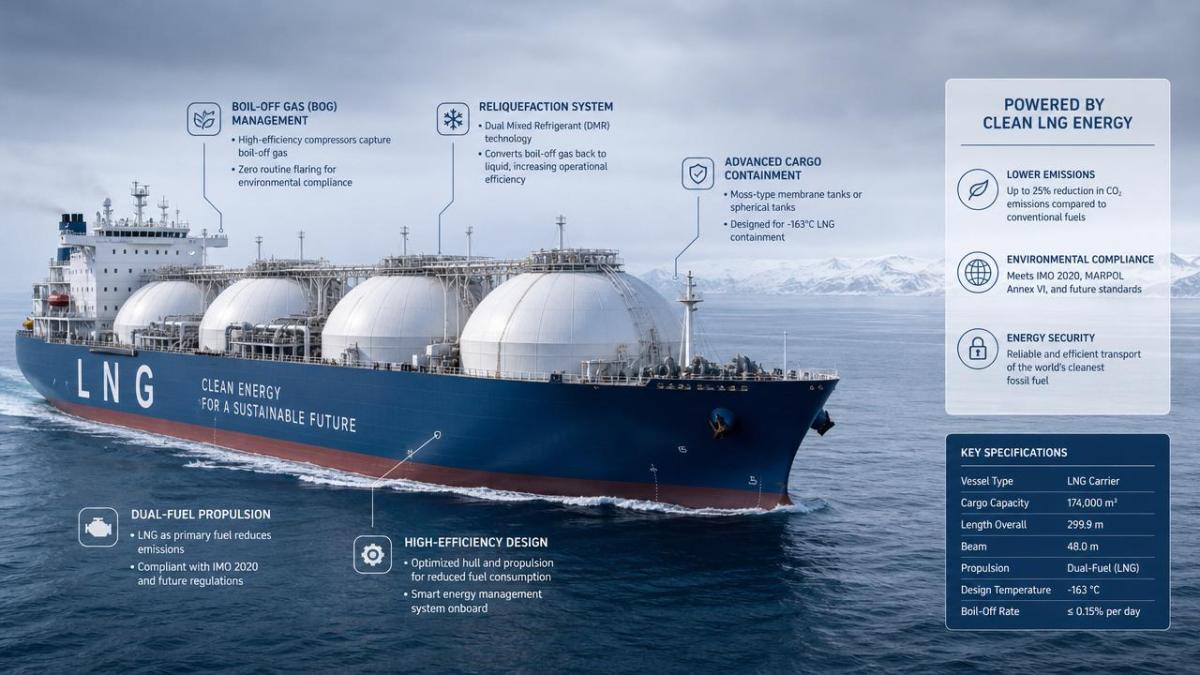
Not every LNG vessel faces the same boil-off challenge. LNG carriers technology advancements create different benefits depending on voyage distance, terminal waiting time, climate exposure, and cargo handling frequency.
A short shuttle route may prioritize fuel flexibility and rapid turnaround. A long-haul intercontinental service may value very low daily boil-off rates and precise cargo pressure management.
This is why technical assessment must begin with the operating scene. The same system can perform differently when port congestion, ambient heat, or slow steaming changes the tank thermal balance.
Core variables that shape technology selection
- Voyage length and average dwell time
- Expected boil-off gas utilization strategy
- Containment type and insulation performance
- Engine load profile and dual-fuel operating mode
- Terminal compatibility and cargo pressure limits
- Regional emissions and carbon intensity requirements
In long-haul energy corridors, insulation and reliquefaction matter most
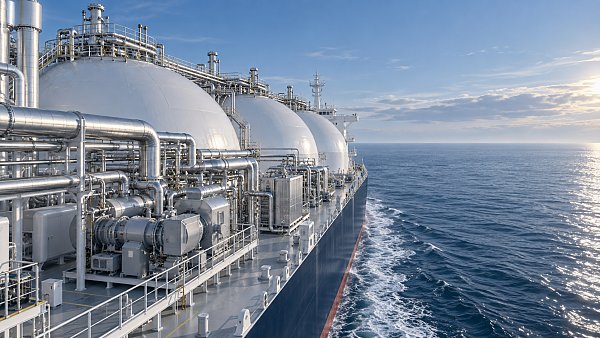
Long-haul routes expose cargo tanks to sustained heat ingress over many days. Here, LNG carriers technology advancements often focus first on containment systems and boil-off recovery capability.
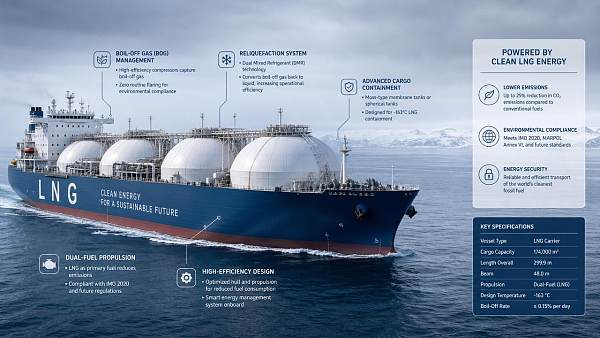
Modern membrane containment designs use improved insulation layers, better barrier materials, and more accurate structural stress analysis. These upgrades lower daily boil-off rates and protect cargo quality under dynamic sea conditions.
Advanced reliquefaction systems add another layer of control. Instead of burning all boil-off gas as fuel, the system can recondense excess vapor and return it to the tanks.
That matters when engine demand is lower than vapor generation. It also helps during slow steaming, weather delays, or berth congestion, when pressure control becomes more complex.
Key judgment points for long-haul deployment
- Daily boil-off rate under realistic loading conditions
- Reliquefaction efficiency at partial engine loads
- Tank pressure stability during schedule disruption
- Insulation durability over repeated thermal cycles
In flexible trading and spot market scenarios, propulsion integration becomes decisive
Flexible LNG trading creates unpredictable sailing speeds, route changes, and cargo programs. In this scene, LNG carriers technology advancements deliver value through integrated propulsion and energy management.
Dual-fuel engines are central here. They allow boil-off gas to be consumed efficiently while maintaining the option to switch fuel mode when vapor availability changes.
The strongest systems do more than burn gas. They coordinate tank pressure, engine demand, shaft power, and auxiliary loads through digital control logic.
This reduces unnecessary vent risk, avoids inefficient gas handling, and supports smoother transitions during ballast legs, partial cargoes, or waiting periods outside terminals.
Useful indicators in variable trading conditions
- Fuel mode switching stability
- Engine response to fluctuating boil-off supply
- Automation quality in gas handling sequences
- Specific fuel consumption across mixed operating modes
In high-temperature regions and congested ports, pressure management is the real test
Warm climates and extended waiting times raise tank heat ingress. They also compress the margin for operational error. In such scenes, LNG carriers technology advancements must support fine pressure control, not only nominal efficiency.
Sensors, digital twins, and predictive monitoring are increasingly important. They can estimate boil-off behavior based on weather, cargo level, insulation condition, and expected delay windows.
This predictive layer helps operators choose between gas consumption, reliquefaction, or adjusted engine loading before pressure rises become operational constraints.
It also supports maintenance planning. Small deviations in thermal performance can signal insulation degradation, valve inefficiency, or control drift long before they create a cargo handling problem.
How different operating scenes change technical priorities
Practical recommendations for matching LNG carriers technology advancements to demand
The best choice depends on how boil-off gas is expected to be used, controlled, and monetized. Technical fit should be evaluated before headline efficiency claims.
Recommended decision path
- Map the real voyage profile, including idle time and climate exposure.
- Define whether boil-off gas is mainly fuel, recoverable cargo, or both.
- Compare containment performance using operational, not brochure, conditions.
- Check dual-fuel engine efficiency at low, medium, and dynamic loads.
- Review automation depth for pressure control and mode transitions.
- Assess digital diagnostics for insulation health and thermal deviation trends.
Within integrated transport intelligence, this approach aligns with GTOT’s focus on asset value, technical credibility, and operational resilience across advanced maritime systems.
Common misjudgments that weaken boil-off control performance
One frequent error is treating all LNG carriers technology advancements as universally beneficial. Some systems excel only under specific pressure ranges, engine loads, or route structures.
Another mistake is focusing only on the nominal boil-off rate. Real performance also depends on cargo heel strategy, weather delays, compressor response, and control software maturity.
A third oversight is underestimating maintenance quality. Advanced reliquefaction and digital monitoring create value only when sensors, valves, and thermal barriers remain properly calibrated and verified.
Lifecycle thinking is equally important. A vessel optimized for current fuel spreads may lose competitiveness if carbon rules tighten or if trade patterns shift toward longer waiting times.
What to do next when evaluating next-generation LNG carriers
Start with the operating scene, then test each technology against boil-off behavior, fuel use, cargo pressure control, and compliance trajectory. This reveals where LNG carriers technology advancements produce measurable commercial and technical gains.
A structured review should combine containment data, propulsion logic, reliquefaction capability, and digital monitoring readiness. That combination is now the real benchmark for next-generation LNG carrier performance.
As global shipping faces tighter efficiency targets and more volatile trade conditions, LNG carriers technology advancements will continue to shape vessel selection, retrofit priorities, and long-term transport strategy across the wider industrial chain.
Recommended News
 Sep 18, 2026How shipboard cryogenic systems prevent LNG boil-off gas lossesShipboard cryogenic systems reduce LNG boil-off gas losses through insulation, pressure control, fuel integration, reliquefaction, and reliable BOG handling.
 Jun 11, 2026LNG Carriers Technology Advancements: What Improves Cost and Boil-Off ControlLNG carriers technology advancements now drive cargo retention, fuel efficiency, and boil-off control. Explore how smarter containment, propulsion, and digital monitoring improve vessel economics.
 May 27, 2026LNG Carriers Technology Advancements That Improve Boil-Off ControlLNG carriers technology advancements improve boil-off control through better insulation, reliquefaction, and smart propulsion integration—learn which solutions boost efficiency and vessel value.
 May 19, 2026LNG Carriers Technology Advancements Improving Boil-Off Gas ControlLNG carriers technology advancements improve boil-off gas control with smarter containment, reliquefaction, and digital monitoring—boosting cargo efficiency, safety, and fleet performance.
 May 07, 2026When LNG Carriers Need Reliquefaction UpgradesLNG carriers need reliquefaction upgrades when boil-off losses, fuel inefficiency, and charter pressure cut value. Learn the key technical and commercial signs to assess retrofit ROI.