



Search News
Industry Portal
Popular Tags
Decarbonization Projects That Win Budget Approval Faster
Author
Time
Click Count
Decarbonization projects often compete for limited capital, so winning budget approval depends on making the business case unmistakable. For financial approvers, the strongest proposals connect emissions cuts to measurable payback, lower operating risk, and long-term asset value. This article explores the project types, cost logic, and decision signals that help decarbonization investments move from concept to approved budget faster.
For finance leaders in rail, marine, and heavy transport value chains, the issue is rarely whether decarbonization matters. The issue is whether a specific investment can clear internal hurdle rates, protect uptime, and improve asset productivity within a realistic planning window such as 12, 24, or 36 months. In sectors where signaling systems, traction power, braking components, smart vessels, and LNG-linked technologies must operate under strict safety and performance constraints, budget approval moves faster when technical ambition is translated into commercial clarity.
That is especially true in complex procurement environments served by GTOT, where distributors, EPC contractors, fleet operators, and infrastructure decision-makers need proposals that fit both engineering reality and financial governance. A credible decarbonization roadmap is not built on carbon language alone. It is built on cash flow timing, implementation sequencing, avoided maintenance, compliance resilience, and asset-life extension.
Why Financial Approvers Say Yes to Some Decarbonization Projects First
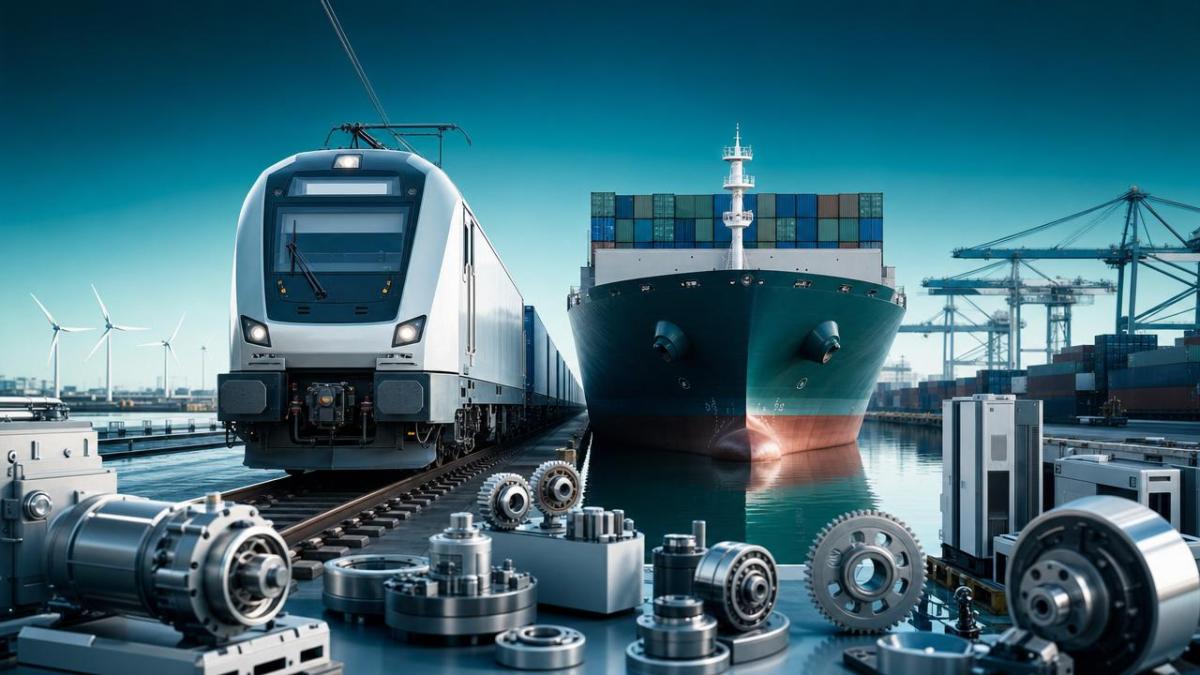
Financial approvers usually do not reject decarbonization because they oppose sustainability. They reject it because the proposal looks difficult to verify, slow to pay back, or risky to operations. In transport and ocean tech environments, approval speed improves when the project fits 4 filters at once: measurable savings, manageable delivery risk, limited downtime, and visible strategic relevance.
A pantograph optimization package, for example, may be easier to approve than a large platform overhaul if it can show a 6–18 month payback through lower wear, fewer power collection interruptions, and reduced maintenance intervals. Similarly, an AI-assisted route optimization layer for smart container ships may move faster than a full propulsion retrofit if the software can be implemented in 8–12 weeks and start reducing fuel consumption on the next voyage cycle.
The 4 signals finance teams look for
- Clear baseline data: current fuel use, maintenance cost, downtime frequency, or energy loss.
- Defined payback period: often under 24 months for easier approval, though strategic projects may justify 36–60 months.
- Low implementation disruption: installation during scheduled maintenance windows or dry-dock cycles.
- Evidence of secondary value: compliance readiness, asset resale support, or lower insurance and operational risk.
In rail and marine systems, projects that reduce emissions and improve reliability at the same time usually outperform projects framed as carbon reduction alone. Finance committees prefer proposals that produce two or three gains from one spend category: lower energy use, lower fault incidence, and better lifecycle cost visibility.
Common reasons promising proposals stall
The most common causes of delay are incomplete baseline measurement, optimistic savings assumptions, and weak coordination between engineering and finance. If the proposal cannot explain whether the savings come from kWh reduction, reduced brake wear, lower boil-off losses, fewer unplanned maintenance events, or better voyage efficiency, the approval path becomes longer. The same happens when CAPEX is presented without OPEX offsets by quarter or by year.
Decision framing that accelerates review
A better framing is to position decarbonization as a productivity and resilience investment. In practice, that means showing how a project affects 5 budget categories: energy, maintenance, compliance, downtime, and asset life. Once approvers can see cost movement across those lines, the project stops looking like a sustainability expense and starts looking like an operational improvement program.
Which Decarbonization Projects Win Approval Faster in Rail and Ocean Operations
Not all decarbonization projects face the same approval friction. In GTOT-relevant sectors, the fastest-moving projects are often modular, data-supported, and compatible with existing assets. They do not always deliver the biggest absolute emissions reduction on day one, but they frequently offer the strongest balance of speed, savings, and execution confidence.
The table below compares common project types by financial attractiveness, implementation complexity, and approval speed in transport-oriented industrial settings.
The key pattern is simple: projects win faster when they can be measured quickly and scaled later. A finance team may approve a digital energy layer in Q1, then use the resulting baseline data to justify a larger traction upgrade or vessel efficiency retrofit in Q3 or Q4. This staged approach reduces decision risk without slowing the decarbonization agenda.
Rail-focused project categories with strong budget narratives
In rail systems, the most approval-friendly decarbonization projects are usually those that strengthen both energy efficiency and service reliability. Examples include smarter signaling power management, reduced resistance in power collection systems, and braking system optimization that limits wear and recovers efficiency where feasible. These projects fit well into 3 planning windows: immediate monitoring upgrades, 6–18 month component improvements, and 2–5 year infrastructure modernization.
Why rail finance teams respond well
Rail operators and suppliers can often measure outcomes through stable service data: fault rate per million kilometers, maintenance labor hours per unit, or energy draw under repeatable conditions. When proposal owners quantify even a 3%–8% reduction in power loss or a 10%–20% extension in service intervals, financial approvers can test the assumptions against existing maintenance and fleet records.
Marine and LNG-related project categories with faster approval potential
In ocean operations, proposals move faster when they align with voyage economics. Fuel savings per day, route efficiency per nautical mile, and cargo-condition protection are easier to understand than broad carbon narratives. That is why smart vessel software, hull and propulsion efficiency measures, and boil-off gas management improvements often gain support sooner than highly disruptive redesigns.
For LNG carriers, even small efficiency gains matter because cryogenic management is tied to both energy use and cargo value. If a proposal can show better thermal stability, lower handling losses, or improved dual-fuel operating efficiency across a 12-month operating cycle, it becomes more than a decarbonization initiative. It becomes a margin-protection initiative.
How to Build the Cost Logic That Gets a Decarbonization Proposal Approved
The financial case should be built in layers, not slogans. Approvers want to see how the number is formed, what assumptions are conservative, and what happens if the result is 20% lower than expected. A robust decarbonization business case usually includes 5 elements: baseline, intervention cost, direct savings, indirect savings, and execution risk.
Use a three-line savings model
- Direct operating savings: fuel, electricity, consumables, or avoided emissions-related charges.
- Maintenance savings: fewer replacements, longer inspection intervals, lower labor hours, or reduced spare-parts consumption.
- Risk-adjusted strategic value: lower compliance exposure, improved tender eligibility, or better asset utilization.
A strong proposal separates these lines instead of blending them into one total. For example, if a braking system upgrade reduces maintenance interventions from 6 times per year to 4, that should be shown independently from any energy or uptime gains. The finance team can then stress-test each line item rather than questioning the whole model.
Present conservative ranges, not single-point claims
One of the fastest ways to lose budget confidence is to present savings as a fixed promise. In industrial transport settings, operating conditions vary by route, load, weather, maintenance quality, and duty cycle. A more credible method is to show three scenarios: downside, expected, and upside. A proposal might estimate 4%, 7%, and 10% efficiency improvement rather than claiming exactly 8.7%.
The table below shows how finance-oriented teams often structure approval-ready cost logic for decarbonization projects.
The most useful conclusion from this framework is that decarbonization becomes easier to approve when the proposal is measurable before, during, and after implementation. Finance teams do not want perfect predictions. They want a disciplined method for validating whether value is being created.
Include the cost of doing nothing
Another underused approval tactic is to quantify inaction. This may include rising maintenance intensity, worsening fuel efficiency, reduced competitiveness in tenders, or higher exposure to future emissions-related regulations. If a project costs more this year but prevents a 15%–25% rise in operating burden over the next 3 years, the budget conversation changes materially.
Implementation Pathways That Lower Approval Friction
Even a financially attractive decarbonization proposal can slow down if the rollout plan looks disruptive. Approval friction drops when the project is divided into manageable stages and tied to existing operational rhythms. For rail operators, that may mean deploying during maintenance shutdowns. For vessels, it often means aligning scope with dry-dock windows, software update cycles, or scheduled equipment replacement.
A practical 5-step rollout model
- Baseline capture over 8–12 weeks for energy, fault, and maintenance performance.
- Pilot deployment on one route, one subsystem, or one vessel class.
- Validation against 3–5 KPIs agreed by engineering and finance.
- Scaled procurement with phased installation and operator training.
- Quarterly review of realized savings versus approval assumptions.
This structure matters because it lets financial approvers release capital in stages. Stage-gated budgeting is often easier to approve than full-scope funding at once, especially when the underlying equipment is mission critical. It also improves accountability because each phase has a documented go or no-go point.
How GTOT-style intelligence supports better decisions
In markets shaped by rail infrastructure cycles, international shipbuilding demand, and highly technical tender requirements, decision-makers need more than product descriptions. They need intelligence on performance parameters, integration constraints, and commercial timing. For example, understanding how LTE-M adoption affects rail monitoring, how composite brake pad fade behavior changes maintenance strategy, or how LNG containment stress analysis influences vessel efficiency can improve both the technical and financial quality of a decarbonization proposal.
That is why intelligence-led procurement tends to outperform price-led procurement in complex sectors. When technical detail is connected to lifecycle economics, budget approval becomes less subjective. The project is no longer competing as a broad sustainability claim. It is competing as a better investment case.
Common Mistakes That Slow Decarbonization Budget Approval
The same weaknesses appear repeatedly across industrial decarbonization proposals. Most are avoidable. They stem from poor translation between engineering language and financial language, not from lack of project merit.
Five mistakes to avoid
- Leading with emissions targets before presenting cash impact and risk reduction.
- Ignoring downtime cost or installation constraints during mission-critical operations.
- Using vendor claims without local baseline validation.
- Requesting full-scale CAPEX before proving value in a pilot or phased model.
- Failing to define post-installation KPIs within the first 90, 180, and 360 days.
What approvers want instead
They want comparability, not enthusiasm. They want to know how Project A ranks against Project B on payback, execution burden, and strategic value. They want to see whether the project remains worthwhile if fuel prices soften, route mix changes, or maintenance assumptions prove too optimistic. When decarbonization proposals answer those questions directly, approval tends to move faster and with fewer revision cycles.
Conclusion: Faster Approval Comes From Better Framing, Better Data, and Better Sequencing
The decarbonization projects that win budget approval fastest are rarely the loudest. They are the ones that show disciplined numbers, practical implementation, and measurable operational value. In rail systems, that may mean efficiency upgrades in signaling, power collection, or braking. In marine and LNG operations, it may mean route intelligence, thermal performance improvements, or vessel efficiency measures with clear voyage economics.
For financial approvers, the decision becomes easier when a proposal connects 3 outcomes: emissions reduction, cost improvement, and asset resilience. For technical suppliers, distributors, EPC contractors, and operators working across land-sea transport systems, that connection is where competitive advantage is created.
If you are evaluating decarbonization opportunities in railway control systems, traction components, braking technologies, smart container ships, or LNG carrier operations, GTOT can help you turn technical complexity into decision-ready insight. Contact us to explore tailored intelligence, compare solution pathways, and get a more approval-ready strategy for your next decarbonization investment.
Recommended News
 Sep 29, 2026What drives traction systems price differences between rail projects?Traction systems price differences explained: compare duty cycles, voltage compatibility, integration, localization, and lifecycle costs for smarter rail procurement.
 Sep 26, 2026What to assess before selecting an electric traction system manufacturerChoose an electric traction system manufacturer with confidence. Explore key criteria for performance, reliability, safety, integration, energy efficiency, and lifecycle support.
 Sep 25, 2026When do full digitalization systems justify the investment?Full digitalization systems: discover when rail and maritime operators can turn connected data into safer operations, higher availability, and measurable ROI.
 Sep 23, 2026What drives automatic train control systems cost on rail projects?Automatic train control systems cost depends on integration, migration, safety testing, communications, and lifecycle support. Explore the key budget drivers for rail projects.
 Sep 21, 2026How to assess an ocean going vessel builder’s delivery riskAssess an ocean going vessel builder’s delivery risk with proven checks for schedules, capacity, design maturity, critical equipment, quality, and project controls.
 Sep 20, 2026What drives rail safety technology costs over a project lifecycle?Rail safety technology cost goes beyond equipment—explore lifecycle drivers from integration and safety assurance to cybersecurity, commissioning, and obsolescence.
 Sep 16, 2026What to verify before choosing an advanced ocean-going vessels supplierAdvanced ocean-going vessels supplier checklist: verify design authority, build quality, digital systems, delivery reliability, and lifecycle support before you buy.
 Sep 15, 2026What rail safety technology best reduces level-crossing risks in Southeast Asia?Rail safety technology Southeast Asia: discover how fail-safe signalling, barriers, obstacle detection and remote monitoring reduce level-crossing risks.
 Sep 14, 2026How exporters can reduce customs delays in global trade logisticsGlobal trade logistics for exporters: reduce customs delays with accurate data, clearance-ready documents, early filing, and proactive exception management.
 Sep 13, 2026When do global transportation network systems reduce delivery delays?Global transportation network systems reduce delivery delays by improving rail-port-vessel coordination, real-time visibility, and proactive decisions across complex land-sea supply chains.
 Sep 09, 2026When should you choose a rail and maritime manufacturer with dual-sector capability?Rail and maritime manufacturer guide: learn when dual-sector capability reduces integration risk, improves lifecycle support, and strengthens rail-to-port operations.
 Sep 08, 2026What to verify before selecting a railway signalling equipment supplierRailway signalling equipment supplier checklist: verify safety evidence, integration, cybersecurity, delivery capability, and lifecycle support before award.
 Sep 07, 2026How to size a traction power transformer for railway load demandTraction power transformer sizing guide: model railway load demand, peak duty, voltage regulation, harmonics, and contingency capacity for reliable service.
 Sep 07, 2026How do customization options for industrial connectors affect lead times?Customization options for industrial connectors can impact lead times, cost, and compliance. Learn how to specify smarter for rail and marine projects.
 Sep 05, 2026What information should an industrial sourcing guide include?Industrial sourcing information procurement guide: evaluate suppliers, compliance, lifecycle costs, interfaces, and lead times for smarter rail and maritime purchasing decisions.
 Sep 01, 2026How to find reliable maritime tender information before biddingMaritime tender information: learn how to verify sources, define bid-ready scopes, check qualifications, and reduce risk before submitting competitive marine bids.
 Aug 30, 2026How to select railway automation equipment for depots with phased upgradesRailway automation equipment for depots: learn how to plan phased upgrades that improve safety, throughput, integration, and lifecycle control.
 Aug 27, 2026How industrial sourcing intelligence pricing data supports budget approvalIndustrial sourcing intelligence pricing data helps teams benchmark scope, assess supplier risk, and build defensible budget approvals for complex rail and maritime assets.
 Aug 26, 2026When does a marine fuel efficiency solution make financial sense in the Middle East?Marine fuel efficiency solution Middle East: learn when retrofit savings, compliance value, and vessel data align to deliver credible ROI and smarter shipping investment decisions.
 Aug 24, 2026When does maritime automation for tankers deliver a real payback?Maritime automation for tankers delivers real payback when it cuts fuel use, reduces cargo risk, and improves uptime. See how owners can time investment for stronger ROI.
 Aug 23, 2026When do maritime logistics systems in the Middle East justify the costMaritime logistics systems Middle East: discover when rising delays, manual coordination, and poor visibility make system investment the smarter move for regional operators.
 Aug 22, 2026What drives vessel navigation system price for commercial fleetsVessel navigation system price depends on integration, compliance, automation, and support—not just hardware. Learn what drives fleet costs and compare quotes with confidence.
 Aug 21, 2026How to assess shipbuilding maritime tenders before biddingShipbuilding maritime tenders require more than price checks. Learn how to assess technical scope, compliance, supply chain, and commercial risk before bidding with confidence.
 Aug 20, 2026When does working with an ocean-going vessels distributor reduce supply risk?Ocean-going vessels distributor: learn when this partner cuts supply risk through stronger compliance, faster response, and better sourcing resilience in complex maritime procurement.