



Search News
Industry Portal
Popular Tags
Pantograph Wear Signs That Should Not Be Ignored
Author
Time
Click Count
For aftermarket maintenance teams, early detection of pantographs wear is essential to preventing power loss, contact instability, and costly service disruptions. From uneven carbon strip erosion to abnormal vibration and arcing damage, the warning signs should never be overlooked. This article highlights the key wear indicators that affect safety, reliability, and maintenance planning in modern rail operations.
What are the earliest pantograph wear signs that maintenance teams should check first?
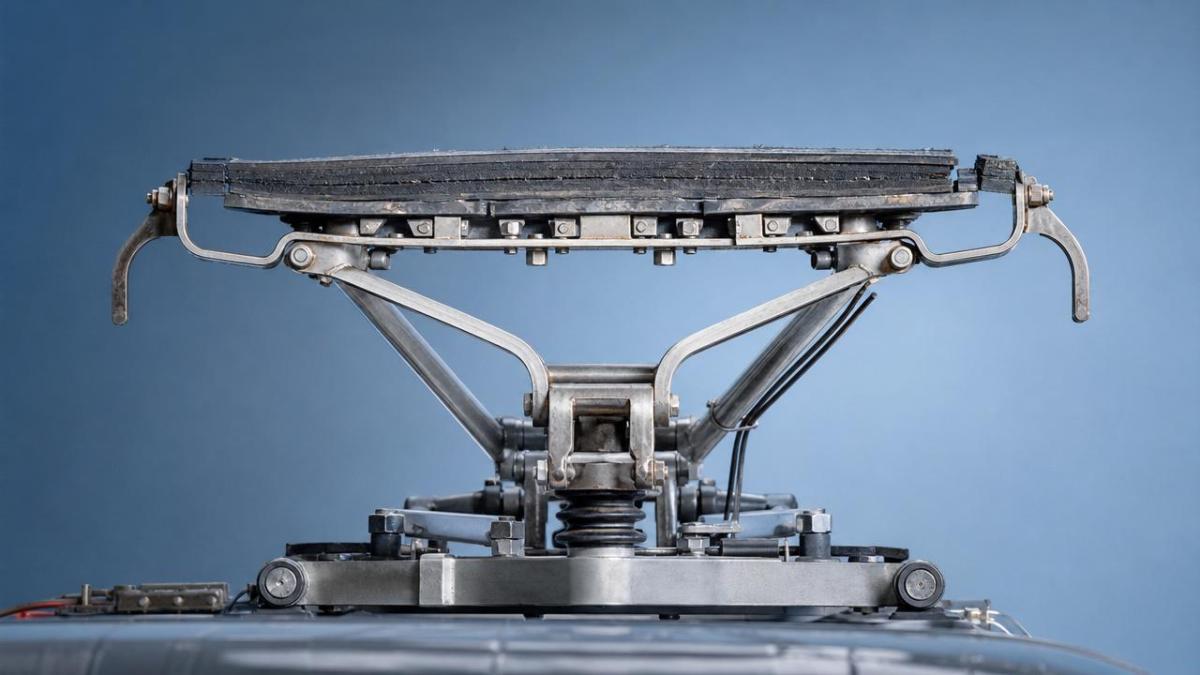
The first visible signs of wear on pantographs are often simple, but they are also the easiest to dismiss during busy service schedules. In most fleets, the earliest indicators appear on the carbon contact strip, the panhead structure, and the articulation points that control stable contact with the overhead line. If these signs are identified early, maintenance teams can avoid more serious damage to the catenary, the collector head, and the traction power chain.
Start with uneven carbon strip thickness. A strip that wears more on one side than the other usually suggests alignment issues, poor contact geometry, uplift imbalance, or overhead wire irregularity. This matters because pantographs are designed to maintain consistent pressure across the contact surface. When the wear profile becomes asymmetrical, contact instability grows, and the risk of arcing increases.
Another early sign is localized burning or blackened spots. These marks may indicate intermittent loss of contact, contamination, electrical discharge, or poor strip condition. Maintenance personnel should also look for chips, cracks, and edge breakage. Even a small fracture can develop into rapid material loss under high-speed vibration, especially on routes with demanding aerodynamic conditions.
Do not ignore subtle mechanical clues either. Loose fasteners, abnormal hinge movement, worn dampers, and fatigue in springs or linkages can all change how pantographs behave under load. In many cases, a carbon strip problem is only the symptom; the root cause sits deeper in the mechanical or pneumatic control assembly.
Why does uneven wear on pantographs matter so much for safety and power collection?
Uneven wear is not just a cosmetic problem. It directly affects current collection quality, contact force stability, and the service life of both pantographs and overhead contact wires. For aftermarket maintenance teams, this is one of the most important signs to assess because it links mechanical condition with electrical performance.
When pantographs wear unevenly, the effective contact area shrinks. That creates higher current density at smaller points, which raises heat, accelerates strip degradation, and increases the chance of arc formation. Over time, unstable contact can damage the wire, erode the strip faster, and create a repeating maintenance cycle that drives up operating cost.
Uneven wear also reduces confidence in trend analysis. A strip that degrades uniformly can be replaced based on predictable intervals and measured thickness loss. A strip that wears irregularly may fail earlier than expected, making standard maintenance intervals less reliable. This is especially critical on high-speed and urban rail systems where service density leaves little room for unplanned outages.
For teams working in fleets with different line conditions, it is useful to compare wear patterns by route, vehicle type, season, and operating speed. If one corridor consistently produces more skewed wear than others, the issue may involve catenary stagger, tension variation, environmental contamination, or vehicle-specific uplift behavior rather than the strip material alone.
Which abnormal sounds, sparks, or movements usually indicate serious pantograph problems?
Not all critical pantograph defects are visible during a static inspection. Some of the most serious warnings come from behavior observed during operation, depot testing, or post-run inspection. Maintenance teams should treat abnormal sounds, excessive sparking, and unstable movement as high-priority diagnostic clues.
A sharp crackling sound, repeated snapping noise, or visible arcing at the contact interface usually indicates unstable electrical continuity. This may result from excessive strip wear, contamination, poor contact force, or defects in the overhead system. Occasional minor sparking may occur under certain conditions, but frequent or intense arcing is a warning that pantographs are not maintaining healthy power transfer.
Abnormal vibration is another major concern. If the panhead bounces, flutters, or oscillates more than normal, contact quality drops quickly. This movement can stem from worn dampers, spring degradation, aerodynamic effects, frame looseness, or structural fatigue. On high-speed vehicles, even a small dynamic defect can become a major reliability issue because vibration intensity rises with speed and wind exposure.
Grinding, rattling, or metal-to-metal noise around joints and articulation points can indicate bushing wear, misalignment, insufficient lubrication where permitted, or loose hardware. In many service environments, these signs are incorrectly treated as normal aging. In reality, they often point to a growing mechanical instability that will eventually alter contact force and accelerate carbon strip damage.
Maintenance teams should also be alert to slow or irregular raising and lowering action. A delayed response may suggest pneumatic leakage, actuator wear, contamination in the mechanism, or control issues. Pantographs must not only contact the wire properly at speed, but also move predictably during operational transitions and fault recovery.
How can maintenance teams distinguish normal pantograph wear from signs that require urgent action?
This is one of the most practical questions in aftermarket work. Pantographs are consumable systems to a degree, so some wear is expected. The challenge is knowing when routine wear becomes a safety, performance, or network risk. The best approach combines visual thresholds, trend monitoring, route context, and defect severity.
Normal wear is usually gradual, relatively even, and consistent with known service mileage. It does not include sudden material loss, severe edge damage, or recurring hot spots. The contact strip should retain structural integrity, and the frame should move smoothly without unusual looseness or vibration. If measured wear matches established fleet patterns, replacement can often be planned rather than rushed.
Urgent action is needed when wear becomes non-uniform, electrical damage appears repeatedly, cracks are visible, uplift behavior changes, or contact instability is confirmed by onboard monitoring or trackside observation. A maintenance team should also escalate any case where pantographs show synchronized symptoms with overhead line marks, breaker trips, or unexplained traction power interruptions.
What are the most common causes behind fast or repeated wear on pantographs?
Fast wear rarely comes from one factor alone. In most rail applications, accelerated degradation results from interaction between component condition, operating environment, and infrastructure quality. For that reason, aftermarket maintenance teams should avoid replacing strips repeatedly without investigating the broader system.
One common cause is incorrect contact force. If force is too low, pantographs lose stable contact and arc more often. If force is too high, friction and mechanical wear increase, shortening strip life and stressing the overhead wire. Either condition can produce high maintenance cost and poor reliability.
Environmental contamination also plays a major role. Dust, oil, salt, moisture, and ice can alter the contact surface and increase abrasive wear. In coastal corridors, tunnels, freight-heavy routes, and winter operations, contamination-related wear on pantographs may progress faster than expected even if the hardware is correctly adjusted.
Infrastructure condition is another critical variable. Irregular wire height, poor stagger, hard spots, tension variation, or defects at overlaps and crossings can all cause repeated impact and contact disturbance. If several vehicles in the same corridor show similar wear signatures, the problem may be route-based rather than fleet-based.
Material mismatch should not be overlooked. Different carbon strip grades behave differently under high speed, heavy current, urban stop-start duty, and adverse climate. A strip that performs well in one operating profile may wear too quickly in another. Maintenance teams should work with engineering and procurement to validate whether the chosen pantograph consumables truly fit the service environment.
What inspection routine helps prevent unexpected failures in pantographs?
An effective inspection routine for pantographs combines daily checks, periodic measurement, and event-based diagnostics. The goal is not just to find defects, but to detect changing trends before they trigger service disruption. For aftermarket teams, consistency matters as much as technical depth.
A practical routine begins with visual inspection of the contact strips for thickness loss, asymmetry, burning, cracks, and contamination. This should be followed by checks on panhead straightness, frame integrity, fastener security, and hinge condition. If the design uses pneumatic control, air lines and response behavior should also be verified.
Next, compare measured wear against historical records. Trend-based maintenance is far more valuable than isolated measurements. If one unit begins consuming strips much faster than peer vehicles, that difference deserves investigation even if absolute limits have not yet been reached. Likewise, repeated arcing marks after cleaning and replacement may indicate a persistent root cause elsewhere.
Where available, use onboard diagnostics, current collection monitoring, or trackside imaging to supplement manual checks. Digital maintenance tools can reveal intermittent behavior that static depot inspection might miss. This is particularly valuable for fleets operating at high speed, in severe weather, or on routes with dense service patterns.
Finally, inspection standards should be clearly linked to action thresholds. Teams should know which pantograph conditions allow continued operation, which require short-term repair planning, and which justify immediate withdrawal. Clear escalation rules reduce hesitation and improve asset safety across the network.
What mistakes do maintenance teams often make when evaluating pantograph wear?
The most common mistake is treating pantographs as isolated components. In reality, they operate as part of a dynamic interface with the overhead contact system, vehicle aerodynamics, current demand, and route environment. Replacing a worn strip without checking force settings, alignment, and line condition may solve the symptom for a short time, but it rarely solves the problem.
Another mistake is relying only on minimum thickness limits. Thickness matters, but wear shape, burn pattern, and structural integrity are equally important. A strip may still meet dimensional criteria and yet be unsafe because of cracking, chipping, or repeated arcing damage. This is why condition-based judgment is essential in pantographs maintenance.
Some teams also underestimate route-specific effects. A fleet can have one subgroup with normal wear and another with severe wear because they operate on different lines or duty cycles. Without route correlation, maintenance analysis can misidentify the cause and lead to unnecessary parts changes.
A final mistake is poor documentation. If inspection findings are not recorded in a structured way, recurring defects remain invisible. Consistent logs of strip profile, defect type, mileage, weather exposure, and associated power events help maintenance teams build stronger failure prevention strategies over time.
If a team needs to improve pantograph reliability, what should be confirmed first?
Before changing parts suppliers, service intervals, or overhaul plans, maintenance teams should confirm a small set of facts. First, identify whether the wear problem is electrical, mechanical, environmental, or infrastructure-related. Second, verify whether the issue is isolated to one vehicle, one pantograph type, one depot practice, or one operating corridor. Third, compare actual wear patterns with expected performance for the strip material and duty cycle.
It is also important to review contact force settings, frame alignment, damping condition, and response behavior during raising and lowering. If these basics are not stable, even high-quality pantographs will show poor life and inconsistent current collection. For procurement or technical cooperation decisions, teams should ask suppliers for wear data by application scenario, not just general product claims.
For organizations planning a deeper maintenance upgrade, the most useful questions are practical ones: What are the current failure modes? Which routes generate the worst wear? Are the pantographs matched to speed and climate conditions? What inspection thresholds trigger replacement today, and are they based on evidence? If further confirmation is needed on specific solutions, parameters, maintenance cycles, quotation logic, or collaboration models, those are the priority topics to discuss first with technical partners and fleet engineering teams.
Recommended News